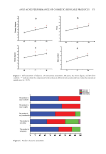
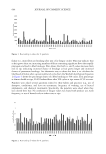
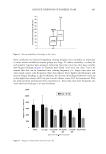
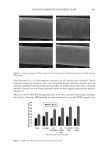
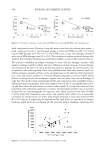
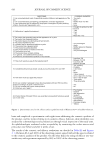
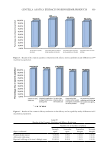
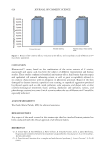
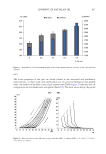
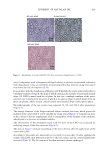
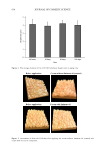
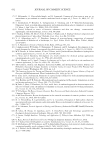
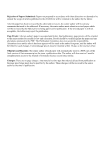
630 JOURNAL OF COSMETIC SCIENCE Figure 4. The average diameter of 0.4 wt% LNO emulsion droplets over an aging time. Cream without liniment oil (control) Before application Before application Cream with liniment oil Figure 5. Assessment of skin relief 120 min after applying the cream without liniment oil (control) and cream with this active component.

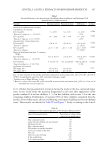
631 LINIMENT OF NAFTALAN OIL Thus, the recommended concentration of LNO in the cream was revealed as 0.4 wt%. This content of the active component allows for a multiple emulsion with low polydispersity, high aggregative stability, and a pronounced action moisturizing the skin to be obtained. CONCLUSION This work shows the promise of introducing LNO, a multifunctional biologically active additive, into compositions of cosmetics. It was established that the introduction of the LNO into the composition of the foam for baths increases its foaming ability, and into a polymer gel moderately decreases strength characteristics in the concentration range of the active additive to 0.5 wt%, which ensures uniform application of the composition. Using optical microscopy, the identity of the facial skin care cream with liniment to the class of multiple emulsions was determined. The concentration of LNO (0.4 wt%) was revealed, which provides an aggregatively stable cream with a uniform structure, low polydispersity, and a pronounced hydrating effect. ACKNOWLEDGMENTS The study was performed on the equipment of the Center for Collective Use “Nanomaterials and Nanotechnologies” of the Kazan National Research Technological University. REFERENCES (1) O. A. Semkina, Ointments, gels, liniments, and creams containing phytopreparations (a review), Pharm. Chem. J., 39(7), 369–374 (2005). (2) Y. A. Shigabieva, S. A. Bogdanova, L. N. Zalyalyutdinova, Yu. G. Galyametdinov, and R. S. Garaev, Development of light-protective gels containing xymedone and amphiphilic components, Pharm. Chem. J., 53(7), 638–641 (2019). (3) I. Aranaz, N. Acosta, C. Civera, B. Elorza, J. Mingo, C. Castro, M. Gandia, and A. H. Caballero, Cosmetics and cosmeceutical applications of chitin, chitosan and their derivatives, Polymers, 10(2), 213– 237 (2018). (4) N. S. Han, M. Basri, M. B. Abd Rahman, R. N. Z. R. Abd Rahman, A. B. Salleh, and Z. Ismail, Preparation of emulsions by rotor-stator homogenizer and ultrasonic cavitation for the cosmeceutical industry, J. Cosmet. Sci., 63(5), 333–344 (2012). (5) T. Tadros, S. Leonard, C. Verboom, V. Wortel, M. C. Taelman, and F. Roschzttardtz, Colloids in Cosmetics and Personal Care (Wiley-VCH, Weinheim, 2008), pp. 1–34. (6) N. V. Yanishlieva, E. Marinova, and J. Pokorny, Natural antioxidants from herbs and spices, Eur. J. Lipid Sci. Technol., 108(9), 776–793 (2006). Table V Values of In Vivo Skin Parameters Measured (SCH Skin Moisturizing, Fat Content of Skin), Basal Values, and Values Measured 60 and 120 min After Application Samples Skin hydration (SCH) Fat content of skin Basal values After 60 min After 120 min Basal values After 60 min After 120 min Cream without LNO 40.1 ± 9.5 44.4 ± 8.7 51.1 ± 2.6 3.2 ± 0.9 4.0 ± 0.8 4.6 ± 0.9 Cream with LNO 41.2 ± 7.6 52.3 ± 8.5 69.6 ± 3.9 3.4 ± 0.7 4.1 ± 0.9 4.7 ± 0.5
Purchased for the exclusive use of nofirst nolast (unknown)
From: SCC Media Library & Resource Center (library.scconline.org)