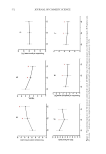
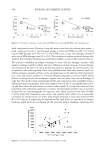
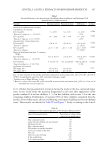
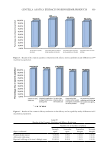
628 JOURNAL OF COSMETIC SCIENCE of decreasing velocities is delayed in comparison with the period of their increase, as a result of which the ascending and descending flow curves form a hysteresis loop (Figure 2), which indicates good thixotropic properties (26). The following yield strengths are important parameters characterizing the structure and strength of the gels: (1) the static minimum (first) yield strength τ 0 characterizing the destruction of a structural network and (2) the dynamic yield strength (Bingham yield strength) τ 0D determined in the straight section of a flow curve. The obtained experimental data can be approximated with high accuracy by the Herschel-Balkley equation: τ τ γ = + ⋅ • 0 K n , where τ 0 is the static yield strength, Pa K is the consistency coefficient, Pa · s γ • is the shear rate, s–1 and n is the index of the flow of the system. The mechanical stability M of gels was determined by the ratio of the yield point after fracture (during the period of decreasing shear rate) to the ultimate strength before it. The strength of the spatial gel network in a series of liniment concentrations tends to decrease, expressed in a decrease in the values of the structural and mechanical characteristics of the compositions. This facilitates the application of the composition to the skin, as evidenced by the data on spreadability. The change in viscosity (Figure 2B) and other rheological parameters when the content of LNO is up to 0.5 wt% by weight is not significant the introduction of a larger amount of it affects significantly. So, for a concentration of 0.9 wt%, the values of the dynamic yield strength τ 0D and the consistency coefficient K decrease by 1.5 times and the viscosity η by 2.4 times, which is unacceptable in the technology for producing and using the gel (Table IV). Thus, cosmetic gels with LNO in the concentration range up to 0.5 wt% are characterized by high stability, structuredness, uniform distribution, and the ability to form long-acting films on the surface of the skin. CREAMS Microscopic analysis is an effective method for assessing the structures of emulsion systems and predicting their stability. Presented in Figure 3 is a micrograph of a cream with 0.2 wt%, 0.4 wt%, and 0.9 wt% of liniment oil 48 h after preparation, obtained using Olympus BX 51. All creams passed the centrifugal test and did not delaminate after 30 min. Of the compositions presented in Figure 3,onlythecreamwith0.4 wt% LNO is characterized as a multiple emulsion (27,28). Such a system has several advantages: it immobilizes the Table IV Rheological Parameters of Gels With LNO Rheological characteristics Concentration LNO, wt% 0 0.2 0.5 0.7 0.9 Dynamic yield strength τ0D (Pa) 182.0 165.0 150.0 135.0 120.0 Static yield strength τ0 (Pa) 19.2 17.5 16.0 14.5 13.0 Viscosity η (Pa·s) 25.7 22.3 17.7 14.7 10.9 Mechanical stability M 0.85 0.84 0.81 0.76 0.72 Consistency coefficient (Pa·s) 31.9 29.1 26.5 23.9 21.4 Index of the flow n 0.33 0.33 0.33 0.32 0.32 Spreading diameter (mm) 32.9 40.8 48.1 51.4 55.2

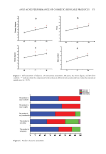
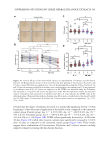
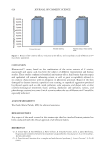
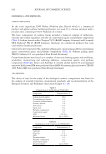
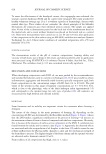
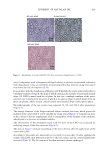
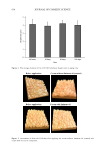
629 LINIMENT OF NAFTALAN OIL active components with subsequent prolonged release it protects incorporated substances from degradation it has an immediate moisturizing effect that lasts for a long time and it minimizes the risk of irritation (29,30). In accordance with the classification of Florence and Whitehill, the cream under study refers to a multiple emulsion of type B, the drops of which contain in the majority several small internal drops (31). LNO is mixed with the oil phase. In this case, a multiple emulsion of the water- oil-water type is formed, the structure of which is an aqueous phase in which drops of the oil phase are present, which, in turn, contain several small internal drops of the aqueous phase. Microphotographs of the test system were repeated 30, 90, and 180 d after preparation (Figure 4). The average diameter of the drops remained almost constant over time, which proves the stability of the cream with 0.4 wt% of LNO for a long period (Figure 4). A further increase in the content of dietary supplements leads to enlargement of the droplets of the emulsion, which leads to a decrease in colloidal stability. The effectiveness of the developed cream with 0.4 wt% of the LNO was evaluated by analyzing images of the skin structure (Figure 5). The data in Figure 5 indicate smoothing of the skin 120 min after the application of the cream with LNO. According to the results of a short-term in vivo study, it is seen that 1 h after applying the sample with LNO, skin hydration relative to the base values and the control significantly increased (Table V). The fat content of the skin remained almost unchanged. 0.2 wt% LNO 0.4 wt% LNO 0.9 wt% LNO Figure 3. Morphology of cream with LNO 48 h after preparation (magnification ×1,000).
Purchased for the exclusive use of nofirst nolast (unknown)
From: SCC Media Library & Resource Center (library.scconline.org)