1 BALDNESS AND SOME CHEMICAL ASPECTS* By IRvNo L. MXLBERO, M.D. /22 East 78th Street, New York 2I, N.Y. FoP. M'A•¾ centuries, the human race has been concerned with the problems arising from the distribution of hair on the body. The function of hair as an outer covering has diminished as civilization has progressed ß and the styles of outerwear have changed. The concern of people the problem of hair revolves around two factors, the growth of hair undesirable areas, or the lack of hair in desired places. The determination':::'• .: of which of these situations is more important is not our problem, but cerns only those individuals faced with either one of these situations.' •11 ß However, in this presentation, we will limit our discussion to the lack of•.? hair growth in a desirable area, the human scalp. •'.• Baldness, or alopecia, as it is called medically, has been associated since':. • the beginning of recorded time with many myths and legends. The alopecia, is derived from the Greek word for fox, an animal which is ject to baldness. The association of this animal with slyness has led a belief that baldness occurs in the more intelligent humans. This fact disputable. In the Bible, there are also many references to the loss ofhair ?i 'i where it was considered a curse and a tragedy. Of course, everybody iS:if: i familiar with the Story of Samson, where the loss of hair was associated with!i• the loss of strength. In our own American Indian folklore, one of the mosfi:• interesting legends arising from the hair of the scalp led to the unpleasanf?i custom of scalping one's enemy. This surgical procedure was thought to necessary because the hair was associated with the soul and thereføre•'½ scalping one's enemy prevented his ghost from walking and haunting the:ili scalper. , A brief summary of the function, development, structure, physiologY !:)!ii and types of hair is necessary at this time so that some of the principles hair can be elucidated. HaEii?ibryologically, the skin is derived from the outer layer, or ectodelni!'!?!i Eaich •a• appendage of the skin, and therefore is ectodermal in ß emerges from an indentation in the skin which is called a follicleJ75 The skin is folded in at each follicular opening, as if it had been pushed?i ß Presented at the May 15, 1953, Meeting, New York City. 264

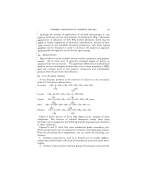
•:: •.:' BALDNESS AND SOME CHEMICAL ASPECTS 265 :i?.down into that part of the skin which contains the blood vessels, the !!':'dermis. At the bottom of this depression there is a merger with the ii!:i.:•apilla which forms the root of the hair. The hair grows from the papilla •t)to the follicular opening and from that point on to its end. The portion i !i'frorn the follicular opening to the end of the hair is called the 1 air shaft. ?iOccasionally there is more than one hair associated with one follicle. At ?::,:{he upper third of the hair follicle there is an opening for the duct of the 'i sebaceous glands which are a part of the follicular unit. iiii..:: :! There are three main types of hair. The long soft hair which is found on i}i•i:iihe scalp, the bearded region, the axilla and the pubis. These hairs have !?•!i•'follicles that lie obliquely in the skin, so that the hairs lie in a sloping i/ !!i:':direction along the surface of the skin. The second type of hair is the stiff i!!!i!:i':short and coarse hair which is found in the eyelashes, eyebrows, the external i•!i:::,meatus of the ear, and the openings of the nose. The follicles of these hairs :((':are situated almost at right angles to the surface of the skin, and cause !!:i:":':i:them to stand out straight from the skin. The third type of hair is the ii.'11downy , lanugo hair which is present over the entire surface of the skin (11iexcept for the palms, soles, the lips, the nipples, umbilicus, the anal and '17Urogenital orifices, and the tips of the distal phalanges of the fingers and : . .i::i'toes. Many of these hairs have no color, no associated muscle and usually i':11 the sebaceous gland is comparatively large. i:: The hair itself is divided into three parts, the central portion, or medulla, i.the middle part or cortex, and the outer layer or cuticle. The size of the ?.medulla varies, and in lanugo hair there is no medulla. However, many :i observers have noted that there is no correlation between the size, the !?trength, the thickness or age of hair and the size of the medulla. The :.:'medulla may even disappear at intervals along the length of the hair. The :i cortex which forms the main part of the hair contains a large amount of : :':. sulfur, in the form of cystine. 'i': The sebaceous glands, which are an integral part of: the follicular ap- ..paratus have been the subject of recent and important studies. Some i:i:sebaceous glands may even open on the skin surface without any con- : .: nectio•. with a hair follicle, but with each hair follicle there may be as many as six sebaceous glands. These glands supply the oil that lubricates '•.:" the hair, but it may be that the sebum present may be more than just an inert lubricant. The sebum produced by these glands is a product of fat secretion, and not a product of fat degeneration as had been previously : thought. The nerve supply to these glands is from the sympathetic system, and they are surrounded by a network of capillary blood vessels and lymphatics. The amount of sebum secreted daily in the scalp is as much as that secreted on the whole body and may amount to as much as two grams a day. Chemical analyses have revealed lipids such as olein, palmitin, and
Purchased for the exclusive use of nofirst nolast (unknown)
From: SCC Media Library & Resource Center (library.scconline.org)