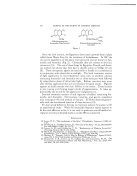
(7) ? :5':' (lOl : . .(i-(17) (18) ':' 19) ,: (20) 251 Fitzpatrick_, T. B.,.Becker, S. W., Jr., Lerner, A. B., and Montgomery, H., "Tyro- sinase in Human Skin: Demonstration of Its Presence and Its Role in Human Melanin Formation," Science, 112, 223-225 (1950). Fitzpatrick, T. B., "Human Melanogenesis," Arch. Dermatol. • $ypMlol., 65, 379-391 (1952). Nealon, D. G., "A Study of the Skin Lightening Effects of Ammoniated Mercury," tVroc. Scientific Section Toilet Goods Assn., Jan. P-7 (1944). Lerner, B., "Effects of Ions on Melanin Formation," 7. Invest. Dermatol. (January• 1952). A/)t, A. F., and Farmer, C. J., "Vitamin CmPharmacology and Therapeutics," •. ,,im. Med. Assoc., 111, 1555 (1938). , Oettal• Heinz, "Die Hydrochinonvergiftung,' Arch. exp. _Pathol. Pharmakol.• 183• 319 (1936). Oliver, E. A., Schwarz, L., and Warren, L. H., "Occupational Leukoderma," 7. Am. Med. Assoc., 115, 927 (1939). Grupper, C. H., Plas, G., and Baudin, P., "Cinq Cas de Melanose de Riehl Guerls ou Ameliores par le Corps," H-365 (para oxypropiophenone) Conceptions Actuelles de la Melanogenese, Bull. sot.franc dermatoL $yphilig, 57 (No. 3), 346 (1950). Denton, C. R., Lerner, A. B., and Fitzpatrick, T. B., "Inhibition of Melanin Formation by Chemical Agents," 7. Invest. DermatoL, 18, 119-135 (1952). Fahmy, I. R., and Abu-Shady, H., "Ammi Majus Linn Pharmadiagnostical Study and Isolation of a Crystalline Constituent," !•uart. 7..Platre. and Pharmacol., 20) 281-291 (1947). El Mofti, J., 7. Royal Egyptian Med. Assn. 1 8, 650 (1925). Sidi, Edwin, and Bourgeois-Gavardin, J., ' The Treatment of Vitiligo with Ammi Majus Linn," )t. Invest. Dermatol., 18, 391-395 (1952). EI-Mofty, Abdel-Moneim, "Observations on the Use of Ammi Majus Linn in Vitiligo," Brit. y. DerrnatoL, 64, 431-441 (1952). Lerner, A. B., Denton, C. R., and Fitzpatrick, T. B., "Clinical and Experimental Studies with 8-methoxypsoralen in Vitiligo," 7. Invest. Dermatol., 20,299 (1953).

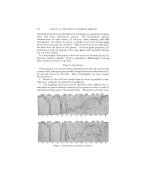
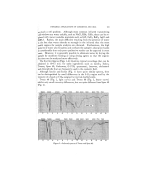
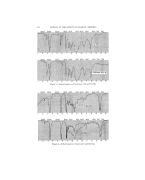
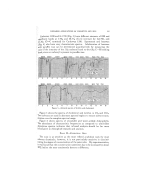
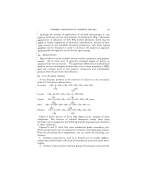
INFRARED APPLICATIONS TO THE ANALYSIS OF COSMETICS AND ESSENTIAL OILS* By H^•.R¾ H. H.•USDO•.•'•' The Perkin-E/ruer Corporation, Norwa/k• Conn. IN SPITE of the fact that most industries and research laboratories have already made wide use of infrared spectroscopy as an analytical tool for more than a decade, it seems that the cosmetic and perfume industries have only recognized the potentialities of this method during the past two years. To some extent this neglect of infrared potentialities derives from the inherent nature of the industry, since ultimate product specifications must often be based on a psychological reaction of odor or color. Infrared cannot be considered as a replacement for such specifications but it can be an invaluable supplementary tool in determining purity of raw materials, * Presented at the May 15, 1953, Meeting, New York City.
Purchased for the exclusive use of nofirst nolast (unknown)
From: SCC Media Library & Resource Center (library.scconline.org)