280 JOURNAL OF THE SOCIETY OF COSMETIC CHEMISTS Liver--Cloudy swelling, focal fatty metamorphosis, periportal cellular infiltration. Spleen--Normal (congestion). Heart--Congestion, hemorrhage. Lung--Emphysema and atelectasis. Kidney--Glomerular hyperemia cloudy swelling of uriniferous tubules. ' Brain--Edema, neuronal degeneration. Group IfI--High Dosage: Gross--Lumbar skin--Devoid of hair, slightly reddened. Histologic: Skin--Slight epidermal hyperplasia. Corium--very slight cellular in- filtration, hyperemia. Striate Muscle--Normal. Stomach--Mucosal hypereinia focal superficial mucosal derma. In tes ti he--Norm al. Liver--Cloudy swelling focal cellular infiltration. Spleen--Normal (congestion). Heart--Congestion, hemorrhage, focal myocardial cellular infiltration. Lung--Peribronchitis atelectasis, focal emphysema. Kidney--Glomerular hyperemia cloudy swelling of uriniferous tu- bules. Brain--Edema, neuronal degeneration. Group f lZ-Control: Gross--Negative Histologic: . Skin--Normal. Stri ate Muscle--Norm al. Stomach--Normal. In testine--Normal. Liver--Cloudy swelling focal passive congestion. Spleen--Normal (congestion). Heart--Congestion, hemorrhage, probably terminal. Lung--Focal emphysema. Kidney--Cloudy swelling uriniferous tubules. Brain--Edema, neuronal degene[ation. Conclusion There is no major pathology present which can be attributed to experi- mental procedure. Possibly, cloudy swelling can be associated with the study, alth6ugh it is also present in the control animals. This is the mildest stage of degenerative change and is reversible. Other pathology noted is frequently found in confined laboratory animals. The vascular disturb- ance and changes in the lung were probably terminal associated with death. IV. REPEATED-INSULT METHOD OF SHELANSKI The following materials were studied: 1. Sample No. 1 Soap (80% tallow, 20% coconut oil, containing 2% Actaruer).

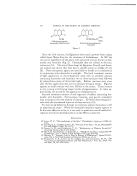
TOXICITY STUDIES ON ^CTAMER 281 2. Sample No. 2 Soap (80% tallow, 20% coconut oil--control soap). 3. Sample No. 3--1% Actamet, weight/volume in dimethyl phthalate. Fifty unselected human subjects, 25 males and 25 females, were used in .: this procedure. The materials were placed, by means of a patch, on the skin of the backs ß of these subjects and were permitted to remain in contact with the skin for i'11: ' a period of twenty-four hours every other day for 15 applications. At the end of each application, the patches were removed and the reactions graded and recorded. This first phase of the procedure required twenty-nine .i.?: days. The second phase of the procedure began with a rest period of two ':i to three weeks. The materials were then reapplied to the backs of the same subjects for forty-eight hours.. The patches were then removed, and :' the results graded and recorded as before. The solutions used in this procedure were freshly prepared before each i.i application by dissolving 10 gin. of each soap in enough water to yield a total volume of 100 ml. • Results ?' There were numerous l q- reactions to both soaps. These reactions, :..• :i'i!i: however, were not continuous in any one subject and bccurred sporadically ::.•. throughout the group. Since 1 q- reactions disappeared within a period of ,' twenty-four hours or less, they were not considered significant. Reactions of 2q- severity, and over, were significant and occurred as follows: '•' Soap No. 1--There ,3ere eight 2q- reactions on the males and five 2q- reactions on the females. One male had a 3q- reaction. :. Soap No. 2--There were two 2q- reactions among the males and six 2q- reactions among the females. Sample No. 3--1% Actamet in dimethyl phthalate. None of the males and none of the females showed any reaction to this material. No reactions took place with any of the above soaps until after the fourth application in the first phase of the test. None of the males and none of the females reacted to any of the above three materials on reapplication in the second phase. The following criteria are used in grading the reactions: 0 --Negative, no reaction. l q---Slight erythema which disappears in a relatively short time, i.e., twenty-four hours. 2q---Marked erythema which persists for more than twenty-four hours. 3q-reMarked erythema with vesicle formation and edema. 4q---Marked erythema, edema, vesicles, blistering, and ulceration. These materials can be classified as neither primary irritants nor sensi- tizers because reactions did not appear until after the fourth application, in the first phase, and none occurred in the second phase. However, the
Purchased for the exclusive use of nofirst nolast (unknown)
From: SCC Media Library & Resource Center (library.scconline.org)