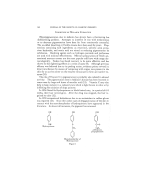
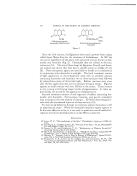
268 JOURNAL OF THE SOCIETY OF COSMETIC CHEMISTS methods. These studies raise the possibility that the sebaceous glands and human sebum may play a very important role in the etiology of common male baldness. These studies started when it was observed that in the synthetic rubber industry, many of the workers engaged in the manu- facture of neoprene rubber lost their hair. There were several character- istic features in that only the scalp was involved, the hairs came out by the roots, the loss was never permanent, there were no other symptoms, and caps or ointments did not afford any protection to the scalp against the vapors of this potent compound. As the work progressed, it was found that a certain chemical configura- tion was responsible for the hair loss, in these synthetic compounds. This active configuration which reacted with the sulfhydryl groups in the skin all contained the unsaturated double bond --CH•CH--. Then because there was a close chemical relationship between these dimers of chloroprene and the naturally occurring Vitamin A and squalene, a component of human sebum, these substances were tested on laboratory animals for their depilatory action. Both these substances showed depilatory action as well as the ability to inactivate sulfhydryl groups. Both Vitamin A and squalene are polymers of isoprene, the parent molecule of natural rubber, whose sole difference from chloroprene lies in its having a CHa group in place of the C1 atom of chloroprene. Further studies testing the depilatory action of sebum have revealed that squalene is not the only compound in human sebum which can cause depilation in laboratory animals. Oleic acid and linoleic acid have also now been found to have this action. At present, these naturally occurring compounds have not caused depilation in man to date. However, in cases ofhypervitaminosis A it has been found that there was ha'r loss, which regrew when the high vitamin intake was discontinued. In conclusion, we find that the problem of simple common male baldness is indeed a complex situation. It is very possible that just as each indi- vidual hair follicle has its own rate of growth, its own length of hair, and its own individual properties, so each male with common male baldness may have his own individual combination of factors to explain his condition. However, it seems at this time, that these new chemical findings may un- ravel and correlate all the previous facts and findings so that eventually in spite of the complexity of the situation• the man of the future may have a full head of hair. BIBLIOGRAPHY Danforth, C. H., "Physiology of Human Hair," Physiol. Reviews, 19, 94 (1939). Rattner, H., "Ordinary Baldness," •frch. Dermatol. and Syphilol., 't4, 201-213 (1941). Snyder, L., and ¾ingling, H., Studies in [furnan oenheritance, Xoeoe, 1, 608 (1935). Hamilton, J. B., "Patterned Loss of Hair in Man," .,Inn. N. Y..,Icad. Sci., 53, 708 (1951).

BALDNESS AND SOME CHEMICAL ASPECTS 269 Lavmon, C. W., "The Non-patterned Alopecias," Ibid., 53, 735 (1951). Dc(rsey, B. L., "Baldness: Its Cause and Prevention," Los Angeles, de Vorss (1939). Szasz, T. S., and Robertson, A.M., "A Theory of the Pathogenesis of Ordinary Human Baldness," /irch. Dermatol. Syphilol., 61, 34 (1950). Sayill, Agnes, "The Hair and Scalp," Baltimore, Wilkins and Wilkins (1945). Hamilton, J. B., "Male Hormone Stimulation Prerequisite and an Incitant in Common Baldness," /ira. ?. /inatomy, 91, 451 (1942). Bengstorl, 3B• L., "•'rogress in Pituitary Therapy of Alopecia," Clin. Med. and Surgery (Jan. 9 ) "Various Endocrine Extracts and Local Therapies in Alopecia," Ibid. (February 1934). Osborn, D., "Inheritance of Baldness," _7. Heredity, 347 (1916). Myers, R. J., and Hamilton, J. B., "Regeneration and Rate of Growth of Hairs in Man," /Inn. N.Y. /Icad. Sci., 53 (1951). Emanuel, S. V., "Quantitative Determination of the Sebaceous Glands' Function with Particular Mention of the Method Employed," /Iota dermatol., 17, 444-456 (1936). : Weitkamp, A. W., Smiljanic, A.M., and Rothman, S., "The Free Fatty Acids of Human Hair Fat," y. /Im. Chem. Soc., 69, 1936-1937 (1947). Suskind, R. R., "The Chemistry of the Human Sebaceous Gland, I. Histochemical Observations," _7. Invest. Dermatol., 17, 37-54 (1951). Butcher, E. O., and Parnell, J.P., "Sebaceous Secretion on the Human Head," Ibid., 9, 67-74 (1947). Schmidt-Nielsen, K., "Microtitration of Fat in Quantities of 10 -s Gram," Cornpt. rend. tray. lab. Carlsberg, Ser. Chim., 24, 233-247 (1942). Schmidt-Nielsen, K., "Micro Determination of the Iodine Number of Fat in Quantities of 10 -s Gram," [bid., 25, 87-96 (1944a). Schmidt-Nielsen, K., Suskind, R. R., and Taylor, E., "Analysis of Human Sebaceous Material from Individual Orifices," .7. Invest. Dermatol., 17, 281-289 (1951). Sulzberger, M. B., and Lazar, "Hypervitaminosis," y. /Ira. Med. /Issoc., 146, 788 (1951). Ritter, W. L., and Carter, A. S., "Hair Loss in Neoprene Manufacture," y. Ind. Hyg. Toxicol., 30, 192-195 (1948). Carothers, W. H., Williams, I., Collins, A.M., and Kirby, J. M., "Acetylene Polymers and Their Derivatives," y. /Ira. Chem. Soc., 53, 4203-25 (1931). Flesch, P., and Goldstone, S. B., "Depilatory Action of the Intermediary Polymers of Chloroprene," Science, 113, 126-127 (1951). Flesch, P., "Hair Loss from Squalene," .Proc. Soc. Exptl. Biol. Med., 76,801-803 (1951). Sobel, H., "Squalene in Sebum and Sebum-like Materials," y. Invest. Dermatol., 13, 333- 338 (1949). Toomey, J. A., and Morissette, R. A., "Hypervitamlnosis A," /Im. •. Dis. Children, 73, 473-480 (1947). Rothman, P. E., and Leon, E. E., "Hypervitaminosis A, Report of Two Cases in In- fants," Radiology, 51, 368-374 (1948). Dickey, L. B., and Bradley, E. J., "Hypervitaminosis A, A Case Report," Stanford Med. Bull., 6, 345-348 (1948). Flesch, P., and Hunt, M., "Local Depilatory Action of Some Unsaturated Compounds," /Irch. Dermatol. and $yphilol., t•5, 261-269 (1952).
Purchased for the exclusive use of nofirst nolast (unknown)
From: SCC Media Library & Resource Center (library.scconline.org)