PHYSIOLOGY AND HISTOCHEMISTRY OF HAIR GROWTH 11 saccharides (metachromasia) in the dermal papilla (11). Whereas esterase is abundant in the resting follicle, the active follicle has, especially in the lower external sheath and the bulb, an abundance ofsuccinic dehydrogenase (Argyris, unpublished), indicating increased oxidative metabolism. These changes are presumably involved in the large energy supply soon to be re- quired for rapid hair production. Immediately following these changes, the phase of active hair production starts. The bulb, especially its lower por- tion, has a much increased mitotic activity, but the remainder of the follicle, the basal epidermis, and the peripheral sebaceous cells have less, as if being drained by the mitotic activity of the bulb. Glycogen is observed in cells of the upper bulb but disappears as keratinization progresses. Changes in the distribution of sulfhydryl groups can also be observed, extending from the bulb out to the region where keratinization is complete (7). The --SH groups are particularly abundant in regions which are parakeratotic. The cessation of hair production is very rapid. Mitotic activity ceases in the bulb, glycogen disappears from the lower external sheath, metachro- masia disappears from the dermal papilla, the last keratinizing cells form the club instead of becoming inner sheath or hair, and by a massive degenera- tion of most of the cells of the lower external sheath and bulb, the resting stage again occurs with the upper external sheath intact. If the connective tissue sheath fails to shorten radically at this time, as in the hairless geno- type of the mouse (2), a normal anchoring club does not form and the lower follicle breaks up into small isolated portions. The dermal papilla is thus stranded in the adipose layer and is not in the proper position to induce a new hair growth from the intact upper sheath. The isolated fragments produce sebaceous and later keratinized cysts. Without normal hair cycles, the epidermis gradually becomes thicker and wrinkled and latent pigment cells become melanogenically active. Damage to the epidermis from methylcholanthrene is less severe when the treatment occurs at the time of hair growth in the treated area (4, 8). The sebaceous glands are lost completely in four days regardless of phase of the hair cycle but are restored from the cells of the upper external sheath by lipid accumulation in these cells. This restoration is much more rapid when the hair cycle is in an anagen phase at the time (10). When a wound is made in the skin of a mouse, surgically or x-irradiation induced, the ex- ternal sheaths at the edge of the wound are involved in the formation of the epithelial tongues over the wound (1). Normally the epidermis produces a constantly sloughing corneum and the sebaceous gland continuously produces sebum, but the sheath pro- duces a hair-producing apparatus only in cycles. Plucking of resting or club hairs will initiate a new growth in the area plucked. In man and the guinea pig, plucking of resting hairs will also cause new growth, but it ap- pears less dramatic because many of the hairs in a given area are growing

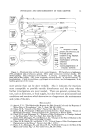
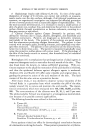
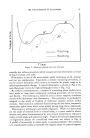
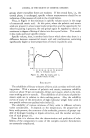
12 JOURNAL OF THE SOCIETY OF COSMETIC CHEMISTS at the time anyhow. When comeurn is sloughed off to a greater extent than normal (12), the mitotic activity of the underlying basal epidermis is increased by a degree roughly comparable with the amount of comeurn re- moved. There is then a self-regulatory control mechanism (feedback) for corneum production and probably for sebum production. The nature of the self-regulation in the hair cycle is not known but could well be the re- sult of the accumulation of an inhibiting substance during the production of hair. This substance would be slightly diffusible, and could be shared by the neighboring epicdermis and follicles only if very close. The club might act somewhat as the stratum comeurn in helping to retain for a time, at least, this substance. Of particular interest in this connection is the fact that a mouse on a diet of half the normal caloric intake will not initiate new waves of hair growth even if the plucking stimulus is applied (9). A plucked area will start a new growth, however, weeks later when and if the normal diet is restored. Hairs which are growing when the reduced diet becomes effective will either be unaffected or will grow more slowly and for a few days longer before catagen occurs and a club is formed. In view of our present information, only a very tentative hypothesis can be suggested to explain the regulatory mechanism of cyclic hair growth. It is possible, however, that there is a slowly diffusible substance (3) formed as a by-product of the growth of the inner sheath and hair. This sub- stance may be the same as the hypothetical substance involved in the formation of the stratum comeurn. This substance may be dissipated or it may "decay" at a certain rate. When a club is removed or disturbed from its bed in the upper external sheath, the substance may be released much more rapidly. It disappears not only from the sheath epithelium but also from the sebaceous epithelium and from the neighboring epidermis. If another follicle is sufficiently close and it is has already lost much of its inhibiting substance, it also might be affected. According to this scheme and providing there is an adequate carbohydrate source, anagen is initiated in a dormant follicle when the inhibiting substance falls below a certain threshold. Anagen stops, i.e., catagen occurs, when the threshold is again attained. Such a system would allow both for the synchrony and the autonomy which do occur. Pigment cells may be very sensitive indicators of the presence of this sub- stance, which we might call h. In many follicles there is a gradual cessation of the formation of pigment granules (melanogenesis) in these special cells shortly before the hair stops growing (6). During the early anagen there is a vigorous return of this melanogenic activity. In conclusion, a control system diagram can be prepared (Fig. 1) which indicates some of the interactions involved among the components of the skin especially with relation to the hair growth cycle. Such a diagram presents inter-relationships and self-regulatory mechanisms in a manner
Purchased for the exclusive use of nofirst nolast (unknown)
From: SCC Media Library & Resource Center (library.scconline.org)