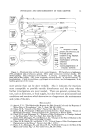
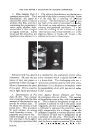
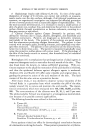
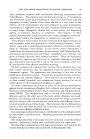
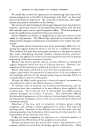
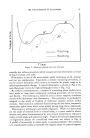
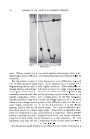
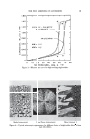
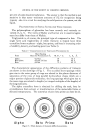
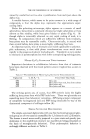
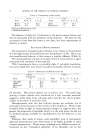
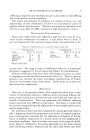
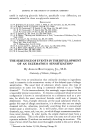
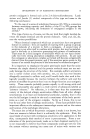
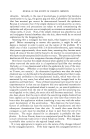
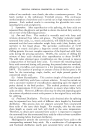
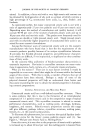
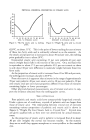
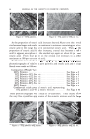
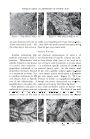
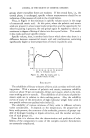
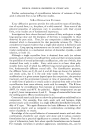
THE POLYMORPHISM OF GLYCERIDES :27 / / ,, / ' Cooling ............ Heating Time Figure l.--Schematic thermal curves for tristearin. valuable but tedious procedure which can give precise information on heat of fusion and per cent solid. Dilatometry is one of the most widely useful techniques of all--precise and not too cumbersome. Essentially a density measuring procedure, it can be used to determine solid content, to describe the plastic range or to indicate polymorphic change. A typical dilatometer is shown in Fig. 2 (1) and dilatometer curves for high melting glycerides in Fig. 3 (2). By dielectric measurements, a number of interesting phase studies have been made on long chain compounds including glycerides (3) by Crowe and Smyth. The technique is sensitive and in many respects correlates closely with calorimetry and dilatometry. The procedure is particularly adapted to the study of freedom of molecular (dipole) motion within crystals. Such motion is commonly found among the less dense, frequently metastable alpha forms which occur widely among long chain compounds. Microscopy is well known and widely employed. While it is best suited for the study of external form or crystal habit, it is quite useful in identi- fication and phase characterization by way of such properties as refractive index, crystal angle and extinction angle. Typical microscopic appearances of triglyceride phases (4) crystallized from melt are shown in Fig. 4. A pitfall of microscopy in phase study is pseudomorphism--the tendency of a transformed crystal to resemble the original phase in external appear-

Purchased for the exclusive use of nofirst nolast (unknown)
From: SCC Media Library & Resource Center (library.scconline.org)