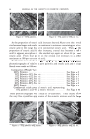
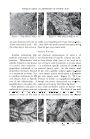
PHYSICAL CHEMICAL PROPERTIES OF STEARIC ACID 47 Further understanding of crystallization behavior of mixtures of fatty acids is obtained from x-ray diffraction studies. X-RAY DIFFRACTION PATTERNS X-ray diffraction patterns provide the only positive means of identifica- tion of crystal form, i.e., the phase, of a solid material. Since most of the physical properties of substances vary in accordance with their crystal form, x-ray studies are of fundamental importance. Investigations have shown that each mixture of fatty acids gives a single long spacing value and the sharpness of the lines is comparable to those observed for pure acids. Thus, for any composition a definite spacing is obtained which is characteristic for that particular mixture (2). This is considered to be good evidence that a single solid solution is formed in such mixtures. Long spacing measurements can be used to determine if a par- ticular combination is a mechanical mixture of dissimilar crystals, a solid solution, or both (1). Although a single crystalline form is obtained from melt (no solvent present), study of solvent crystallized fatty acids and their mixtures reveals the possibility of several polymorphic modifications, only one of which, that obtained from melt, is stable. Fatty acids exist in at least three poly- morphic forms each of which has different long crystal spacing and, there- fore, fundamentally different crystal cells. For identification purposes, the different forms are C, B, and A and all three are known for palmitic and stearic acids, but C is the only truly stable form. The particular modifications in a given system depend upon the composition, the previous treatment, and the environment present at time of examination. The C or stable form of palmitic or stearic acids is obtained from melt or by slow crystallization from some solvents, acetic acid for example. The B form is obtained by crystallization from benzene at intermediate temperature (80øF. for stearic and 60øF. for palmitic). Higher temperatures are apt to give C, lower temperatures A and C. Storage of metastable forms near the melting points effects transformation to C. Commercial stearic acid does not show the polymorphism exhibited by its components. For example, from melt, acetic acid and benzene, triple pressed stearic acid crystallizes in a single diflqcultly identifiable form prob- ably of C type. This again illustrates the basic difference in behavior of commerical stearic acid as compared to combinations containing other ratios of palmitic to stearic. Knowledge of the crystal behavior of commercial stearic acid and other combinations of palmitic and stearic acid alone and in various cosmetic formulations has a practical significance to cosmetic chemists. From this type of information, basic facts about specific formulations can be learned. For example, variations in product appearance, consistency, etc., can be

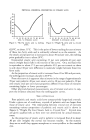
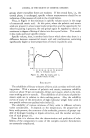
48 JOURNAL OF THE SOCIETY OF COSMETIC CHEMISTS studied and a more scientific basis realized for manufacturing control. This could be particularly useful in determining the permissible latitude in operating conditions to meet finished product standards. CONCLUSIONS The explanation for the generally wide use of the 55 per cent palmitic- 45 per cent stearic acid proportions occurring normally in commercial stearic acid may have its basis in the phenomena just discussed. Consider the combination of properties provided: 1. Melting point is at a relatively flat part of the curve. 2. Relatively larger crystals are obtained than with mixtures containing smaller or larger palmitic/stearic acid proportions. 3. Specific volume is at a minimum. 4. Molar proportions are approximately equal. 5. Solubility is near the maximum value obtained at the eutectic. 6. X-ray diffraction pattern indicates presence of a single form--the stable C type of the pure components. There are many problems in the development of cosmetic formulations. Questions on the physical characteristics, performance properties, and con- sumer acceptance of a particular product are complicated by factors out- side those mentioned in this review, such as odor, color, pearlescence, shrinkage, hardness, toughness, and texture. In many cases, practical experience in formulations and manufacturing conditions has been the major basis for the development of satisfactory products. Basic physical chemical data of such complex mixtures are not available as they must be developed for each formulation. However, more basic data on the physical chemical characteristics of cosmetic formulations should be considered a practical matter in their development. Such knowledge is useful in arriving at a scientific basis for satisfactory formulations and in determining the latitude in formulation and manufacturing conditions to obtain the desired uniformity of quality in the final products. BIBLIOGRAPHY (1) Bailey, A. E., "Melting and Solidification of Fats," New York, Interscience Publishers, Inc. (1950). (2) Ralston, A. W., "Fatty Acids and Their Derivatives," New York, John Wiley & Sons, Inc. (1948). zfcknow/edgment: The author is indebted to Dr. E. S. Lutton and Dr. F. B. Roseyear for their advice and helpfulness in providing some of the physical-chemical data for this paper.
Purchased for the exclusive use of nofirst nolast (unknown)
From: SCC Media Library & Resource Center (library.scconline.org)