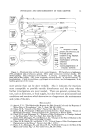
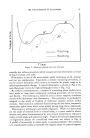
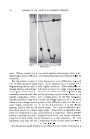
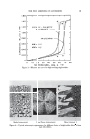
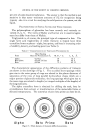
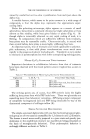
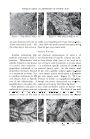
THE POLYMORPHISM OF GLYCERIDES 31 rained by careful but not too slow crystallization from melt just above the alpha m.p. A notable feature, which seems to be quite common in a wide range of compounds, is that the alpha m.p. represents the approximate super- cooling limit. Under the polarizing microscope, alpha appears as a mosaic of small spherulites beta prime is commonly obtained as bright spherulites or from solvent as fine needles, while beta gives blades or plates (Fig. 4). Al- though alpha is invariably obtained on any rapid cooling of melt, it is fleeting. In compositions which are sufficiently different from tristearin, beta prime may be reasonably stable. Characteristically, in accord with their crystal habits, beta prime is more highly stiffening than beta. An important point, true of tristearin and widely applicable to polymor- phic substances, is that solid phase transformations occur much more rapidly in the presence of solvent (including oil). Tripalmitin is very similar to tristearin in polymorphism but with lower corresponding melting points. MIXED C•0-C•s SATURATED TRIGLYCERIDES Important deviations in solidification behavior from that of tristearin have been observed with the mixed palmitic-stearic triglycerides as seen in Table 2. TABLE 2--POLYMORPHISM OF MIXED C16-Cls SATURATED TRIGLYCERIDES (6) Triglyceride C.M.P., o C. Forms Other Than Alpha SPS 68.5 Beta only PSS 65.2 Beta prime from melt, beta from solvent PSP 68.6 Beta prime only SPP 62.7 Beta prime and beta The striking points are, of course, that SPS entirely lacks the highly stiffening beta prime form while PSP lacks beta. These two glycerides are something more than laboratory curiosities--SPS being a major component of completely hydrogenated lard and PSP being obtainable by way of the disaturated component of stillingia tallow (8). SIMPLE SATURATED DIGLYCERIDES The simple saturated diglycerides with one free hydroxyl group per glyc- erol group are of two types as exemplified by 1,3-distearin and 1,2-distearin. The former is much more readily prepared in a pure state and greatly pre- dominates in the equilibrium mixture (an equilibrium being presumed on the basis of monoglyceride behavior). Their polymorphic behavior is strikingly different as shown in Table 3.

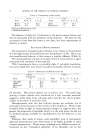
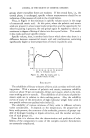
32 JOURNAL OF THE SOCIETY OF COSMETIC CHEMISTS TABLE 3--COMPARISON OF D•STEAR•NS 1,3 (6) 1,2 (9) Form M.P., øC. L.S., fk. Form M.P.,ø C. L. S., _ Beta-a 77.7' 50.2 Alpha 59.5 54.5 Beta-b 78.2 52.8 Beta primer 71 48.3 * Dielectric Measurements (3b). t Altered nomenclature. The absence of alpha for 1,3-distearin is the most unusual feature and may be associated with the symmetry of the molecule. The basis for the occurrence of two beta-like forms is not clear, but their separateness of identity is certain. SATURATED MONOGLYCERIDES The saturated 1-monoglycerides normally occur almost to the exclusion of 2-monoglycerides, the equilibrium ratio being about 9:1 (10). Here, too, the crystallization behavior of the isomers is notably different (Table 4). The monomorphism and lack of an alpha form for 2-monostearin is again associated with symmetry of the molecule. With 1-monostearin there is a reversible alpha ,•- sub-alpha transforma- tion and a stable beta form which crystallizes from polar solvents in beauti- TABLE 4--COMPARISON OF MONOSTEARINS (6) , 1-Mono . - -2-Mono , Thermal Pt., Form øC. L.S., •. Form M.P., øC. L.S., -•. Sub-alpha 49 50.3 Alpha 74 50.2 Beta prime 78 50.1 Beta 81.5 50.1 Form I 74.5 43.8 ful platelets. Beta prime appears out of solvent only. The small long- spacing of alpha (smaller than calculated for a fully extended molecule) suggests a tilted alpha form, although alpha typically has chains perpen- dicular to the plane of molecular ends. Monoglycerides, with two free hydroxyl groups per molecule, are of particular interest because of their surface active properties. Phase study normally sheds no light on these properties except in a negative way the greater the proportion of emulsifier which is in the solid phase the less are its hydroxyl groups available for emulsification, but the behavior is not simple. Whatever their mode of action, solid emulsifiers such as monostearin (glyceryl monostearate) have been found to be highly desirable in some cosmetic preparations. Phase study, including x-ray diffraction, gives in- formation on the "consistency potential" of an emulsifier, not on the
Purchased for the exclusive use of nofirst nolast (unknown)
From: SCC Media Library & Resource Center (library.scconline.org)