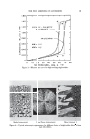
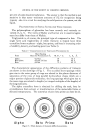
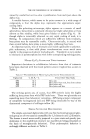
THE POLYMORPHISM OF GL¾CERIDES 33 stiffening arising from any emulsification per se, but rather on the stiffening due to the network of solid crystallites. The typical monostearate of commerce is a mixture of mono-, di-, and triglycerides, and the information of Table 4 on 1-monostearin cannot be applied without discrimination. The data would pertain somewhat more directly to, e.g., Myverol 1805, a product of high monostearin content. DISATURATED TRIOLYCERIDES Disaturated triglycerides melt sufficiently high that they may be of in- terest as solid components of cosmetics. Cacao butter which is about 75 per cent disaturated (the remainder being mainly monosaturated) is fre- TABLE 5---COMPARISONS OF 2- AND I-OLEYLDISTEARIN (11) ..... 2-Oleyldistearin , - 1-Oleyldistearin - Form M.P., øC. L .S., •. Form M.P., øC. L. S., •k. Alpha-3 22.4 80 Alph a-3 30.4 80 (Beta prime*-3 35 68) Beta Prime-3 43.5 70.8 Sub-beta-3 36.2 73 Beta-3 44.3 64 * From solvent only. quently used. The range in type of solidification behavior of disaturated glycerides is suggested by the accompanying Table 5 for oleyldistearins. All forms of both glycerides have triple-chain-length structures, i.e., there is a segregation of saturated from unsaturated chains (6). There is a greater spread in m.p. between the lowest and highest melting forms of 2-oleyl- distearin than between those of the isomer. Stable forms are of beta and beta prime type, respectively. Discussion There are, in the glyceride family, solid compounds which show a wide variety of solidification behavior--different levels of melting, different de- grees of supercooling, most of them with only irreversible but some with re- versible transformations. There are compounds with different stiffening powers associated with different crystal habits. And there is a range from the entirely nonemulsifying solid triglycerides to the strongly surface-active solid monoglycerides. The information which has been tabulated for various glyceride types is only a beginning toward the preparation and control of cosmetic prepara- tions involving such materials, but the importance of mastery of the be- havior of possible components of a system cannot be over-emphasized in formulation problems. And as has been said, many of the types of solidifi- cation behavior exhibited by the various glycerides are also found among other solidifying cosmetic materials and the same tools which have been

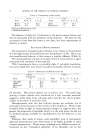
34 JOURNAL OF THE SOCIETY OF COSMETIC CHEMISTS useful in exploring glyceride behavior, specifically x-ray diffraction, are eminently suited for these non-glyceride materials. BIBLIOGRAPHY (1) N. D. Fulton, E. S. Lutton, and R. L. Wille, y. alm. Oil Chem. $oc. al, 98 (1954). (2) A. E. Bailey and E. A. Kraemer, Ibid. 21,251 (1944). (3) (a) R. W. Crowe and C. P. Smyth, 2 t. aim. Chem. $oc. 72, 4427 (1950). (b) R.W. Crowe and C. P. Smyth, lbid. 72, 5281 (1950). (c) R. W. Crowe and C. P. Smyth, Ibid. 7:t, 2040 (1950). (4) O.T. Quimby, 2 t. aim. Chem. $oc. 72, 5064 (1950). (5) A. E. Bailey, "Melting and Solidification of Fats," Interscience Publishers, Inc., New York (1950). (6) E. S. Lutton, 2 t. aim. Oil Chem. $oc. 27, 276 (1950). (7) (a) T. Malkin in "Progress in the Chemistry of Fats and Other Lipiris," Vol. I, Academic Press, Inc., New York (1952). (b) T. Malkin, Ibid., Vol. II (1954). (8) E. S. Lutton and F. L. Jackson, •t. aim. Chem. $oc. 72, 3254 (1950). (9) R. J. Howe and T. Malkin, 7. Chem. $oc. 7:t, 2663 (1951). (10) J. B. Martin, Ibid., 75, 5483 (1954). (11) E. S. Lutton, Ibid., 7:t, 5595 (1951). THE SEQUENCE OF EVENTS IN THE DEVELOPMENT OF AN ECZEMATOUS SENSITIZATION* By ADOLPH ROSTENB.SX % Jz., M.D. University of Illinois, Chicago, Ill. THE TYPE OF sensitization that ordinarily develops to ingredients used in cosmetics is the eczematous variety of the delayed type of allergic sensitization. The usual kind of substance which causes this type of sensitization to come into being is commonly referred to as a "simple chemical." To the immunochemist, this seemingly vague designation has a reasonably precise connotation. It denotes a compound whose structural configuration is known in contradistinction to a substance such as a pro- tein, for which the exact structural formula could not, at present, be determined. Now, if simple chemicals are the usual substances which en- gender this type of allergic sensitization, it is obvious that not any simple chemical will do otherwise, practically everything that is encountered would cause a sensitization. As is well known, there are many simple chemicals, e.g., water, salt, iron, etc., to which allergic eczematous sensitiza- tions never develop. In other words, the simple chemical must have a certain attribute. This is the ability to enter into some sort of union with a protein molecule (?) without too markedly disturbing its structure. The type of union which has been most thoroughly studied is the one in which a * Presented at the October 12, 1954, Meeting, Chicago, Ill.
Purchased for the exclusive use of nofirst nolast (unknown)
From: SCC Media Library & Resource Center (library.scconline.org)