USES AND NEWER APPLICATIONS OF SILICONE COMPOUNDS 25 silicone fluids have been found to be very effective in the prevention of diaper rash, or a contact dermatitis due to fecal contents emanating from a recent colostomy which soils the adjacent skin. We have been treating patients who are very susceptible to poison ivy and poison sumac. They have used the silicone preparations previously mentioned as prophylactic measures successfully. The silicone formulations serve to prevent the allergenic effect of the poison ivy allergen upon the skin. We suggest that a more effective preparation in the prevention of the poison ivy is the combination of the zirconium compounds dispersed in a silicone greaseless cream. In conclusion, we have outlined laboratory and clinical methods of evaluating the relative cutaneous protection afforded by topical applica- tions of silicone fluids in various vehicles. These results can be affected by changes in environmental temperature and humidity, the concentration of the specific contactant, and the individual altered physiology of the pa- tient's epidermis. This paper suggests that the dermatologist and the cosmetic chemist have merely "scratched the surface" of the symbolic crystal ball in reference to significant future applications of these non-toxic, versatile and unique chemical compounds--the silicone fluids. BIBLIOGRAPHY (1) Tajkowski, E.G., and Reilly, T. H., "Silicones: Properties and Possible Uses in Cos- roetics," Proc. $ci. Sect. Toilet Goods .4ssoc., No. 20 (1953). (2) Talbot, J. R., MacGregor, J. K., and Crowe, F. W., "The Use of Silicone as a Skin Protec- tant," 2'. Investigative DermatoL, 17, 3 (1951). (3) Finnerty, E. F., "Silicone Protectives--A Clinical Evaluation," Ind. Med. and $urg., 23, 4 (1954). (4) Suskind, R. R., "Industrial and Laboratory Evaluation of a Silicone Protective Cream," dlrch. Ind. Hyg. and Occ. Med., 9, 101-112 (1954). (5) Morrow, G., "The Use of Silicones to Protect the Skin," Calif. Medicine, 80, 1 (1954). (6) LeVan, P., Sternberg, T. H., and Newcomer, V. D., "The Use of Silicones in Derma- tology," Ibid., 81, 3 (1954). (7) Piein, J. B., and Plein, E. M., "A Preliminary Study of Silicone Oils as Dermatological Vehicles," •. •lm. Pharm. •lssoc., Sci. Ed., 42, 79 (1953). (8) Suskind, R. R., "Industrial and Laboratory Evaluation of a Silicone Protective Cream," •lrch. Ind. Hyg. and Occ. Med., 9, 101-112 (1954). (9) Smith, C. C., Day, T. L., and Zimmerman, E. H., "Studies of a Nitrocellulose Silicone Cream as a Skin Protectant Against Eczematogeneous Contact Allergens," 5 t. Investiga- tive DerrnatoL, 21, 2 (1953). Madsen, A., "Patch Test on Skin Prepared with Kerodex (Invisible Glove)," •lcta Derrnato-I/enereol., 32, 213 (1952). Abbott Laboratories, personal communication to United States Testing Co., Inc., Ho- (10) (11) boken, N.J. (12) Reiches, A. J., "Angular Stomatitis Treated with Sillcote Ointment," drch. Derrnatol. and SyphiloL, 68, 3 (1953). (13) Brown, J. B., Fryer, M.P., Randall, P., and Lu, M., "Silicones in Plastic Surgery," Plastic and Recons. Surg., 12, 5 (1953). (14) Schwartz, L. Mason, H. S., and Albritton, H. R., "A Method for the Evaluation of Pro- tective Ointments," Occupational Med., 1, 376 (1946). (15) Birmingham, D. J., "Alterations in the Skin Physiology Following Continuous Use of Soaps and Detergents," presented before the Society of Cosmetic Chemists, New York, December 9, 1954.

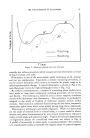
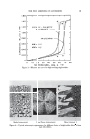
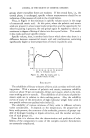
26 JOURNAL OF THE SOCIETY OF COSMETIC CHEMISTS (16) Anderson, D. S., "The Acid-base Balance of the Skin," Brit. y. Dermatol., 63, 283 (1951). (17) Sharlit, H., and Sheer, M., "The Hydrogen Ion Concentration of the Surface on the Healthy Intact Skin," .4rch. DermatoL and $yphilol., ?, 592 (1923). THE POLYMORPHISM OF GLYCERIDES--AN APPLICATION OF X-RAY DIFFRACTION* By E. S. LUTTON Research and Development Department The Procter & Gamble Company, Cincinnati 31, Ohio THv, so•,m COMPONENTS of cosmetic creams are dispersed as micro- crystals in oily bases, and with respect to consistency this solid is of vastly greater significance than the liquid base. Some cosmetic formulations contain solid glycerides familiar to the edible fat industry, e.g., cacao butter and glyceryl monostearate. A survey of glyceride crystallization, a subject which has received much study in that industry, should therefore be useful to the cosmetic chemist, not only because of the information on the glycerides themselves but also because the techniques used and the types of observations made are apt to be generally applicable to other solidi- fying materials used in cosmetics, e.g., cetyl alcohol and wax esters. Most of the practical glycerides of commerce are mixtures, but in arriving at a fundamental understanding of mixtures the first step should be an in- vestigation of their major components the present discussion is limited to pure chemical compounds. Naturally there are many similarities between the behavior of pure glycerides and their practical mixtures. However, mixing components may introduce important new features. There are numerous ways of studying the solid state--many quite familiar and widely used. Of these the melting point is known to all and has innumerable variations. Valuable as it obviously is, it is too often stretched beyond its applicability all it can properly do is show the temperature of melting (or solution) of the last or very near the last solid in the system. The thermal (cooling or heating) curve is somewhat related to the melting point but is run on a larger sample (1 to 100 g.). It can show many features: the supercooling limit, something of the rate of crystallization, very roughly the amount of solid, the occurrence of different crystalline forms it can be a particularly effective characterizing device. See Fig. 1 for examples. The technique can be refined to the level of calorimeter, a * Presented at the December 9, 1954, Meeting, New York City.
Purchased for the exclusive use of nofirst nolast (unknown)
From: SCC Media Library & Resource Center (library.scconline.org)