PHYSICAL CHEMICAL PROPERTIES OF STEARiC ACID 41 either of two methods--one a batch, the other a continuous process. The batch method is the well-known Twitchell process. The continuous method employs a hydrolyzer and is carried out at high temperature under pressure. Each method results in converting the glycerides into corre- sponding fatty acids and glycerin. 2. Separation. After saponification or fat splitting, the fatty acids are separated from the glycerin and purified to obtain the desired fatty acids by one or more of the following processes: (a) Pan and Press. This method is normally used with fatty acid mixtures obtained from tallow and grease. The higher molecular weight saturated fatty acids, i.e., stearic and palmitic, will solidify leaving the un- saturated and the lower molecular weight fatty acids (oleic, linoleic, and myristic) in the liquid phase. The particular combination of 55/45 palmitic to stearic acid gives a large-size crystal structure which upon chilling permits the most complete separation of the liquid and solid fatty acids during the pressing operation. Briefly, this consists of chilling the mixture of fatty acids obtained after saponification to about 36-40øF. The solid cakes obtained upon crystallization are then pressed to remove a large portion of the liquid fatty acids. To remove the remaining liquid fatty acids entrained during cold pressing, the pressed cakes are remelted, allowed to crystallize, and repressed in a hot pressing operation at about 100øF. The number of pressings or amount of time in the hot press is the basis for the terminology single, double, and triple pressed grades of commercial stearic acid. (b) Solvent Crystallization. This consists simply of fractional crystal- lization of solid fatty acids from a solvent solution. It may be carried out over a successive number of crystallizations depending upon the degree of purity desired in the final product. This method produces stearic acid with the approximate 55/45 ratio of palmitic to stearic when tallow fatty acids are used. However, different ratios may be obtained depending upon the mixture of palmitic-stearic acids present in the original fatty acid after fat splitting. (c) FractionalDistillation. The fatty acids obtained after fat splitting may be separated into fatty acids of different chain lengths by fractional distillation. This process does not separate saturated from unsaturated fatty acids of the same chain length. For example, oleic has the same chain length as stearic and both will distill at the same temperature. Therefore, to obtain pure saturated fatty acids it is important to separate the saturated from the unsaturated fatty acids by either solvent crystalliza- tion or pressing before fractional distillation. Hydrogenation permits the conversion of unsaturated fatty acids to the corresponding saturated fatty acids. By a combination of hydrogenation and fractional distillation nearly pure saturated fatty acids can be ob-

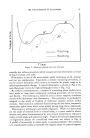
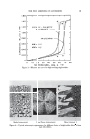
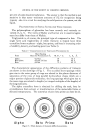
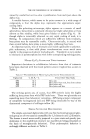
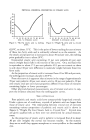
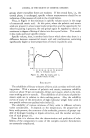
42 JOURNAL OF THE SOCIETY OF COSMETIC CHEMISTS tained. In addition, a fatty acid with a very high stearic acid content can be obtained by hydrogenation of oils such as soybean oil which contains a high percentage of C•8 unsaturated fatty acids, i.e., oleic, linoleic. and linolenic. As mentioned earlier, the major commercial stearic acid is one with a ratio of approximately 55 per cent palmitic and 45 per cent stearic acid. Depending upon the method of manufacture and quality desired, it will contain 90-98 per cent of the mixture of palmitic-stearic acids and up to 10 per cent oleic and myristic acids. The grades most frequently used for cosmetics are double or triple pressed stearic acid. Single pressed stearic acid with its relatively higher proportion of unsaturated fatty acids is un- suited for most cosmetic formulations. Among the foremost users of commercial stearic acid are the cosmetic manufacturers who have found that it best fits the requirements of the cosmetic products possibly because of its unique crystallization behavior. It provides the finished physical properties and performance character- istics which are difficult, if not impractical, to duplicate by other combina- tions of fatty acids. In the cosmetic field, uniformity of finished product characteristics is extremely important. Deviation in crystalline structure can mean varia- tions in appearance, body, texture, etc., of cosmetic creams and pastes. What are the reasons? There are so may factors involved it would be impossible to cover every detail that might be of interest within the limited scope of this review. With this in mind, a number of factors that are of basic interest have been selected. Perhaps a study of some of the physical chemical properties will help us understand them better and thus assist in pointing the way to obtain the desired properties in formulat- ing cosmetic preparations. CRYSTAL STRUCTURE AND MELTING POINT Commercial stearic acid has a well-defined crystalline structure. There is some evidence that this is due to the formation of an intermolecular compound of 1:1 palmitic-stearic acid in the composition range of typical commercial stearic acid. This crystalline structure is related to certain performance characteristics, such as melting point, shrinkage, hardness, toughness, and texture. Palmitic-stearic proportions outside this range will give different, perhaps inferior, crystalline structure, melting point, texture, etc., in the cosmetic preparations. To illustrate this phenomenon, let us examine the typical liquidus (melt- ing point) curve for the binary system palmitic-stearic acid (1). See Figure 1, "Mol per cent Stearic Acid vs. Melting Point." From this curve, it is seen that as the proportion ofstearic acid in palmitic is increased up to about 30 mol per cent the melting point is lowered from
Purchased for the exclusive use of nofirst nolast (unknown)
From: SCC Media Library & Resource Center (library.scconline.org)