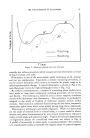
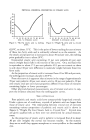
26 JOURNAL OF THE SOCIETY OF COSMETIC CHEMISTS (16) Anderson, D. S., "The Acid-base Balance of the Skin," Brit. y. Dermatol., 63, 283 (1951). (17) Sharlit, H., and Sheer, M., "The Hydrogen Ion Concentration of the Surface on the Healthy Intact Skin," .4rch. DermatoL and $yphilol., ?, 592 (1923). THE POLYMORPHISM OF GLYCERIDES--AN APPLICATION OF X-RAY DIFFRACTION* By E. S. LUTTON Research and Development Department The Procter & Gamble Company, Cincinnati 31, Ohio THv, so•,m COMPONENTS of cosmetic creams are dispersed as micro- crystals in oily bases, and with respect to consistency this solid is of vastly greater significance than the liquid base. Some cosmetic formulations contain solid glycerides familiar to the edible fat industry, e.g., cacao butter and glyceryl monostearate. A survey of glyceride crystallization, a subject which has received much study in that industry, should therefore be useful to the cosmetic chemist, not only because of the information on the glycerides themselves but also because the techniques used and the types of observations made are apt to be generally applicable to other solidi- fying materials used in cosmetics, e.g., cetyl alcohol and wax esters. Most of the practical glycerides of commerce are mixtures, but in arriving at a fundamental understanding of mixtures the first step should be an in- vestigation of their major components the present discussion is limited to pure chemical compounds. Naturally there are many similarities between the behavior of pure glycerides and their practical mixtures. However, mixing components may introduce important new features. There are numerous ways of studying the solid state--many quite familiar and widely used. Of these the melting point is known to all and has innumerable variations. Valuable as it obviously is, it is too often stretched beyond its applicability all it can properly do is show the temperature of melting (or solution) of the last or very near the last solid in the system. The thermal (cooling or heating) curve is somewhat related to the melting point but is run on a larger sample (1 to 100 g.). It can show many features: the supercooling limit, something of the rate of crystallization, very roughly the amount of solid, the occurrence of different crystalline forms it can be a particularly effective characterizing device. See Fig. 1 for examples. The technique can be refined to the level of calorimeter, a * Presented at the December 9, 1954, Meeting, New York City.

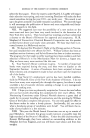
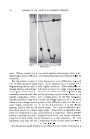
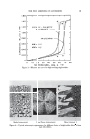
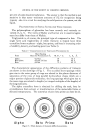
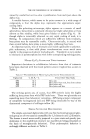
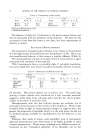
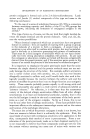
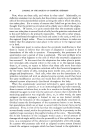
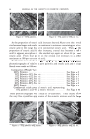
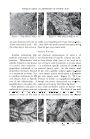
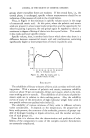
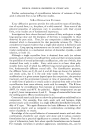
THE POLYMORPHISM OF GLYCERIDES :27 / / ,, / ' Cooling ............ Heating Time Figure l.--Schematic thermal curves for tristearin. valuable but tedious procedure which can give precise information on heat of fusion and per cent solid. Dilatometry is one of the most widely useful techniques of all--precise and not too cumbersome. Essentially a density measuring procedure, it can be used to determine solid content, to describe the plastic range or to indicate polymorphic change. A typical dilatometer is shown in Fig. 2 (1) and dilatometer curves for high melting glycerides in Fig. 3 (2). By dielectric measurements, a number of interesting phase studies have been made on long chain compounds including glycerides (3) by Crowe and Smyth. The technique is sensitive and in many respects correlates closely with calorimetry and dilatometry. The procedure is particularly adapted to the study of freedom of molecular (dipole) motion within crystals. Such motion is commonly found among the less dense, frequently metastable alpha forms which occur widely among long chain compounds. Microscopy is well known and widely employed. While it is best suited for the study of external form or crystal habit, it is quite useful in identi- fication and phase characterization by way of such properties as refractive index, crystal angle and extinction angle. Typical microscopic appearances of triglyceride phases (4) crystallized from melt are shown in Fig. 4. A pitfall of microscopy in phase study is pseudomorphism--the tendency of a transformed crystal to resemble the original phase in external appear-
Purchased for the exclusive use of nofirst nolast (unknown)
From: SCC Media Library & Resource Center (library.scconline.org)