A CLASSIFICATION OF ODOURS AND ITS USES modification to-day. I hope that after the publication of this paper some interested perfumer will have the inclination and be prepared to give the time and patience that will be necessary in undertaking this work. A prerequisite of this investigation was the careful selection of the finest and purest substances, both natural and synthetic, and this involved the repeated examination of all known aromatics from every available source. In view of the cleverness of sophistication, especially of the more expensive materials, this proved to be a long and trying piece of work. But I was fortunate enough to be able to obtain many of the natural products on the spot, in the various countries I visited, which thus guaranteed their purity. Having selected and collected this vast array of priceless bottles, the next step was to decide on what should be the end point of the odour of the contents of each for as is well known, the characteristic note of some natural products may be fleeting while the residual smell lingers on. But since each aromatic substgnce is employed primarily for its typical odour note, I decided to check and re-check the point at which this distinguishing feature disappeared. Moreover, I had to place a time limit on those sub- stances of longest duration, such as patchouli and oakmoss, and I gave them the figure or coefficient of 100. My next step was the acquisition of a large stock of smelling strips, measuring 6 inches by -• inch, all made from the same stock of absorbent paper, and on each I wrote the name of the substance, the date and time of its application. It was important to have approximately equal quantities of the aromatics on the strips, but had I attempted to weigh exactly 100 milligrams of each, or calculated the differences due to their specific gravities, it would have added a further complication which I wished to avoid and moreover, I felt it would not materially influence the time coefficient if I dipped quickly each strip to a depth of exactly one inch. Nevertheless, I made some preliminary tests to determine the differences, and while making no allowance for viscosity found the weights of the majority ranged between 80 and 100 milligrams, with an ultimate length of stain of about 2« inches. This method seemed reasonably satisfactory for the liquids and I adopted it, but I still had to find another method for dealing with the solids, which of course are invaluable and widely used. I therefore prepared 10 per cent solutions of them all in diethyl phthalate, and placed 1 c.c. of each on strips of paper measuring 6 inches by 1 inch, which gave me about the same quantity of each parent substance as the fluids. As a guard against olfactic fatigue I limited the number of samples under examination to four a day, and began by smelling them every hour on the assumption that this figure or coefficient would be adequate. But when I found that most of them exhaled their characteristic odour for days on end I had to modify this view, and to those that evaporated in less than 83

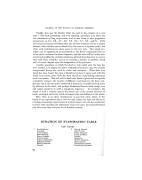
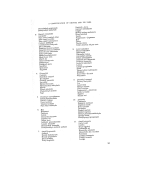
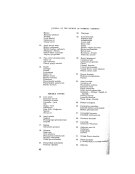
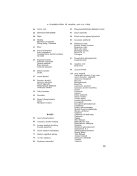
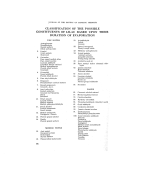
JOURNAL OF' THE SOCIETY OF COSMETIC CHEMISTS one day I gave the coefficient 1, and to the others g to 100. This work went on and on and soon seemed endless, because I had to make repeated tests when the results were doubtful. However, at the end of four years I had finished, and when the substances were grouped under their' respective coefficients, and the groups tabulated progressively from 1 to 100, I had before me a picture that was tantamount to the fractional distillation of any fragrance. But I feel it is necessary to point out at this stage that the application of this Key to the Basis of Perfumery will always depend upon the artistry of the worker in his laboratory, since without imagination it will never produce a masterpiece. A comparison with my other hobby will perhaps more clearly demonstrate my point, as a similar flair is required of the successful landscape photographer. He has travelled to a beautiful part of the country with the sole object of making some pictures of great excellence, and has climbed a low hill to get a glimpse of his subject. But before him spreads an immense panorama, in which are arrayed magnificent mountains, wild canyons, lovely lakes, fine trees and dainty wild-flowers, all crowned by a superb cloud-scape, and he realises at once that a comprehensive shot of this ravishing scene will never make a satisfactory picture, despite its magnetic appeal to the eye. In fact there is enough material here to make a whole series of masterpieces. So he selects one outstanding feature at a time from this medley, and moves about until he discovers a viewpoint from which he can arrange it in a pleasing design ß and only then does he release the shutter of his camera to record a work of art. I am now going to give you a selection from this classification of odours. ? the substances with coefficients from 1 to 14 I will call the Top Notes those from 15 to 60 the Middle Notes and the others from 61 to 100 the( :• ..• Basic Notes or Fixers, because they are fixatives in the usually accepted sense and aromatics which, when skilfully blended, yield the characteristic lastingi!½ note of any fragrance. However, I will return to the problem of fixation!:!! later in this paper. ToP NOTES ' (1) Acetophenone (2) Limes (3) Coriander (4) LavenzS! der' (5) Terpinyl Acetate (6) Bergamot (7) GeranioI (8) Amy!?! Salicylate (9) Peppermint (10) Linalyl Acetate (11) Sweet (12) Methyl Heptine Carbonate (13) Paracresyl Phenylacetate ß and Lemongrass. M•DDLE NOTES: (15) Heliotropin (16) Eugenol (17) Melissa Orris absolute (19) Verbena (20) Clary Sage (21) Anisic Aidehyde the Ionones (22) Orange Flower Water Absolute (23) Broom Absolute?:• (24) Ylang (31) Orange Flower Absolute (34) Celery Root (43) and Rose Absolutes, and (50) Neroly. :!}•zfi• I BASra NOTES ' {65) Cinnamic alcohol (77) Meth 1 Na hthyl Keto
Purchased for the exclusive use of nofirst nolast (unknown)
From: SCC Media Library & Resource Center (library.scconline.org)