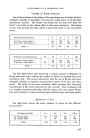
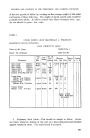
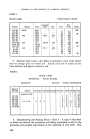
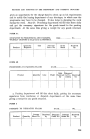
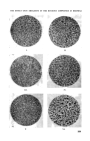
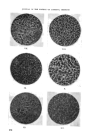
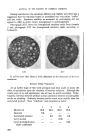
JOURNAL OF THE SOCIETY OF COSMETIC CHEMISTS by the effect of adding an oil soluble dye to the creams, the cream made from acetylated beeswax is susceptible to certain added ingredients, this effect not being apparent in the cream made from the untreated beeswax. Emulsions of the w/o type based on beeswax and lime water are not materially effected when the beeswax is replaced by acetylated wax. The limited solubility of beeswax in mineral oil is somewhat increased by acetylation and the viscosity of the dispersion is enhanced. In attempting to assess the effect of adding compounds which contain hydroxyl groupings to the acetylated beeswax there are obvious difficulties to be considered. In the first place, the exact nature of the beeswax "alcohols" are not known or at any rate not available in the literature. They may be hydroxy acids, hydroxy alcohols, any one of a variety of alcohols or, indeed, a combination of these types. The selection of cetyl alcohol was an obvious step, as this approximates to the straight chain fatty alcohols which are mentioned in the literature. The ethylene oxide condensate was selected as a contrast to the oil-soluble cetyl alcohol. THE EFFECT OF REINTRODUCING HYDROXY COMPOUNDS TO ACETYLATED BEESWAX (A ) Cetyl alcohol When used in conjunction with acetylated beeswax as in cream E, the pH of this cream is 8.5 compared with 8.7 to 8.8 for creams A and B. If anything, the presence of cetyl alcohol enhances the ease of manufacture of the cold c•eam, but tends slightly to reduce the shiny surface and to cause a more granular structure. On standing in jars the presence of cetyl alcohol appeared to have pre- prevented shrinkage but did not inhibit water loss from the cream. In the early stages cetyl alcohol, judged from the microscopical examination, seems to have improved the emulsion based on acetylated wax, but on standing the cream is far from uniform. (b) Cetyl alcohol/ethylene oxide condensate. The above product appears slightly to increase the pH of the cream based on acetylated beeswax. Its most significant effect is the reduction in vis- cosity of the cream. The improvement in the acetylated beeswax cream due to the presence of the ethylene oxide condensate is most marked so far as particle size and stability are concerned. SUMMARY AND CONCLUSIONS It is well known that additions oI certain hydroxyl-containing compounds to surface-active agents often result in improved emulsifying performance. The acids present in beeswax form soaps with bases and it is possible that the alcohols present in the wax form complexes with the soap to produce 274

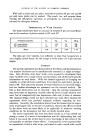
THE EFFECT UPON EMULSIONS OF THE HYDROXY COMPOUNDS IN BEESWAX emulsifiers which are responsible for the peculiar properties of beeswax. Regrettably, little published information on the nature of "alcohols" in beeswax is to be found. In order to determine the effect of the beeswax alcohols on emulsions made from this wax the free hydroxyl groups were blocked by acetylation. Although we are now dealing with a changed ratio value it has been shown that acetylated beeswax lacks many of the adrnirable emulsifying properties of the untreated wax. A cold cream made from the acetylated wax possesses larger particle size and is relatively unstable when compared to the normal cold cream. To some extent the performance of this cream can be improved by re- introducing compounds which contain hydroxyl radicles. It would appear that cetyl alcohol is too oil-soluble and the ethylene oxide condensate too water soluble adequately to replace the alcohols removed by acetylation. Further work (unpublished) has shown that a careful selection of other hydroxyl compounds used in their correct proportions in conjunction with acetylated beeswax will lead to a cream quite as good as the cream made from the untreated beeswax. In fact, it is fair to say that the additions have, in some respects, resulted in creams with improved properties. Cream A, which may be regarded as a "normal" cold cream, can be greatly improved in many ways, e.g., smaller particle size, attractive appearance, inhibition of water-loss, stability of the emulsion, by the addition of small amounts of hydroxyl-containing materials. The fact that acetylation does not greatly affect the properties of beeswax as a w/o emulsifier is not surprising. The formation of calcium soaps with the beeswax acids results in a reasonably efficient w/o emulsifier and its properties would not be greatly influenced by small additions of alcohols. The above work indicates that the rather unusual emulsifying properties of beeswax depend to some extent upon the presence of alcohols or, at any rate, compounds which contain hydroxyl radicals. This effect does not appear to be generally recognised and certainly little attention is given to it in the literature. It is therefore suggested that more attention could be given to the acetyl value of beeswax during analysis and general estimation of its properties. I acknowledge with thanks the laboratory experiments undertaken by Mrs. P. Mitchell and Miss E. Parmenter, and the general help and ad¾ice given by Mr. Geoffrey Pickthall, especially as far as the photomicrography is concerned. 275
Purchased for the exclusive use of nofirst nolast (unknown)
From: SCC Media Library & Resource Center (library.scconline.org)