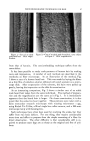
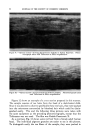
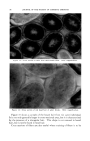
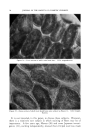
96 JOURNAL OF THE SOCIETY OF COSMETIC CHEMISTS . Figure 17.--Cross section of adult male beard hair, same subject as Figure 16. 310X magni- fication. It is not intended, in this paper, to discuss these subjects. However, there is a relatively new subject in which staining of fibers may be of imp. ortance. A few years ago, Mercer (10) and some Japanese investi- gators (11), working independently, showed that crimped wool was made

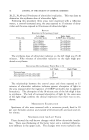
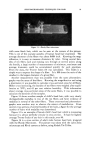
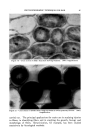
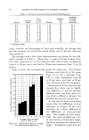
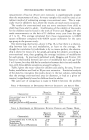
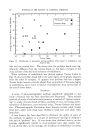
PHOTOMICROGRAPHIC TECHNIQUES FOR HAIR 97 up of two rather differently constituted hemicylinders, the positions of which are exactly related to the curve of the crimp wave. There are a number of ways of showing this, as a previous seminar of this SOCIETY has already heard (12). The dye-accessible portion has been designated as the orthocortex the nondye-accessible portion, the paracortex. Du- senbury and Jeffries (12) presented some evidence that human hair was essentially paracortex, but their investigation did not go into the question of whether curly and kinked human hair had any bilateral character, or whether chemical treatments had any effect on the hair that could be observed in this fashion. These are subjects worthy of further study. PHOTOMICROGRAPHY IN THE STUDY OF PERMANENT WAVING "PROBLEMS" Having described some of the photomicrographic methods that are particularly suited to the study of hair, their utility will now be illustrated by the following brief description of part of an investigation carried out in connection with permanent waving. It is well known that some hair, for reasons that are not always obvious, is more difficult to wave than usual. It has often been said that this occurs more frequently with chil- dren's hair than with adult hair. The purpose of the investigation was to see if any physical characteristics of the hair could be correlated with the waving problems. A group of ten children (ages 4i/2 to 12) and a group of ten adults (ages 15 and over) were used. On the basis of past permanent waving history, these were selected to have a higher incidence of "problems" than the usual cross section of the population. The existence of "problems" was confirmed by giving waves in the experimental beauty shop and by laboratory waving studies of samples of the hair. From these results, six of the individuals were classified as "problem heads." In addition to measuring diameters, Trotter Indexes, cross-sectional TABLE 1--AVERAGE CHARACTERISTICS OF CHILDREN'S HAIR SAMPLES Sample Load, gm., Area Medulla- per Hair Trotter X l0 t, don, at 20% Index sq. in. Density % Extension C-1 64.8 5.04 1.10 45 C-2' 77.2 5.11 1.19 30 1•' 8 C-3' 90.6 5.96 1.17 50 17.8 C-4 80.0 5.39 1.23 50 17.2 C-5 74.7 5.07 1.22 30 16.2 C-6 72.2 4.80 1.23 40 15.3 C-7' 85.6 5.13 1.20 10 C-8' 66.0 5.94 1.13 0 c-9' 75.2 4.70 1.15 15 C-10 63.6 6.60 1.09 20 * "Problem" hair.
Purchased for the exclusive use of nofirst nolast (unknown)
From: SCC Media Library & Resource Center (library.scconline.org)