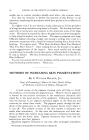
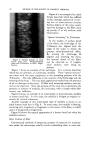
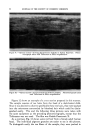
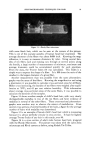
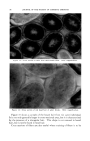
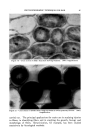
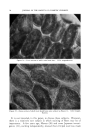
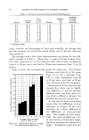
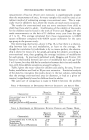
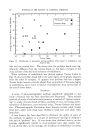
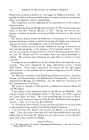
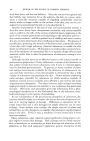
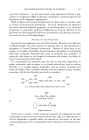
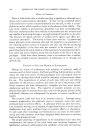
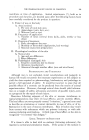
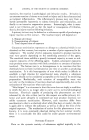
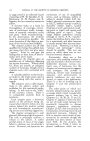
100 JOURNAL OF THE SOCIETY OF COSMETIC CHEMISTS lOO 8o-- 60-- 40-- 20 _ 0 60 © I "Problem" Hair Norraal Hair © ß © © ß ß ß ß 65 70 75 80 85 90 95 Trotter Index lOO Figure 19. Distribution of permanent waving problems with respect to medullation and shape of hair. hair and the normal hair. This shows that the problem heads were sig- nificantly different from the normal heads on the basis of shape of the cross sections of the hair and incidence of medullation. When incidence of medullation was plotted against Trotter Index in Fig. 19, all six problem heads fell in the same region of the graph, separate from the other 14 samples. It appears that problem hair has a higher Trotter Index (nearer a circular shape) than normal hair of the same degree of medullation, and a lower incidence of medullation than normal hair of the same Trotter Index. SUMMA RY A series of photomicrographic methods specifically applicable to the study of human hair has been described and illustrated. These include methods of study of cuticular scale patterns, a method of "optical section- ing" to study internal detail of fibers, methods of cross sectioning, deter- minations of diameters, cross-sectional areas, Trotter Indexes and densi- ties. Photomicrographs illustrating these features include adult female head hair, adult male head hair, children's head hair and adult male beard hair. A case history has been described to illustrate the utility of some of the methods as applied to a study of permanent waving of children's hair and of "problem" hair. It was shown that children's hair is, on the average, significantly smaller in cross-sectional area than adults' hair. It was shown that, on the average, the incidence of medullation increases

FIXED PHASE OR CARRIER IN CHROMATOGRAPHY 101 with cross-sectional area of hair. It was shown that "problem" hair has a higher Trotter Index (nearer a circular shape) than normal hair of the same degree of medullation, and a lower incidence of medullation than normal hair of the same Trotter Index. dcknowledgements: The authors wish to express their appreciation for the skilled assistance of W. F. Munn and Mrs. Elsa Knitl in taking the photomicrographs. REFERENCES (1) Shillaber, C. P., "Photomicrography in Theory and Practice," John Wiley and Sons, Inc., New York (1945). (2) Barnard, J. E., and Welch, F. V., "Practical Photomicrography," Arnold Publishers, London (1936). (3) Wildman, A. B., "The Microscopy of Animal Textile Fibres," Wool Industries Research Association, Torridon (1954). (4) Heyn, A. N.J., "Fiber Microscopy," Interscience Publishers, Inc., New York (1954). (5) Munn, W. I5'., U.S. Patent No. 2,537,846, January 9, 1951. (6) Munn, W. I5'., Research Comments, 3, No. 1 (1951). (7) Munn, W. I5'., and Evans, R. L., Proc. Sci. Sect. Toilet Goods aissoc., May (1952). (8) Munn, W. I5'., Exakta, 2, 2, 6 (1953). (9) Trotter, M., and Duggins, 0. H., aim. 5•. Phys. ainthropoL, 6, 489 (1948). (10) Mercer, E. H., Textile Research pc., 23, 388 (1953). (! 1) Horio, M., and Kondo, T., Ibid., 23, 373 (1953). (12) Dusenbury, J. H., and Jeffries,•,., •7. Soci Cosmetic Chem., 6, 355 (1955). (13) Duggins, O. H., and Trotter, M, aim. 5•. Phys. ainthropoL, 8, 399 (1950). SOME REMARKS ON THE NATURE OF THE FIXED PHASE OR O F THE CARRIER IN GAS-LI QUID PARTI- TION CHROMATOGRAPHY OF ESSENTIAL OILS AND AROMATICS* By YvEs-RENf• N^vEs, D.Sc. L. Givaudan and Co., Ltd., Vernier, Geneva, Switzerland WE s•ovI.•) on no account neglect or underrate the fact that the constituents of essential oils or aromatics may be altered on contact with the fixed phase or the carrier in gas-liquid partition chromatography. Most of the constituents of the essential oils and most of the aromatics have to be examined by gas-liquid partition chromatography at relatively high temperatures because of the prerequisites for the functioning of the usual detectors. Substances used for the fixed phase or as carriers which are appropriate for the analysis of less fragile substances or at lower temperatures are quite unsuitable here. It is considered necessary to mention these facts because some workers appear to be unaware of them, and others underrate their importance. It is essential that an analytical technique, whose use can be invaluable * Presented at the August 2, 1957, Meeting, Geneva, Switzerland.
Purchased for the exclusive use of nofirst nolast (unknown)
From: SCC Media Library & Resource Center (library.scconline.org)