128 JOURNAL OF THE SOCIETY OF COSMETIC CHEMISTS ROLE OF VEHICLE There is little doubt that a vehicle may play a significant, although not a direct, role in percutaneous absorption. It may not be considered direct in the sense that it carries a material directly into the cell, or that it accom- plishes an action which would not occur in the absence of the vehicle. The role of the vehicle in percutaneous absorption has been overemphasized. One must understand that some vehicles in themselves are skin irritants and are capable of producing damage or an unphysiological condition in the skin. The presence of organic solvents or surface-active agents may affect per- cutaneous absorption. The action in these cases may be: (1) permitting better physical contact between skin and the material to be absorbed or (2) reducing surface tension of materials and skin and thereby producing better wettability of the skin with the material to be absorbed or (3) permitting better physical solution of the material to be absorbed and there- fore easier and more complete access into the lumen of the ducts of the ap- pendages. Aside from these, however, there is no evidence that a vehicle, per se, can actually promote absorption of substances in or through the dermal cells. EXTENT OF USE AND DESIGN OF EXPERIMENT During the course of conferences with members of technical staffs of concerns and by direct inquiry, the Food and Drug Administration is often asked the type and nature of pharmacological and toxicological tests on products to develop data which would be adequate to demonstrate safety for use. The requirements or extent of such tests will vary and will be dependent on the manner, condition and extent of use of the product itself. Some cosmetics are used infrequently examples are hair wave lotions, depilatories and hair dyes. The majority of cosmetic products are em- ployed often daily to several times a day, and over the greater portion of the individual's lifetime, not infrequently by persons in various conditions of health. The cosmetic itself may vary in its inherent toxicity. Although many cosmetic preparations are relatively inert or nontoxic, some may exert profound local or systemic effects. A substance which can alter hair struc- ture to permit waving, or one capable of rapid keratolysis, as in the case of depilatories, may exert profound local or systemic effects on absorption. In such cases their toxicology and limitations in use must be well under- stood, and such products must bear adequate label directions to prevent harm to the prospective user. The proper planning of experiments to be undertaken must take into consideration the extent of the total body area involved, frequency of application, amounts administered and condition of the skin and mucous

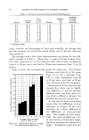
THE PHARMACOLOGIST DELVES IN COSMETICS 129 membrane at time of application. Animal experiments (7), both as to procedure and duration, are decided upon after the following factors have been carefully considered for the product in question: I. Extent of use on the body A. Area involved 1. Per cent of total skin area 2. Appendages (nails, hair, etc.) 3. Mucosae (oral or eye) B. Frequency of application 1. Number of times (several times daily, daily, weekly or less often) C. Duration of treatment 1. Daily throughout the year 2. Monthly or bimonthly (depilatories, hair waving) 3. Seasonal (sunscreen preparation) II. Physiological condition of the skin A. Normal skin 1. Age and sex differences 2. Race differences B. Pathological (damaged) skin 1. Eruptive conditions due to disease 2. Abrasions (mechanical) 3. Abnormal through weather effect (sun and wind burn) PH^R•a^eOI. O•¾ ^•rI• ToxieoI. o•¾ Although man is not excluded, moral considerations and jeopardy to human life would not permit the necessary experiments on this subject to yield the data required on pharmacology, biochemistry and pathology to permit a full appraisal of safety. It would be incorrect to state that all possible effects of a cosmetic can be predicted from the results of animal experimentation. However, thorough animal data should yield informa- tion on a margin of safety, seriousness and extent of possible injury, even to a prognosis for the repair of such injury. Reactions following exposure of the skin or mucous membranes to topical preparations may elicit (1) local effects and (2) systemic effects. The local effects are more properly termed "irritations," a general term used to describe an eczematous or contact dermatitis in case of skin, or of in- flammation in the case of mucous membranes. Skin irritation may result from contact with substances which are primary irritants, or with sub- stances producing sensitizations. A third type of local effect on the skin is recognized--it is termed "skin fatigue." LocAl. TOXICITY OR IRRITATION If a tissue is able to deal with an excitant (irritating substance), the reaction is normal and stimulation results. If the action of the excitant is
Purchased for the exclusive use of nofirst nolast (unknown)
From: SCC Media Library & Resource Center (library.scconline.org)