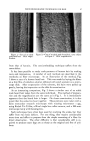
126 JOURNAL OF THE SOCIETY OF COSMETIC CHEMISTS with their ducts and the hair follicles). Since the coarser sweat glands and hair follicles may extend as far as the subcurls, the skin, in a sense, repre- sents a sieve-like structure capable of engulfing considerable material which, while no longer visible on the surface of the skin, may not be con- sidered to have penetrated the skin or to be absorbed by it. Another characteristic of the skin of man and warm-blooded animals is that the outer horny layer desquamates constantly and uninterruptedly and, in addition, the cells of the various epidermal layers, beginning at the level of the stratum granulosum and extending to the outermost portion-- the stratum corneum--exhibit a gradual loss of viability and water content. It is also in these latter layers that cornification takes place. The process of cornification, producing the keratins of the horny layer, endows this section of the skin with tough refractory chemical substances to enable the skin better to withstand trauma. All this points to evidence that a primary func- tion of the epidermis of mammalian skin is to exclude, slough off and expel materials rather than to abet the penetration of substances coming in con- tact with it. Although the skin serves as an effective barrier to the inward transfer or percutaneous penetration of many substances, a review of the literature on this subject reveals that many substances, even if only to a limited degree, may be absorbed percutaneously. In general, as better methods of chem- ical analysis have become available for the detection of substances in tis- sues and body excretions, it has been possible to demonstrate that a wide variety of substances may penetrate the skin. Newer technics employing radio isotopes, especially for substances for which sensitive methods of chemical analysis are not available, have afforded a new tool for the study of percutaneous absorption. Too often, however, radio isotopes have been employed simply to demonstrate whether or not a substance has penetrated the skin. Obviously, such procedures give little information from a phar- macological standpoint as to the biochemical fate of the substance, meta- bolic end products or the toxicity of metabolites. In our consideration of the percutaneous absorption of substances, dis- tinction should be made as to whether the skin at the time of exposure is in- tact or in varying degrees of damage. Differences in absorption (6) be- tween intact skin and a skin damaged by simple abrasions can be most striking. Some workers even consider the simple removal of sebum and cell detritus, as with detergents, as capable of producing an unphysiological state in the skin. If this is true, a condition of truly normal skin is more rare than realized. Many substances, upon repeated topical application, bring about a cer- tain degree of serious skin damage. Such damage may be simple macera- don or keratolysis, or as ,extensive as frank fissuring and ulceration of the epidermis, so that with subsequent application greater absorption of the

THE PHARMACOLOGIST DELVES IN COSMETICS 127 material is obtained. On the other hand, some substances produce a pre- cipitant or coagulative effect on the skin, resulting in a lessened capacity for absorption with subsequent applications. Both artificial and natural membranes have been used to simulate skin in studies of percutaneous absorption. No such membrane can represent the entire physico-chemical properties of the living skin, or its electrical properties, or such other additional differences as may be inherent in the penetration of the living cell membrane, the keratins, cell detritus and secre- tion and excretions of the appendages. NATURE OF THE SUBSTANCE During the past eighteen years, the Skin Toxicity Branch of our Division of Pharmacology, has had occasion to acquire data on the percutaneous absorption of several hundred compounds. Review of these data in at- tempts to correlate, if possible, the percutaneous absorption of compounds with their molecular characteristics, such as molecule size, presence of molecular side chains or the length of molecular side chains, has failed to reveal much pertinent information. It is remarkable, for example, that the skin is relatively impervious to simple molecules, such as water, or to simple electrolytes, such as sodium chloride, or to simple organic molecules, such as carbon monoxide and carbon bisulfide, when it readily absorbs, and with apparent ease, complex molecules of which the following are cited as examples: CH, I CH• CH• CHa• /CH2--CH • / / )c )CHO--CU--Cm--O--Cm--C-- CHa xCH•--CH• • OH 3, 3, 5-Trimethylcyclohexyldipropylene glycol ether or or C2H• CH•--CH•--C• H--CH•OH 2-ethyl Butyl alcohol //o --CH•-CH--C--0C•H• Ethyl cinnamate Until more is known of the molecular structure of compounds in their relationship to the structural elements of the skin cells, it is believed that it will be impossible to predict either the manner or the extent of the per- cutaneousabsorption of a compound by mere inspection of molecular struc- ture. •
Purchased for the exclusive use of nofirst nolast (unknown)
From: SCC Media Library & Resource Center (library.scconline.org)