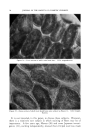
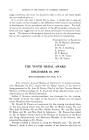
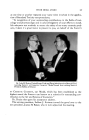
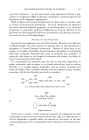
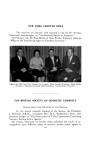
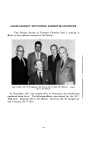
GESELLSCHAFT DEUTSCHER KOSMETIK-CHEMIKER Tx•E German Society of Cosmetic Chemists held a meeting in Berlin to form definite statutes for the Society. Left to Right: Dr. H. Neugebauer, Dr. Everts, Dr. F. Keil, Dr. Schmitt. Seated: Dr. L. W. Masch. In November, 1957, two months after its formation, the membership numbered about forty. The following officers were elected for the 1957- 1958 term: President, Dr. L. W. Masch Secretary, Dr. H. Neugebv. uer and Treasurer, Dr. F. Keil. 136

BOOK REVIEWS C•.INICA•. TOXICOLOO¾ or COMMER- CIAL PRODUCTS, by Marion N. Glea- son, Robert E. Gosselin and Harold C. Hodge. The Williams and Wil- kins Company, Baltimore 2, Md. 1957. 7 X 10!/2 inches, indexed, 1160 pages. Price $16. This book is divided into seven sections, using white, pink, blue and yellow paper to differentiate them. It is slanted toward the clinical treatment of acute poisoning due (mainly) to commercial prod- ucts used in the home and on the farm. About 16 pages are devoted to general first aid and emergency treat- ment of poisoning. A toxicity rat- ing chart aids the physician in de- termining the class of poison and extent of danger to be expected from a given product. The next section deals with the toxicity of ingredients used in the commercial products covered by the book. Each ingredient is given a toxicity rating based on the chart mentioned before. Here we find sodium alkyl sulfates, alkyl aryl sul- fonates, aluminum chloride, di- chlorophene, salicylanilide, sulfites and zinc oxide to have a toxicity rating of3, "moderately" toxic. Tri- ethanolamine is rated at "slightly" toxic while stearic acid is practi- cally "nontoxic." These are but a scant few materials of the hundreds listed. In the next section, 68 compounds representing classes of materials are further described with clinical and experimental data elaborated. Section ¾, the largest in the book (831 pages) lists over 15,000 trade named products which might be in- gested accidentally. Active in- gredients are starred. The reader then checks back to Section II for treatment. Very few cosmetics are listed as to ingredients. Section ¾I deals with general formulas of typical products starting with abrasive cleaners and ending with zeolite water softeners. Each formulation is ascribed a toxicity rating. Thus, bar soap gets a rat- ing of "slightly toxic," as do mas- sage and cleansing creams. But cold cream gets a "practically nontoxic" rating. Most cosmetic products get similar ratings. Some of the cos- metic formulas are completely un- workable, such as Formula No. 2 under astringent creams on page 1088. Section VII is a manufacturers index. The book is well done. It fills a real need. It should be better sup- ported by the toilet goods industry with product data. Every manu- facturer should have one for refer- ence in case of accidental ingestion of his products.--M. G. I)EN^v^•E COSMETICS: SCIENCE AND TECH- NOLOGY, Executive Editor, Edward Sagatin. Interscience Publishers, Inc., New York 1, N.Y. 1957. 7 X 10 inches, illustrated and indexed, 1433 pages. Price $25. Keeping sixty-one specialists on schedule from manuscript through 137
Purchased for the exclusive use of nofirst nolast (unknown)
From: SCC Media Library & Resource Center (library.scconline.org)