86 JOURNAL OF THE SOCIETY OF COSMETIC CHEMISTS (2) Rothman, S., "Physiology and Biochemistry of the Skin," Chicago, University of Chicago Press (1954), p. 552. (3) Lerner, A. B., Denton, C. R., and Fitzpatrick, T. B., 7. Invest. Dermatol., 20, 299 (1953). (4) Carvalho, A. A., 7. Indian Med. Assoc., 26, 93 (1956). (5) Christiansen, J., Acta Dermato.-VenereoL, 35, 453 (1955). (6) Yoshida, Y., and Togashi, Y., 7. Invest. DermatoL, 25, 363 (1955). (7) EI-Mofty, A.M., Excerpta Medica, Special Issue, Ilth International Congress of Dermatol- ogy, 42 (1957). (8) 8-MOP Supplied by Paul B. Eider Company, Bryan, Ohio. SOME PHOTOMICROGRAPHIC TECHNIQUES FOR HAIR* By MuRa^¾ BERDICK, and EVERETT G. McDoNouc, P.D. Evans Research and Development Corp., New York 17, N.Y. T•E pt•RPOSE of this paper is not to provide a comprehensive man- ual of photomicrographic techniques, since this has been done elsewhere, not only in a general way (1, 2), but in several cases, specifically for the study of fibers (3, 4). Also specifically excluded from consideration here are methods dealing with the biology and growth of hair. The purpose of this paper is to point out a few special problems that arise when dealing with human hair after it has emerged from the scalp. Some of the usual microscopic and photomicrographic techniques are not applicable, even some of the ones that have been devised specifically for work with fibers. It is hoped that this paper will show some of the pit- falls and demonstrate a few methods that may be new to you. Then, to illustrate the utility of some of these methods in research on hair, a case history dealing with permanent waving will be presented. METHODS Observation of Cuticular Scale Pattern Most of the conventional methods for observing scale patterns of fibers are not well suited to • human hair because the diameter of the fibers is so large that the depth of focus of the microscope will not permit observa- tion of anywhere near half the circumference at high magnification. Thus, whole fiber mounts are usually not of much value, even when care is taken to select a mounting medium whose refractive index is far removed * Presented at the September 20, 1957, Seminar, Chicago, Ill.

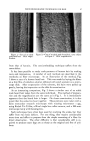
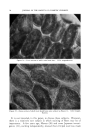
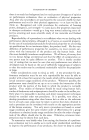
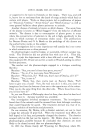
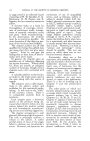
PHOTOMICROGRAPHIC TECHNIQUES FOR HAIR 87 Figure 1.--Cast of an adult male head hair. 330X magni- fication. Figure 2.--Cast of an adult male beard hair, same subject as Figure 1. 330X magnification. from that of keratin. The semi-embedding technique suffers from the same defect. It has been possible to study scale patterns of human hair by making casts and impressions. A number of such methods are described in the textbooks on fiber microscopy. As an illustration of the method, Fig. 1 shows a cast of a human head hair. This was made by laying the fibers on a thin film of collodion solution (diluted with amyl acetate) on a micro- scope slide. After evaporation of the solvents, the hairs were pulled up gently, leaving the impression on the slide for examination. As an interesting comparison, Fig. 2 shows a similar cast of an adult male beard hair taken from the same individual. The method of prepara- tion and the magnification are the same as in Fig. 1. It is immediately apparent that the beard hair is larger. On closer examination, it is also noted that the scales lie closer together. These pictures were taken with a Zeiss monocular research microscope with rotating micrometer s age, using Kodak Tri-X film, a Rival single lens reflex camera, and a 100-watt microscope lamp with focusing lens. Such techniques have often been used for studying the scales, but they suffer from two basic defects. For one thing, they require considerably more time and effort to prepare than the simple mounting of a fiber for direct observation. The other difficulty is that considerable skill is re- quired. to pr9duce ca•s.ts •:•[ are as sharp as the original and free of arti- facts, " , • .
Purchased for the exclusive use of nofirst nolast (unknown)
From: SCC Media Library & Resource Center (library.scconline.org)