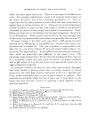
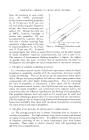
292 JOURNAL OF THE SOCIETY OF COSMETIC CHEMISTS the temperature of its contents. Pressure is required to force the liquid through the orifice and to impart the necessary velocity to cause the collapse of the liquid stream leaving the orifice. Turbulence, radial and tangential disturbances, pressure waves and vibrations aid in the breakup of the liquid jet. A spinning movement greatly accelerates the breakup of liquid streams and improves atomization. The so-called three phase actuators impart a rotational or t'angential movement to the jet, and there- fore, aid in atomization of low pressure formulations. Sometimes, however, higher pressures deliver an even coarser spray than lower ones, as is the case when true aerosol formulations contain entrapped air. If care is taken to eliminate the air from the aerosol container, the formulation has a lower pressure but a finer spray than in the presence of air. Thus, aside from the pressure and from the mechanism of the valve, the flashing of the propellent is the soul of the atomization of an aerosol product. 3. !P'hat is flashing? Every propellent, consisting of a liquid and a vapor phase, enclosed in a hermetically sealed container attains a pressure corresponding to its temperature. There exists a characteristic pressure-temperature relation for every propellent. If the container is suddenly opened to atmospheric pressure, and the contents have a temperature higher than the equilibrium temperature corresponding to 760 mm. mercury, the liquid will boil instantly and vigorously, and a part of it will change immediately into vapor. This instantaneous transformation of the liquid into the vapor phase due to a sudden decrease in pressure is called "flashing." The change from the liquid phase to the vapor phase requires heat, and therefore, this process is governed by the laws of thermodynamics. There exists a mistaken belief that all of the propellent will flash when suddenly exposed to a pressure (p0) lower than equilibrium pressure. In fact, only a certain part of it can flash, and the balance will evaporate slowly. The heat required for flash evaporation is supplied by the liquid because the flashing is so rapid that there is practically not enough time to draw heat from an outside source. Since heat is taken away from the liquid itself, its temperature must drop until it reaches the equilibrium temperature corresponding to the lower pressure (P0). At this point flashing ceases and slow evaporation takes place with a speed depending on the amount of heat which can be trans- ferred from the surroundings to the liquid for evaporation. FLASHING IN THE VALVE ORIFICES (FIG. 3) The volumetric flow rate at a constant temperature through a given aerosol valve for the same formulation is proportional to the square root of the gauge pressure. The valve delivery rate, however, which is defined as the weight discharged per second will depend also on the flashing factor of

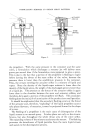
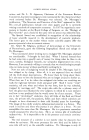
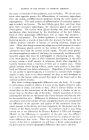
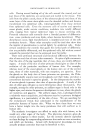
FORMULATING AEROSOLS TO OBTAIN SPRAY PATTERNS 293 • ACTUAORIFICE -•' ---•- - - DETAIL STE ORIFICE Figure 3. the propellent. With the same pressure in the container and the same valve, a formulation which discharges a streamy jet will deliver more grams per second than if the formulation were prepared to give a spray. This is due to the fact that a portion of the propellent is flashing to vapor before leaving the throat of the stem orifice of the valve, because the pressure there is lower than the equilibrium pressure in the container. Thus, the stream entering the actuator orifice is a mixture of liquid and vapor. Since the density of the liquid-vapor mixture is lower than the density of the liquid alone, the weight of the discharged spray is lower than of a liquid jet. The pressure at the throat of the actuator orifice is again lower than in the chamber between the stem and actuator orifices, and therefore, here again a portion of the propellent will flash. This secondary flashing does the main job of atomization of the product into small particles. It should be emphasized that the secondary flashing occurs at the throat of the actuator and, therefore, "exploding" of the liquid propellent cannot take place sideways of necessity, it must be projected foward in the shape of a cone. The flashing of a propellent is the main cause of disintegration of the liquid stream in an aerosol spray. It takes place not only on the circum- ference, but also throughout the whole throat area of the valve orifice. The expanding volume of the mixture accelerates the stream. The flashing promotes the detachment of liquid particles from the main liquid stream and assists in the disintegration process.
Purchased for the exclusive use of nofirst nolast (unknown)
From: SCC Media Library & Resource Center (library.scconline.org)