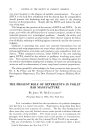
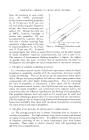
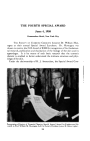
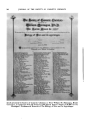
THE FOURTH SPECIAl, AWARD June 4, 1958 Commodore Hotel, New York City THE SOCTET¾ Or COSMETIC CHEMISTS honored Dr. William Mon- tagna at their annual Special Award Luncheon. Dr. Montagna was chosen to receive the 1958 Award of S1000 for recognition of his fundamen- tal research, publication and elucidation of the biology of the skin and its appendages. It is by means of such basic research that the cosmetic chemist is enabled to better understand the intricate structure and phys- iology of the skin. Under the chairmanship of H. J. Amsterdam, the Special Award Corn- Presentation of Society of Cosmetic Chemists Special Annual Award for Fundamental Re- search to Prof. William M. Montagna (left) by Society President James H. Baker (right). 298

I,'OURTH SPECIAL AWARD 299 mirtee and Dr. L. D. Apperson, Chairman of the Literature Review Committee, fourteen investigators were nominated for this Award and their work reviewed before Dr. Montagna was selected. Dr. Montagna's publication, "The Structure and Function of the Skin" appeared in 1956. His over-all publications include over sixty papers and he is currently writing a textbook of comparative anatomy. In 1957 he organized a sym- posium in London at the Royal College of Surgeons on the "Biology of Hair Growth" and a book by the same title (in press) was edited by him. The Special Award was established in recognition of the relationship of basic scientific research to the development of cosmetic products. The honor goes to the author whose recent scientific papers offer the greatest potential value to cosmetic science. Dr. Albert M. Kligman, professor of dermatology at the University of Pennsylvania, gave the following biographical sketch and eulogy on Dr. Montagna: "Your secretary's letter inviting me to 'eulogize' Dr. Montagna alarmed me considerably. I thought he had died. When I learned instead that he had come into a goodly sum of money for doing what he likes to do most, namely, biological research, my sympathy degenerated into envy. However, I am certainly willing to concede that we should eulogize people who can make money without specifically working for it. Now my task of eulogizing would be simpler if Dr. Montagna had in fact obliged us by dying. After all, it is not expected that we should tell the truth about dead persons. We honor them by lying about them. It is also easy to love the deceased who are no longer around to bother us. What then am I to do when the eulogized sits before me watching me walk the tightrope between truth and good will? Shall I recite "vital" statistics, tell you when and where he was born, how he was schooled, trapped by marriage, etc? The script also calls for a phoney story of how the great man flunked the very subjects in which he is now eminent and how it was predicted that he would never be of any account. These are in fact "devitalized" statistics they tell little of the flesh and blood man, the private self, the passions, follies and fears which scientists are thought to have eliminated in their cold blooded quest for knowledge. The image of the coldly analytic, dehumanized scientist is a fiction. The truth is red hot and those who pursue it are always in a fever. No one exemplifies this more than Dr. Montagna. He is a passionate researcher totally possessed by what he does. He is an intense pile of intellectual radioactivity. It is impossible to be in his presence and remain unstimu- lated. The real measure of a scientist is not merely what he discovers but whom he activates. He must procreate his own kind and be father to sons who will carry on the scientific tradition. Dr. Montagna is only 45
Purchased for the exclusive use of nofirst nolast (unknown)
From: SCC Media Library & Resource Center (library.scconline.org)