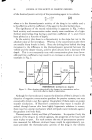
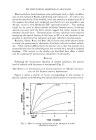
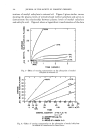
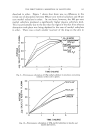
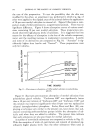
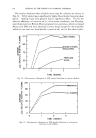
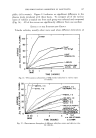
METHODS FOR MEASURING PERCUTANEOUS ABSORPTION By M. AINSWOP, TH* Presented September 23-2•, Z959, Seminar, New York City WHEN A LIQUID is applied to one side of a very thin membrane, some molecules of the liquid will appear almost immediately at the other side. This diffusion process can be described by a single permeability index because the diffusion rate is always constant. However, if the "membrane" is very thick an appreciable amount of the diffusing substance accumulates inside it before the penetration reaches a steady state. During this stage the rate of entry of the substance into the membrane is faster than the rate at which it leaves the other side. The diffusion process can then no longer be described by a single index. This is true of skin which in some ways acts as a very thick membrane. Treherne's work (1) in this laboratory showed that with several chemicals of very different properties applied to the skin there was always a delay period during which the penetration rate accelerated from zero toward a steady value. This delay period has ranged from a few minutes in the case of methyl alcohol applied to rabbit skin to one or more hours with, for example, tri-butyl phosphate applied to pig skin. Therefore, to study the transfer of molecules through the skin we should use dynamic methods which follow variations of the penetration rate with time. A single measurement of the amount which has penetrated over a given period of time is inadequate in the sense that we cannot estimate from it the quantity which would penetrate during any other period of time. The problem of measuring percutaneous absorption into the whole animal can be approached in two ways. Either we can make a continuous estimation of the quantity of the test substance accumulating in the body or we can measure the rate of disappearance of the test substance from the skin surface after taking precautions to prevent evaporation. However, there is no certainty that these two methods of approach will lead to the same result, for in one case the systemic dose is measured and in the other it is the quantity entering the skin. The same result * Ministry of Supply, Chemical Defense Experimental • Establishment, Porton, Wilts., England. 69

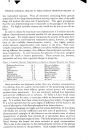
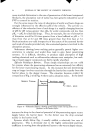
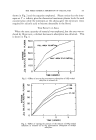
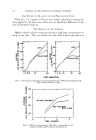
70 JOURNAL OF THE SOCIETY OF COSMETIC CHEMISTS will be obtained only if the penetrating substance does not combine with any component of the skin, and if the skin circulation is fully effective in clearing away the material which has entered the skin. The practical in rai**o methods that can be employed are somewhat limited. If the test substance is pharmacologically active, the body responses can be studied quantitatively. This is not easy and usually not very precise. Furthermore, the degree of a physiological response to a drug is rarely, if ever, directly proportional to the dose of the drug. Some sort of calibration of the body response is therefore necessary. If, instead of directly attempting to measure the quantity absorbed into the body, the disappearance of the applied test substance is studied, then it is necessary to employ an assay method which can detect a very small change in a relatively large quantity. If chemical analysis is used, there is also the difficult problem of removing the residue of test substance from the skin surface for assay purposes. This procedure must be repeated at various times after applying the substance and can only be carried out on different regions of the skin. Many of these difficulties disappear if radioisotopes are employed as trace elements, but some problems still remain. Estimates of absorption of the labeled test substance into the body must rely on measurements of the rate of excretion of the trace element or changes in the circulating blood concentration of the tracer. But these measurements alone are meaning- less and must be supported by studies of distribution, excretion, and so on. If the test substance is injected intravenously at a constant rate, then the blood concentration of the substance may be usefully correlated with the injection rate, or with the integrated injection rate--that is, the total dose absorbed. This approach has been successfully employed by Griese- met, Blank and Gould (2) in their'studies of the percutaneous absorption of Satin. With this particular substance no trace element was necessary because the Satin irreversibly reduced the level of the circulating blood cholinesterase. It is also feasible with small animals to determine the total dose of radioactive tracer absorbed by destroying and dissolving the experimental animal, and estimating the radioactivity of the resulting solution. An obviously necessary first procedure is the removal of the skin to which the test substance had been applied. This is a static determination, but a sufficiently large series of such experiments carried out at various times after applying the substance to the skin would elucidate the time-course of the skin penetration. It is clear that some of the methods mentioned could not be used for studying the penetration of human skin. However, it would seem possible to administer an innocuous radio-labeled test substance intravenously to humans and obtain a correlation between the blood concentration of radio-
Purchased for the exclusive use of nofirst nolast (unknown)
From: SCC Media Library & Resource Center (library.scconline.org)