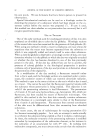
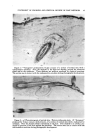
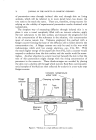
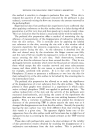
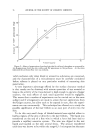
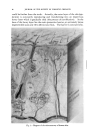
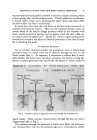
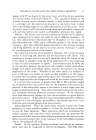
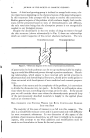
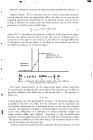
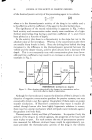
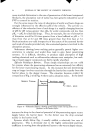
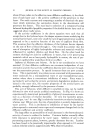
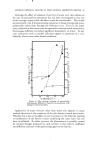
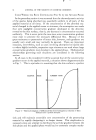
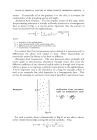
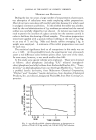
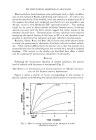
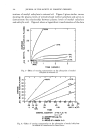
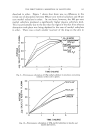
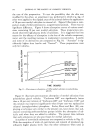
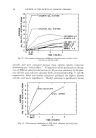
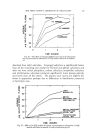
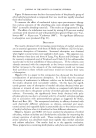
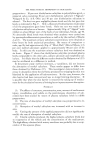
BIOLOGICAL FACTORS AFFECTING PERCUTANEOUS ABSORPTION 81 ing manufactured and pushed outward to become stratum corneum, which is more spongy than the dense barrier zone. Closely related to cornification is wound repair, which starts automatically upon injury and ceases when the horny layer has been reconstituted. It would seem then that the vital forces in the skin strive constantly to exclude environmental matter. Must not the cosmetic chemist, then, be always aware of the need to design products which do not interfere with these natural protective devices, but do gently assist the skin while im- proving its external appearance? Should not a better understanding of the biochemical anatomy and physical chemical properties of the skin be help- ful in attaining this goal? CUTANEOUS ANATOMY Let us consider diagrammatically the anatomical zones a penetrating substance meets in transit from the air directly through the skin to the blood vessels (Fig. 1). In sequence, it encounteIs a surface film of emul- sified lipides, the horny layer (stratum comeurn), the barrier, living epi- dermis (stratum germinativum) and finally the dermis in which reside the !Poss !:B'LE A 9 •"N 0"'•.::g" THROUGH THE PEN ET:RAT::i 0 N [ Ntio UNBROKEN: S'K .I N A:N-C 'Between: t•e :(: ells :Of t'hb' Strut U m 'Cø•neum, • ' ThrOugh the Walls Through the • • the SeboCeous Throuc lh• : SWeet • .K. • •" : 'r•ro.c• ..the -of" the Stratum. "Cot neum. Fig. 2.--Possible avenues of penetration into and through the unbroken skin. blood vessels. Other avenues of penetration through the skin are shown diagrammatically in Fig. 2. The pathway through the epidermis is much more likely the main ave- nue of penetration than are the sebaceous glands or sweat glands, simply

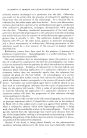
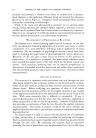
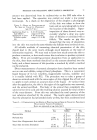
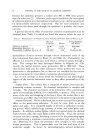
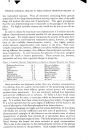
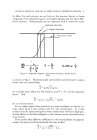
82 JOURNAL OF THE SOCIETY OF COSMETIC CHEMISTS because the epidermis presents a surface area 100 or 1000 times greater than the other two (2). Of course, under special conditions the sweat gland or sebaceous glands may be preferential pathways, e.g., during sweating of for lipide-soluble substances respectively. But for most conditions and substances the direct path through the epidermis is probably the impor- tant one. A general idea of the effect of cutaneous anatomy on permeation may be obtained from Table 1 in which are listed the relative values for rate of TABLE ]--PERMEABILITY OF VARIOUS LAYERS OF EXCISED HUMAN SKIN TO WATER (2, 3) Stratum Living Epidermis Corneum Barrier and Dermis Thickness (microns) 20-40 10-20 Permeability Rate J•/(t..4) 25 0.2-1.0 Permeability Coe•cient (J•.x)/(t..4) 500-1000 2-20 2000-4000 10 20,000-40,000 permeability of water outward through various anatomical zones of the skin (calculated from data by Blank (3) and Mali (2). Permeability co- efficient is a measure of the ease with which a substance passes through a zone. This concept has been developed further by Higuchi (4). Ob- viously, the barrier restricts water permeation 100 to 1000 fold. These observations hold also for other substances whose preferential route of penetration is the epidermis, but no data are yet available for the various zones encountered in sweat gland or sebaceous gland penetration. Let us now consider in more detail the biochemical and physiological aspects of the various anatomical zones as they affect permeability of the skin. Surface Film. The surface film is composed of sebum, sweat and des- quamating stratum corneum. Its chemical composition is complex and variable. The character and extent of its interaction with a penetrating agent are exceedingly difficult, if not impossible, to predict. Due to move- ment of the skin and sloughing of the horny layer, the surface film is dis- continuous and offers relatively little resistance to the penetratingmolecule. Stratum Corneum. On the other hand, the stratum corneBro has a greater effect on the penetrating substance. It may be quite thick as on the palms and soles. It is composed largely of keratin, a sulfhydryl contain- ing protein which adsorbs large amounts of water and other polar com- pounds. In addition, surface lipides, which may spread along the channel walls between cells, will retain lipide-soluble material. Thus, the stratum corneum acts like a sponge, becoming a reservoir for the penetrating agent and maintaining a maximum concentration gradient just above the bar- rier. However, if it binds the penerrant very strongly, it will actually hinder penetration. This is particularly true for ions and dyes of low molecular weight. As shown by autoradiography, ionized surfactants
Purchased for the exclusive use of nofirst nolast (unknown)
From: SCC Media Library & Resource Center (library.scconline.org)