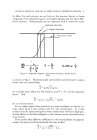
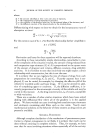
96 JOURNAL OF THE SOCIETY OF COSMETIC CHEMISTS where /• = the amount absorbed at time t per unit area of exposure, •/ = the concentration of drug expressed in unit/cm. a, C8 = the solubility of the drug as units/cm. a in the external phase of the ointment, and D = the diffusion constant of the drug molecule in the external phase. Differentiating with respect to time we obtain for the instantaneous rate of absorption at time t d/• 1/2 (2•/ -- C8) •/ D t dt - 1 +'2(At- For the common case of Cs .4 we find the relationship further simplified to and dt • 2t Derivation and bases Gr these equations will be reported elsewhere. According to these remarkably simple relationships, remarkable in view of the complexity of the situation treated, the amount of drag released from such suspension-type ointment (C• d) is proportional to the square roots of the amount of drug per unit volume, diffusion constant, drug solubility and time. It is of interest to note that intuitively one might expect a direct relationship with concentration, but this is not the case. It is evident that we can regulate the rate of release of drugs from such preparations by controlling d, D, and C•. If partly aqueous base is em- ployed, C• can be varied, Gr example, by changing the effective pH of the vehicle Gr insoluble acidic and basic drugs. Or it can be altered by addi- tion of complexing agent or cosolvent. D, the diffusion coe•cient, is in- versely proportional to the microscopic viscosity of the vehicle and may be varied in this manner. d, the drug concentration, is, of course, susceptible to wide variations. There are a number of other similar situations which have been solved dealing with diffusional flow where all of the gradient is in the applied phase. We have worked out cases involving both emulsion-type ointments and ointments containing solid fillers such as zinc oxide. Nearly exact mathematical solutions to the behavior of these systems as drug sources are presently available. GENERAL D•scvss•os Although complete elucidation of the mechanism of percutaneous pene- tration is of great consequence in our fields, it is evident that much can be done without awaiting its complete solution. Thus, Gr example, we have seen that for cases involving situations where essentially all of the activity

THE PERCUTANEOUS ABSORPTION OF SALICYLATES 97 gradient is in the applied phase, skin properties play no part. For these systems drug concentration in the base, diffusion coefficient of the drug molecule in the vehicle, and solubility of the drug in the same are the im- portant factors. For the remaining cases these formulation variables are not directly important, the only significant factor involving the vehicle being the thermodynamic activity of the penetrating agent contained in it. More information concerning the exact route of penetration would be of considerable aid, however, in devising methods of increasing the perme- ability of the rate limiting barriers. Certain solvents significantly lower the resistance of the skin to penetration. Whether this is due to changes produced in the transepidermal barrier layer or to modification of the follicular and sebaceous route apparently has not been unequivocally established. Present treatment is not meant to discount the importance of studies along this line but to show what can be still done without them. THE PERCUTANEOUS ABSORPTION OF SALICYLATES AS MEASURED BY BLOOD PLASMA LEVELS IN THE RABBIT By VAn F. COTT¾, John SKERPAC, HEINZ M. EDERMA, FRANK ZURZOLA and MARTIN KUNA* Presented September 23-24, 1959, Seminar, New York City T,E PERCUTANEOUS ABSORPTION Of salicylates has been reviewed by Gross and Greenberg (1), by Valette and Cavier (2) and more recently by Rothman (3). Most of the studies ofpercutaneous absorption ofsalicylates have been carried out by measuring the total urinary excretion of salicyl- ates over relatively long periods of time following the topical application of the salicylate preparation. The validity of this method may be ques- tioned on the basis that a considerable proportion of administered salicylate is conjugated by the time it appears in the urine (Schachter and Manis) (4) and that this method does not take into account the loss of the drug from the skin surface (e.g., by evaporation). One may seriously question whether it is possible to make conclusions about the relative rates of ab- sorption of salicylates by measuring their excretion. In measuring the ab- sorption of a drug by its blood levels one is usually interested in its fate when it gets into the circulatory system. For this reason the changes in plasma level following the intravenous injection of methyl salicylate dis- solved in saline were studied. * Bristol-Myers Products Division, Hillside 5, N.J.
Purchased for the exclusive use of nofirst nolast (unknown)
From: SCC Media Library & Resource Center (library.scconline.org)