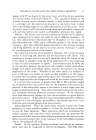
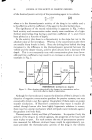
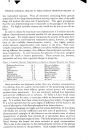
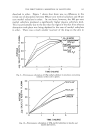
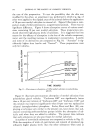
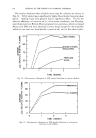
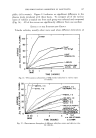
METHODS FOR MEASURING PERCUTANEOUS ABSORPTION 71 activity and the rate of injection. This relation might then be used to estimate the rate of percutaneous absorption from the blood radioactivity. But there are serious limitations, in particular to the degree of radioactivity which could be used. Suppose 1 per cent of a dose applied to the skin penetrates and becomes evenly distributed in 50 litres volume of tissue. Suppose also that we take a 10 mi. sample of blood for assay and that the minimum rate of counting is one count per second for reasonable precision. Then allowing 10 per cent efficiency for the Geiger counter, we can calculate that the activity of the test substance applied to the skin would have to be more than 100 microcuries. This is a high level of radiation activity which, with a •-emitter of high energy such as P32, would probably produce a severe skin reaction. A safer way of studying the percutaneous absorption of a radioactive compound is to follow the disappearance of the compound from the skin starface. This can be carried out with a very small quantity of the test substance of a total radioactivity less than 1 microcurie. It can be said, therefore, that attempts to estimate percutaneous absorp- tion in vivo have to be based on indirect measurements and, in general, difficult. and not very precise techniques. A more direct experimental approach can be made by directly measuring the rate of diffusion through isolated skin. But first we need evidence that removal of skin from the body does not alter any characteristics which may modify its permeability. Treherne (1) found that removal of the epidermis increased the permeability of rabbit skin by two to three orders, and Blank, Griesemer and Gould have shown by autoradiography (3) that shallow cuts penetrating just a little deeper than the stratum comeurn allow rapid penetration. It is likely that the main barrier to chemical diffusion through the skin is in the epidermis and may be localized near the base of the stratum corneum. We are, therefore, concerned mainly with the integrity of the epidermis in diffusion studies on isolated skin. When the skin is being •esected, the largest factor likely to interfere with its integrity is cutting off its blood supply. But the epidermis does not normally have a blood supply and any changes in it due to cutting off the skin circulation are, therefore, not likely to be instantaneous or even rapid. Treherne, in fact, found that freshly resected whole skin respired oxygen TAI•LE 1.--THE EFFECT oF STORAGE ON THE STEADY RATE OF PENETRATION OF ISOLATED SKIN BY TRI-BUTYL PHOSPHATE Freshly re- sected skin, Stored Stored Species w/min./cm? for 24 hr. for 48 hr. Rabbit 1.16 1.20 1.48 Pig 0.23 0.26 ... Man 0.16(8hr.) 0.22 ... at a rate which was practically un- changed several hours later. Our experiments have indicated that if bacteria] decomposition of resected skin is prevented by cold storage, the chemical permeability of the skin at 33øC., is almost unchanged for at least two days. Direct comparison

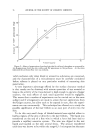
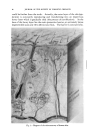
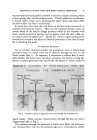
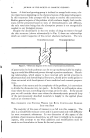
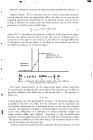
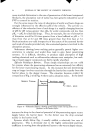
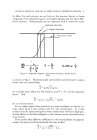
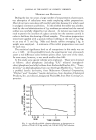
72 JOURNAL OF THE SOCIETY OF COSMETIC CHEMISTS of penetration rates through isolated skin and through skin on living animals, which will be referred to in more detail later, has shown the two rates to be much the same. There are, therefore, strong reasons for relying on the validity of experimental penetration results obtained with isolated skin. The simplest way of measuring diffusion through isolated skin is to place it over a vessel completely filled with an isotonic solution, apply the test substances to the skin surface, and measure the progressive rise in the concentration of the substance in the solution this concentration must of course remain low. Treherne employed this method with a Geiger counter forming the base of the diffusion cell to follow directly the concentration rise. A Geiger counter can only be used in this way with radioisotopes which emit low energy electrons, e.g., C14, S35. With the much higher energy of the S-particles from P32, such a counter would respond to radiation from the skin surface and the results would be mean- ingless. Another objection to a static reservoir beneath the skin is that the rate of skin penetration might change with the rising concentration of penerrant in the reservoir. These disadvantages are avoided by placing the skin over a shallow cell through which isotonic fluid flows continuously serial samples of the fluid are then collected for analysis in a test-tube type Geiger counter. Constant temperature water both Ringer • •J f Clamping cylinder solution • • •t ,••////'• Skin '•uid Magnetic Stirrer Outflow Figure 1.--Section of a single diffusion cell (not to scale).
Purchased for the exclusive use of nofirst nolast (unknown)
From: SCC Media Library & Resource Center (library.scconline.org)