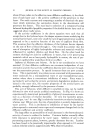
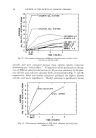
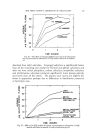
BIOLOGICAL FACTORS AFFECTING PERCUTANEOUS ABSORPTION By ROBERT D. GRIESEMER* Presented September 23-24, 1959, Seminar, New York City IN THE STUDY of penetration of chemicals into and through the skin, two groups of significant factors emerge. The first concerns the biolog- ical aspects of the skin, the second the physical chemical phenomena arising from the interaction of molecules. That these two groups of fac- tors must of necessity overlap is apparent immediately when one realizes where the decisive field of operations for biological activities exists, namely, at the molecular level (1). Thus in one sense, the gross biological features of the skin, such as his- tological structure, chemical composition, and physiological responses, may be relegated to minor roles in the process of skin penetration. Under normal circumstances, they are not involved in permeation. But in another sense, these features are actually paramount, since they sharply restrict percutaneous absorption to narrow pathways in which molecular interac- tion can become the controlling force. During formation of the skin and under abnormal conditions when the skin is damaged, the small restric- tive channels of penetration in normal skin do not exist, and creation of the entire skin is the central problem. GENERAL BIOLOGY OF THE SKIN From the biological standpoint one may consider not only the physical and chemical structure of mature skin, but also the profound changes which occur during growth and development and which result from stress and disease. Because of its exposed position, the skin is called upon early in life to assume its chief role as guardian of the internal milieu of the body. It is not surprising, therefore, to find that the skin just before birth has attained almost complete maturity, relative to its protective capacity. Throughout adult life and into old age, the skin maintains this capacity with remarkable constancy. It is perhaps because of this dependability that the idea often develops that the skin is a dead envelope. Nothing * Dermatological Research Laboratories, Dept. of Dermatology, Harvard Medical School at the Massachusetts General Hospital, Boston 14, Mass. 79

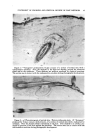
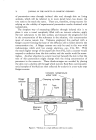
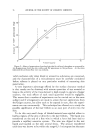
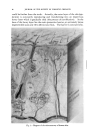
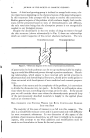
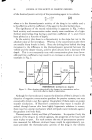
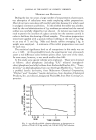
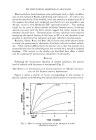
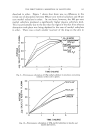
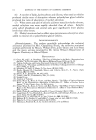
80 JOURNAL OF THE SOCIETY OF COSMETIC CHEMISTS could be further from the truth. Actually, the outer layer of the skin(epi- dermis) is constantly reproducing and transforming into an impervious horny layer which is gradually shed (the process of cornification). At the base of the horny layer lies the main protective barrier, an extremely dense impenetrable zone only 10 to 20 microns thick. The barrier is constantly be- :.2.? .i' e½-.':: -:-,-: - , Fig. 1.--Diagram of the mlcroanatomy of human skin.
Purchased for the exclusive use of nofirst nolast (unknown)
From: SCC Media Library & Resource Center (library.scconline.org)