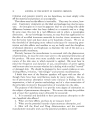
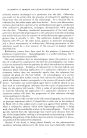
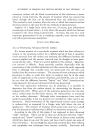
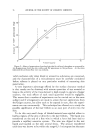
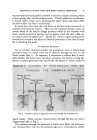
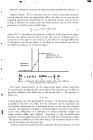
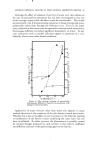
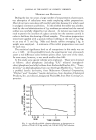
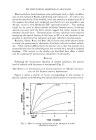
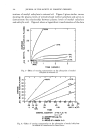
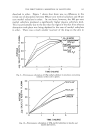
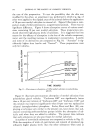
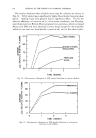
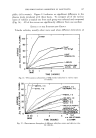
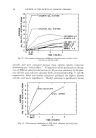
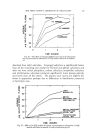
METHODS FOR MEASURING PERCUTANEOUS ABSORPTION 75 this method is sensitive tO changes in perfusion flow rate. When this is reduced the quantity of test substance removed by the perfusate is also reduced conversely raising the flow rate increases the amount removed by the perfusing fluid. Experimental data from perfused skin experiments have confirmed that after applying a substance to the skin surface there is a delay during which penetration is at first very slow and then speeds up to reach a steady value. This is an indication that the delay is associated mainly with the epidermis. The perfused skin preparation offers a method of examining the sig- nificance of measurements of the disappearance of radioactive substances from the skin surface. This is normally done by applying the labeled test substance to the skin, covering the site with a thin window which transmits /3-particles but prevents evaporation, and then setting up a Geiger counter facing the skin. As the substance is absorbed into the skin and cleared away by the circulation the Geiger counter rate falls, and this rate of fall can readily be expressed in terms of the mass of sub- stance entering the skin in unit time. Such observations, however, only tell us that the substance has at least entered the skin. They do not distinguish between molecules which enter the blood and are cleared away, those which escape the skin vascular network and enter subcutaneous tissues, and those which for one reason or another remain in the skin, for example, combined with protein. It is in fact only necessary for Phosphorus 32 atoms to penetrate a millimetre or two into the skin for their radioactivity at the skin surface to be halved by the screening due to the intermediate tissue. The perfused skin preparation has allowed us to study the significance of the disappearance of a test substance fkom the skin surface. The data plotted in these graphs were obtained in a experiment in which radio- active tri-butyl phosphate (TBP) was applied to perfused pig skin. The surface radioactivity of the skin and the activity of the perfusate were measured simultaneously, and during the course of the experiment the perfusion flow rate was varied. There are two striking features of these graphs. First, a variation in perfusion flow rate altered the circulatory clearance of the penetrating TBP in almost exactly the same way as it changed the disappearance rate from the skin surface. Second, the quantity leaving the skin surface was very little different from that entering the skin vessels in a given time. The apparent slightly faster rate of dis- appearance from the skin surface could well have been due to slight loss of radioactivity due to screening by the stratum corneum as the TBP entered the skin. These data with perfused skin seem to be clear evidence of the validity of skin penetration results obtained by studying the disappearance of a radioactive test-substance from the skin surface. This is probably a

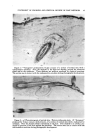
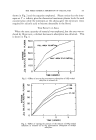
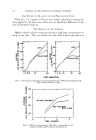
76 JOURNAL OF THE SOCIETY OF COSMETIC CHEMISTS '• .15 E ,. • .10 c). m ..., .0,5 o E (b) I I I I I 2 4 6 Time (hours) Figure 2.--Rates of penetration of perfused pig skin by tri-butyl phosphate as measured by (a) disappearance from the skin surface and (b) appearance in the perfusate. At the times indicated the perfusion flow rate was reduced. valid conclusion only when bland or unreactive substances are concerned, and the characteristics of a test-substance must be carefully considered before reliance is placed on any particular method of' measuring skin penetration. A very important advantage offered by the surface clearance method is that results can be obtained with minute quantities of test material so long as the activity of the trace element is high enough to operate a Geiger counter the toxic effects of such small quantities would be negligible. This means that a number of experiments can be carried out on the same subject and if arrangements are made to screen the test applications from the Geiger counter, but allow each to be exposed in turn, then the experi- ments can run concurrently. This technique has allowed us to study the possible significance of the hair follicle as an easy port of entry into the skin. To do this very small drops of labeled material were applied either to hairless regions of the skin or directly to the hair follicles. The liquid was transferred on the end of a fine wire in which a knot had been tied to provide a capillary retentive system. The wire was dipped in the test liquid and touched on the skin several times. The amount transferred each time was known to be within the range 0.5-5 microgram but the exact
Purchased for the exclusive use of nofirst nolast (unknown)
From: SCC Media Library & Resource Center (library.scconline.org)