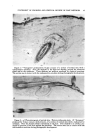
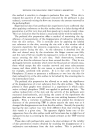
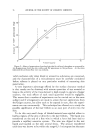
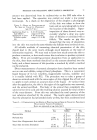
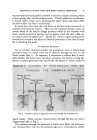
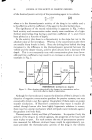
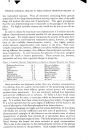
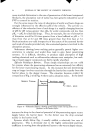
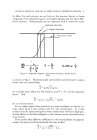
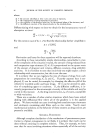
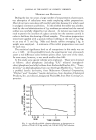
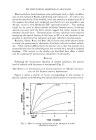
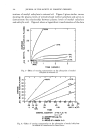
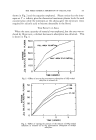
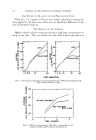
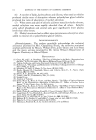
METHODS FOR MEASURING PERCUTANEOUS ABSORPTION 77 amount was determined from its radioactivity at the GM tube after it had been applied. The operation was carried out under a low power microscope. As a check on the disposition of the droplets a photograph of the skin was taken to show the TABLE 2.--RATES OF PENETRATION OF PIG SKIN BY TRI-BUTYL PHOSPHATE (t•g./cm.2/-M•.) Application direct to 0.33 (10 results, hair follicles range 0.15-0.65) Application to inter- 0.28 (10 results, fo!licular epider- range 0.11-0.40) mis hairs and an autoradiograph to show the location of the droplets. Super- imposition of these showed very ac- curately whether a drop was quite clear of follicles or coincided with a follicle. The results on pig skin showed that the rate of absorption into the skin was nearly the same whether the follicles were involved or not. All .reliable methods of measuring chemical penetration of the skin should lead to the same result, although much depends on the type of information required. We may need to know how much enters the skin to produce a reaction, or how much enters the circulation to produce systemic effects. If we are considering systemic absorption from an application to the skin, then these methods should tell us the amount absorbed into the body, and a direct measure of this provides a standard by which a method can be evaluated. Direct measurements of systemic absorption have therefore been carried out on rats and rabbits, using tri-butyl phosphate. This is a convenient liquid because of its low volatility, inappreciable toxicity, stability and it is readily labeled with P32. The procedure was to take a group of about ten animals each with the same region of skin clipped free of hair and to apply to each animal an accurate dose of the liquid. At various times after the application, the skin in the region of the application was removed, and the animal sacrificed. The body of the animal then completely dis- solved in hot nitric acid and the resulting solution assayed for total content of the trace element. From this was calculated the total quantity of the test substance absorbed by the animal. The results again demonstrated that the absorption had proceeded slowly at first, but then accelerated and TABLE 3.--A COMPARISON OF THE RATES OF PENETRATION OF SKIN BY TRI-BUTYL PHOSPHATE MEASURED BY VARIOUS TECHNIQUES Rates are expressed as (ug./min./cm. 2) ß Species- , Method Rat Rabbit Pig Resected skin ... 1.6 (0.6-2.5 Perfused skin 0.80 1.7 (0.5-1.2) (0.8-2.3) Intact skin (disappearance from surface) ... 2.3 (1.0-3ß 7) Intact skin (systemic absorption) 0.70 9.. 0 (0.4-1.2) (1.7-2.3) 0.16 (0.08-0.35) 0.15 (0.07-0.23) 0.13 (0.07-0.20) ß . .

78 JOURNAL OF THE SOCIETY OF COSMETIC CHEMISTS finally the rate became steady. This steady rate of penetration has been used for comparison with those measured by some of the methods described, and the results tabulated. It is seen that in the case of the rabbit, where the comparison is complete, that there is very good agree- ment between the results. With the pig, where total body digestion was not a very practical proposition, the measurements based on diffusion through isolated skin and perfused skin, and on disappearance from the skin agreement between the rates of percutaneous absorption into intact animals and the penetration rates directly measured on perfused skin preparations. The use of isolated skin offers a technique for studying the penetration of human skin by chemical substances, but samples of whole skin are necessary and these are not always readily available. The method is therefore of little value in semiroutine tests, but its use in fundamental studies may throw much light on the mechanism of chemical penetration of the skin. On the other hand, studying the rate of disappearance of a labeled test substance from the skin surface has been shown to provide reliable information on the rate of skin penetration. This is a procedure which can be carried out with complete safety on humans for the quantity applied to the skin can be extremely small. The size of the dose is only limited by the requirement for a radioactivity sufficient to produce a reasonable count in a Geiger-Mtiller tube, and the limitation of manipulating very small quantities of liquid. REFERENCES (1) Treherne, J. E., :7. Physiol.. 133, 171 (1956). (2) Griesemer, R. D., Blank, I. H., and Gould, E., y. Invest. Dermatol., 30, 255 (1958). (3) Blank, I. H., Griesemer, R. D., and Gould, E.,Ibid., 30, 187 (1958). (4) Feldberg, W., Paton, W. P., y. Physiol., 114, 491 (1951).
Purchased for the exclusive use of nofirst nolast (unknown)
From: SCC Media Library & Resource Center (library.scconline.org)