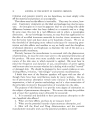
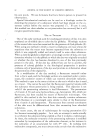
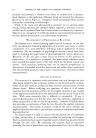
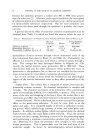
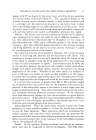
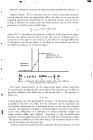
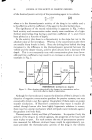
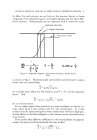
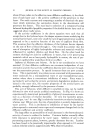
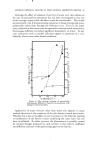
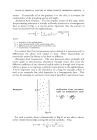
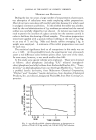
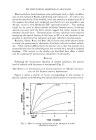
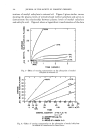
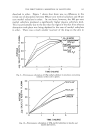
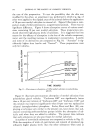
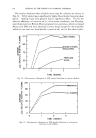
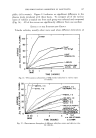
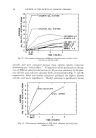
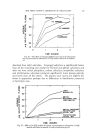
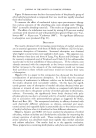
9O JOURNAL OF THE SOCIETY OF COSMETIC CHEMISTS cause marked diminution in the rate of penetration of the bound compound. Similarly, the absorption rate of iodine has been greatly reduced by use of PVP to control its toxicity. For the same reason the rates of absorption of acidic and basic drugs are strongly influenced by the effective pH of the vehicle. The activity co- efficient of the molecular form of such drugs is a rapidly changing function of pH for pH values greater than pKa for acidic compounds and less than pKw - pKb for alkaloidal drugs. Thus, for example, the rate of absorption of histamine would be 10 times greater from a base buffered at pH = 7.5 than from tl'at at 6.5 and 100 times greater than that from base at 5.5. Such estimations are valid irrespective of the nature of the assumed barrier and mode of transfer provided only the nonionized species is involved in the absorption process. Substances showing lower melting points generally permit higher con- centration in solution and would thus tend to give faster penetrating systems. It is difficult, therefore, to produce rapid absorption of high melting chemicals such as sulfonamides whereas most semipolar, low melt- ing or liquid organic compounds are fairly rapidly absorbed. Effective Multilayer Barriers. These simple relationships are not valid for systems where the penetrating substance has an extremely low affinity for the lower water-bearing tissues. In this instance the rate determining step no longer involves transition through the barrier but transfer from the barrier phase to the deeper tissues. The situation becomes evident by comparison of Fig. 2 with Fig. 4 where such a situation exists. In the latter Deeper Tissue Barriel Layer Figure 4.--Schematic diagram showing Surface Layer • Conc. plot enetrating system having little or no gradient in the barrier layer. instance the drop in the chemical potential of-the penetrating agent occurs largely below the barrier layer. In the former case the drop occurred mainly in the barrier itself. Systems which follow Fig. 4 usually exhibit a relatively low rate of penetration. This is obviously due to the highly unfavorable partition coefficient in moving from the epidermal layers to the watery deeper tissues.

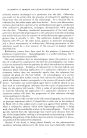
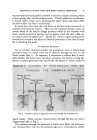
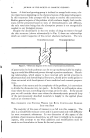
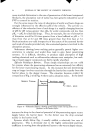
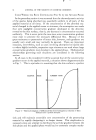
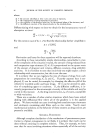
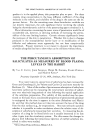
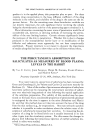
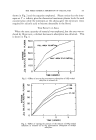
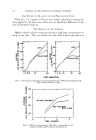
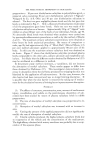
PHYSICAL CHEMICAL ANALYSIS OF PERCUTANEOUS ABSORPTION PROCESS 91 In effect, for such systems we can look on the resistant barrier as being composed of two dissimilar layers, one largely lipoidal and the other effec- tively hydrous. Schematically we can represent such a system by a plot Hydrous Barrier / j Lipold Barrier • 7•ctivity Plot ? / _ _ I •% A p• D, SLOPE • ( 1,% I..,+ • •, P Figure i--Schematic diagram of permeation through a double barrier layer. as shown in Fig. 5. Mathematically such double and multi-layer systems would obey the relationship: clq aA dt (h•/P•) q- (h=/P=) for a double layer where h is the thickness and P = D/7 of the respective layers. And clq aA dt (h•/P•) q- (h2/P2) q- ... (h•/Pn) for an n-layer system. As one might expect these equations are quite analogous to electric cir- cuits where dq/dt is the current, and P is the conductivity. It is also evident that the layer having the lowest conductivity will have dispropor- tionate effects on the flux analogous to the common series-connected resist- ance circuits. If we assume that diffusion coefficients in the several phases are approxi- mately the same as is often practically the case, we find dq aAD -- dt h•'• q- h2v• q- ..
Purchased for the exclusive use of nofirst nolast (unknown)
From: SCC Media Library & Resource Center (library.scconline.org)