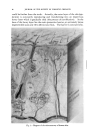
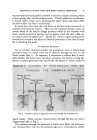
BIOLOGICAL FACTORS AFFECTING PERCUTANEOUS ABSORPTION 83 tagged with S a5 are bound by the horny layer and often do not penetrate beyond the orifice of the hair follicle (5). This adsorptive feature of the stratum comeurn serves a purpose, namely to bind noxious material until it is extruded into the external environment as the horny layer is shed. The water-binding capacity may affect penetration in another way: when the horny layer is well hydrated during sweating, hydrophilic cornl•ounds will reach the barrier more readily and lipophilic substances less •eadily. Barrier. The barrier zone has been isolated by Szakall (6) by adhesive tape stripping, but in sheets too small for use on diffusion chambers. It has been demonstrated histochemically by Stoughton (7) by means of dinitrofiuorobenzene which stains sulfhydryl groups in the barrier quite intensely. Just why sulfhydryl groups elsewhere in the stratum comeurn and living epidermis do not stain is not clear, but the technique is useful for visualizing the location of the barrier. The chemical structure of the barrier is unknown, but it must be quite similar to the living cells beneath and the dead horny cells above. The transition is abrupt, and one can only speculate about the nature of the forces which so suddenly cause the living epidermal cell to lose water and to bind its solid constituents so tightly. Electromicroscopy by Selby (8) of the junction between barrier-layer cells exhibits sturdy intercellular bridges and empty intercellular spaces, material having been lost during preparation of the tissue. Whether or not these spaces are artifacts or exist in life does not matter so much as what material is in the spaces. Certainly the intercellular regions which give rise to the spaces must be less tightly organized than the bridges and would be the avenue of penetration. It is known that molecules of greater than 200 or 300 molecular weight do not penetrate the intact barrier (9) yet the diameter of the pores in the material in the intercellular spaces in the barrier is much larger than the largest molecule penetrating. Thus, the restraining forcemust be the molec- ular interaction between penerrant and pore contents. If the substance has a high electrostatic charge, e.g., ions, the attraction is so great that no penetration occurs. If the substance has a water-lipide partition coefficient of about 1.0 it has the highest permeability the barrier then must have both polar and nonpolar groups in the pore contents. Living Epidermis. When the penetrating molecule reaches the living epidermis, its water solubility permits il to leave the barrier and continue on into the lower epidermis. Here, substances which are metabolized by cellular enzymes may stop their transit provided they can penetrate the epidermal cell walls but even these substances preferentially pass on to the dermis beneath because there is less resistance in the intercellular channels than in the epidermal cell walls. Dermis. At the junction between epidermis and dermis an electron- dense zone may be recognized in electron micrograms. But little resist-

84 JOURNAL OF THE SOCIETY OF COSMETIC CHEMISTS ance is encountered by the penetrating molecule, and it passes easily into the wide channels of the dermis and on to the blood vessels. The only deterent here may be the adsorptive capacity of the mucopolysaccharides for polar substances. Some substances whose molecular size is too large for passage through the blood vessel walls are carried away by lymphatics. Smaller molecules are swept away by the rapidly flowing blood stream which maintains a high concentration gradient. But in the lymphatics, the concentration gradient declines as the concentration of penerrant rises, due to sluggish lymph flow this impedes passage of the penerrant into the lymphatics. /Increased blood flow, as in inflammation, may actually increase penetration slightly, in as much as the concentration gradient will approach the maximum. In some membranes, such as in the gastrointestinal tract, transfer of substances is assisted by the vital processes occurring within the cell. But in the skin of nonaquatic animals, there is no evidence that energy from cellular metabolism is required. As excised skin dies over a period of days, its permeability neither increases nor declines. Penetration of the skin is, therefore, entirely a process of diffusion. ABNORMAL CONDITIONS Under abnormal structural conditions, all the above limitations on pene- tration do not apply. If the barrier is destroyed by trauma, as in cuts, chapping, ruptured blisters, toxic reactions from mustard gas or in eczema, all substances pass freely into the dermis. It is this type of stress which elicits wound repair and restoration of the barrier. For superficial wounds and transient inflammation, the barrier may be restored in twenty-four to forty-eight hours. But for restoration of the entire epidermis, three weeks are required. ]Fiechanical Trauma. Of practical importance to the cosmetic chemist are the superficial scratches and punctures which occur frequently in rou- tine daily activities. Using satin tagged with pa2, Blank, eta/., demonstrated by autoradiography, as well as by chemical determination of extracts of the dermis, a striking increase in permeability following a superficial scratch extending just barely through the barrier (1). Similar data were obtained for trauma by adhesive tape stripping and puncture wounds. While sarin pours through slight scratches in the barrier, tagged deter- gents pass through scratches only in small amounts and ions, such as aluminum, hardly at all. Recent work by Blank (10) shows that sodium laurate C TM and alkylbenzene sulfonate S •5 penetrate slight breaks in the barrier in very small amounts and aluminum ions hardly at all. Chemical Trauma. Chemical damage to the barrier will occur from sol- vent extraction and exposure to pH greater than 11.5. Ether-alcohol or pyridine extraction increases the water permeability of skin 50 to 100 fold
Purchased for the exclusive use of nofirst nolast (unknown)
From: SCC Media Library & Resource Center (library.scconline.org)