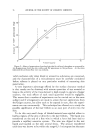
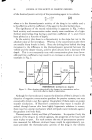
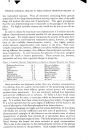
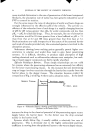
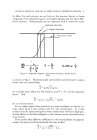
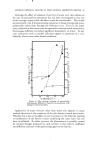
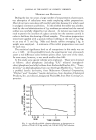
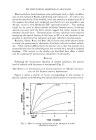
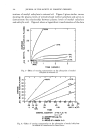
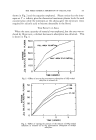
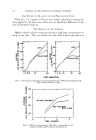
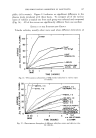
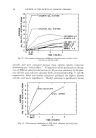
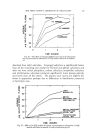
THE PERCUTANEOUS ABSORPTION OF SALICYLATES 111 preparations: 10 per cent diethylamine salicylate in polyethylene gycol, a prepared salve containing 10 per cent diethylamine salicylate ("Algesal," Nyegaard & Co. A/S. Oslo) and 10 per cent diethylamine salicylate in ethanol. The first two gave negligible plasma levels and the last gave low levels as indicated in Fig. 17. Only s-dibenzyl-ethylenediamine disalicylate of all the preparations gave lower levels. Only one test was made of di- ethylamine salicylate on a human. Approximately 30 g. of "Algesal" were rubbed on about 80 per cent of the body of one individual, female, age 46. No detectable blood levels were obtained when analyses were carried out by spectrophotofiuorometric procedures as well as by the method of Brodie et al.(5). The maximum urinary salicylate concentrations were obtained at forty hours by both analytical procedures. By means of comparison a male, age 26, had approximately 30 g. of "Minit-Rub" (Bristol-Myers, 1.76 per cent methyl salicylate) applied to approximately 80 per cent of his body. In this case the maximum urinary salicylate level was obtained at six hours. Figure 17 shows that diethylamine salicylate produced plasma levels comparable to the other salts, sodium salicylate and morpholine sal- icylate. It is likely that the different results obtained by Halpern et al. (15) may be attributed to a difference in method. In the present study methyl nicotinate, a vasodilator, did not increase the absorption of methyl salicylate. These results appear to differ from those obtained by Malkinson (17). This investigator demonstrated a de crease in absorption when the erythema produced by stripping the skin was blanched by the application of hydrocortisone. In this case, however, the skin barrier had been removed and was no longer limiting absorption. It is possible that when the skin barrier is removed the taking up of medica- ment by the circulation becomes a limiting factor in percutaneous absorption. SUMMARY (1) The effects of structure, concentration, area, amount of medicament injury, vasodilation, and vehicle on the percutaneous absorption of sali- cylates have been studied by means of plasma salicylate levels in rabbit preparations. (2) The rate of absorption of methyl salicylate was proportional to its concentration. (3) Absorption of methyl salicylate was increased with an increase in area. (4) Varying the amount of the applied preparation did not significantly modify the rate of absorption of methyl salicylate. ($) Volatile vehicles produced the highest plasma salicylate levels due to evaporation of the vehicle and the concentration of the medicament. The high efficacy obtained with watery emulsions was probably due to evap- t)ration of the aqueous phase.

112 JOURNAL OF THE SOCIETY OF COSMETIC CHEMISTS (6) A number oflipids, hydrocarbons and silicone, when used as vehicles produced similar rates of absorption whereas polyethylene glycol vehicles produced low rates of absorption of methyl salicylate. (7) When esters and salts of salicylic acid were tested involatile solvents, methyl salicylate was more rapidly absorbed than all others. Salicylic acid, salicyl phosphate and several salts gave significantly lower plasma levels than other esters. (8) Methyl nicotinate had no effect upon percutaneous absorption when added to mineral oil or polyethylene glycol vehicles. ACKNOWLEDGMENTS Atcknowledgments: The authors gratefully acknowledge the technical assistance provided by Mrs. Clementina Ercoli, the extensive statistical analyses performed by Messrs. William Frey, John Grano and Lyn Steen and the many services provided by Dr. Armin Wilson's Department of Organic Chemistry at Bristol-Myers. REFERENCES (1) Gross, M., and L. A. Greenberg, "The Fate of Salicylate in the Body: Absorption from the Skin," In The Salicylates, New Haven, Hillhouse House (1958), pp. 24-28. (2) Valette, Guillaume, and Cavier, Raymond, y. physioL (Paris), 39, 137 (1947). (3) Rothman, S., "Physiology and Biochemistry of the Skin," Chicago, University of Chicago Press (1954), pp. 26-59. (4) Schachter, D., and J. G. Manis, •t. C/in. Invest., :t7, 800 (1958). (5) Brodie, Bernard B., Udenfriend, Sidney, and Coburn, Alvin F., y. Pharm. Exptl. Therap., 80, 114 (1944). (6) Moore, P. G., Biometrika, 44, 482 (1957). (7) Tuckey, John W., Technometrics, Feb., 31 (1959). (8) Student's test. (9) Analysis of Variance. (10) Stolar, Moese E., Rossi, G. Victor, and Barr, Martin, "The Effect of Various Ointment Bases on the Percutaneous Absorption of Sallcylates II. Effect of Surface Active Agents," •. /lm. Pharm. /lssoc., $ci. Ed., in press. (11) Stolar, Moese E., Rossi, G. Victor, and Bart, Martin, "The Effect of ¾arious Ointment Bases on the Percutaneous Absorption of Salicylates I. Effect of Type Ointment Base," Ibid., in press. (12) Shelly, Walter B., and Melton, Frank M., y. Invest. Dermatol., la, 61 (1949). (13) Lang, Edwin P., Vos, Elizabeth A., Kunze, Frieda M., and Urnberger, Ernest J., y. Phar- raaco/. Exptl. Therap., 87, 52 (1947). (14) Strakosch, E. A., and Clark, W. G.,/lm. •. Pied. Sci., 205, 518 (1943). (15) Halpern, B. N., Gaudin, O., and Stiffel, C., Cornpt. rend. soc. bioL, 142, 819 (1948). (16) Higuchi, T., y. Soc. Cosmetic Chemists, 11, 85 (1960). (17) Malkinson, Frederick D., .7. Soc. Cosmetic Chemists, to be published.
Purchased for the exclusive use of nofirst nolast (unknown)
From: SCC Media Library & Resource Center (library.scconline.org)