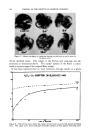
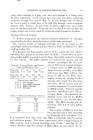
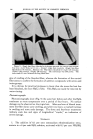
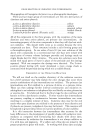
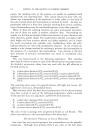
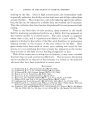
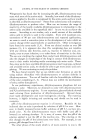
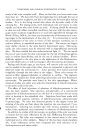
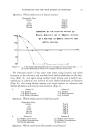
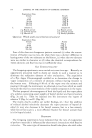
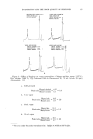
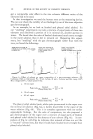
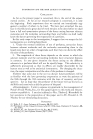
PROPERTIES OF PEROXIDE-BLEACHED HAIR 137 The close relation between damage, which results in a change of the physical properties, and the disulfide bonds in wool has been well estab- lished. It has been reported that the wet tensile strength is related mostly to the disulfide linkages, whereas the dry tensile strength depends largely on the peptide bonds (6). Therefore, a possible partial breakdown of peptide bonds might not show up when determining load extension in water. Therefore, it may be impossible to evaluate the over-all damage of bleached hair by means of 20 per cent Indexes. Thus the results given in Table 2 may not represent true values of bleached hair in its dry state. It was not possible to use methyl-, TABLE 2.--20% INDEXES OBTAINED IN DISTILLED WATER min. Bleach Blank 15 O.944 ... 30 0. 911 ... 45 0.89O 60 0.866 015•2 120 0.741 0.955 180 0.759 240 0.660 015}4 or ethyl alcohol, or ethylene glycol to obtain 20 per cent Indexes on bleached or virgin hair without breakage of some of the 12 single hairs. The fact that breakage does occur is very interesting and shows how human hair can differ in its physical behavior from wool. Ac- cording to Speakman's studies (7), "the capillary spaces in wool, which must be penetrated in order to alter its physical properties, are of the same order of size as the n-propyl alcohol molecule." In spite of the fact that the conditions were similar to those described by Speakman, it was not possible to stretch virgin hair 20 per cent from its original length in ethyl alcohol without breaking approximately 14 per cent of the hair fibers, and in ethylene glycol, which is even more reactive than ethyl al- cohol and only slightly less reactive than water, approximately 21 per cent. These results (Table 3) would indicate that alcohols of molecular weight greater than methyl alcohol are not capable of penetrating the hair, which may indicate that pore-sizes of human hair and wool are different. A calibration at 50 per cent and 75 per cent relative humidity could not be achieved because most of the hairs in the bundles broke before 20 per cent Extension was reached. It was therefore decided to measure the effect of hydrogen peroxide by the extension-at-break test. Extension-at-Break Extension of the fibers to the breaking point was determined with a Scott Tester employing the constant rate of loading method. For each test ten hair bundles containing 12 single hairs were processed in the bleach solution for different lengths of time, air-dried and transferred to a desic- cator containing a saturated sodium chloride solution (75 per cent relative humidity). After seven days the fibers were removed and immediately extended to the breaking point with the Scott Tester. Ten unbleached

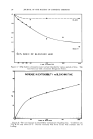
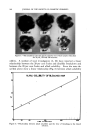
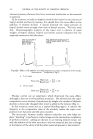
138 JOURNAL OF THE SOCIETY OF COSMETIC CHEMISTS Q9 O.8 0.7 Q6 •'•'"---. • BLANK BLEA C H ,•0% INDEX OF BLEACHED HAIR 15 30 45 60 120 180 240 TIME IN MINUTES Figure 3.--20% Indexes obtained in water on hair bleached for various periods of time. The tests were run with a Constant Elongation Tester. INCREASE IN EXTENSIBILITY vs BLEACHINGTIME % IO 0 60 120 180 240 TIME IN MINUTES Figure 4.--Per cent increase in extensibility compared to bleaching time. Conditions are 75% R. H. and about 25øC. Results obtained with Scott Tester with constant rate of loading.
Purchased for the exclusive use of nofirst nolast (unknown)
From: SCC Media Library & Resource Center (library.scconline.org)