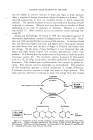
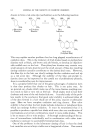
NATURAL COLOR PIGMENTS OF THE HAIR 129 has the ability to convert tyrosine to dopa and dopa to dopa quinone. After a number of further alterations indole-$,6-quinone is formed. This material polymerizes to form an insoluble brown or black compound, melanin. The specific chemical structure and method of bonding melanin to protein is unknown. Melanin may vary from almost colorless to black depending on its state of reduction or oxidation. Melanin is a stable free radical (7). Dark melanin acts as an excellent cation exchange ma- terial (8). Alving and Eichelberger (9) found in 1948 that prolonged ingestion of chloroquine diphosphate resulted in depigmentation of human hair. Saun- ders etal. (10) reported further instances of this reaction. It has been found that red, blond and light brown hair will lighten after chloroquine therapy but dark brown hair and the hair of Negro or Oriental individuals does not change. On the basis of these findings it is now presumed that red, blond and light brown human hair contains pheomelanin rather than melanin. It is known that the melanocytes in these hairs contain an active tyrosinase system (6). The metabolic scheme proposed by Butenandt et al. (11, 12, 13) (Fig. 2) provides a possible mechanism for pheomelanin formation. The melanocytes in pheomelanin hair contain an added en- zyme. This enzyme converts tryptophan to aminophenol. The presence of this compound operates a switch mechanism in energy utilization. Tyrosinase converts tyrosine to dopa and dopa to dopa quinone. The dopa quinone, however, is reduced to dopa and energy from this change Tyrosinose Oxi• Ou,none PIGMENT Arninophenox=zone Arninophenol R R R I I I YELLOW NH NH PIGMENT ( ( from 7•yptophon o•O • Figure 2.--Tyrosinase system and the oxidation of arninophenyl compounds (after Bute- nandt, et al.) (Figure originally published in The Biology of Hair Growth, Montagna and Ellis, editors, "The Nature of Hair Pigment," by Fitzpatrick, T. B., Brunet, P., and Kukita, A. Academic Press, Inc., New York, p. 295, 1958.)

130 JOURNAL OF THE SOCIETY OF COSMETIC CHEMISTS is utilized to produce pheomelanin. It can be seen that regardless of the final pigment the basic energy originates from tyrosinase. Since neither a pheomelanin nor an intermediate has been identified in human hair, this system is hypothetical. If studies in other animals apply to the human the pigment or pigments are probably derived from 3-hydroxykynurenine. In one redheaded patient (10) the areas of white hair became brown when chloroquine diphosphate was stopped. It seems likely that in these areas the pheomelanin system was destroyed. This removed the switch mecha- nism and the tyrosinase system produced melanin. Excessive inhibition of the pheomelanin system is likely to result in black hair rather than per- manently white hair. A red iron containing pigment, trichosiderin was isolated by Rothman and Flesch (14). The chemical structure of this pigment has not been identified. There is still uncertainty whether this is a natural pigment or a compound formed during the process of extraction. NORMAL CONTROL OF PIGMENT FORMATION Variation in the shade of hair color at different ages makes it obvious that pigment formation is not constant. Considering the entire metabolic process involved there are many areas where pigment production can be influenced. Most basic are the factors controlling the activity of the Golgi apparatus in laying down the protein matrix of the granule. Mito- chondria may play an important role in providing energy for the protein synthesis. Tyrosinase activity depends upon the availability of tyrosine, rate of tyrosinase synthesis and balance between activators and inhibitors. We must presume that the same factors will apply to the enzyme which converts tryptophan to aminophenol. Some of these processes are mod- erately well known but others are almost pure conjecture. Since there are many apparent mechanisms to influence pigment forma- tion it is logical to ask whether they are all utilized or whether the effects are always accomplished through the same chanel. Most alterations in hair color result in loss of pigment but it is possible to darken the color of the hair. There is a decreasing tyrosinase activity as hair becomes gray. The early stages of the growing hair have no tyrosinase activity, the adult hair is very active and pigment formation ceases just before the hair stops growing (15). White hair from one individual contained no detectable pigment granules (4). It appears that the hair has both fluctuation in enzyme activity and complete cessation of granule formation. It is un- likely that the melanocytes will be destroyed when hair turns white. Hair which is regrowing in alopecia areata may remain white for months. Mi- croscopically this hair resembles anagen IV hair (16). Hair at this stage
Purchased for the exclusive use of nofirst nolast (unknown)
From: SCC Media Library & Resource Center (library.scconline.org)