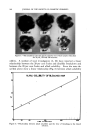
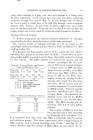
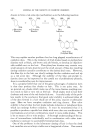
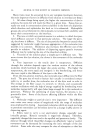
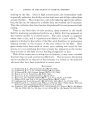
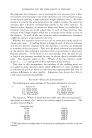
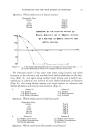
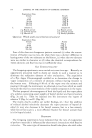
PROPERTIES OF PEROXIDE-BLEACHED HAIR 141 and time in the bleaching solution, one would expect to find a linear rela- tionship between the 20 per cent Index and bleach time. However, as Fig. 3 clearly shows, this is not the case. While further testing will be required to define the relationship precisely, it seems evident that the 20 per cent Index falls at a decreasing rate, and that it may actually increase over a part of its range (Table 5). It has been reported that in disulfide breakdown, the 20 per cent Index is linear to bleaching time of wool. Thus the fact that our results show a nonlinear relationship between the 20 per cent Index and bleaching time TABLE 5.--ALKALI SOLUBILITY strongly suggests that there may be Ti.me, Solubility, 20% min. % Index 0 7.62 1.0 30 11.37 0.911 60 12.43 0.866 120 18.85 0.741 180 25.30 0.759 240 32.60 0.660 ALKALI SOLUBILITY COMPARISONS BETWEEN WAVED AND BLEACHED HAIR HAVINO THE SAUTE 20% INDEX -------Solubility, %-- - 20% Waved Bleached Index 8.9 8.80 0.95 10.1 16.25 0.80 Copper Uptake a partial breakdown of peptide bonds. If it is assumed that only disulfide bonds and not peptide bonds are broken during the waving of hair, further evidence for peptide bond breakdown may be obtained by comparing waved and bleached hair having the same 20 per cent Index of 0.8. The latter shows 16.25 per cent and the waved hair only 10.1 per cent loss from its ori- ginal weight after the treatment in 0.1 N sodium hydroxide at 60øC., for one hour. The method of affinity-differences for copper of damaged wool was chosen in an attempt to get more information on bleached hair. Copper will react with the fiber, as has been reported in copper acid wool-dye methods. Copper uptake was determined by the method of Weber (11) and the fiber color, after the copper treatment, varied depending upon the degree and type of damage. Three grams of copper sulfate (CuSO4.5 H20) were dissolved in 300 ml. distilled water, and 10 mi. 28 per cent NH4OH was added. This copper- ammonium complex was diluted with distilled water (to 1000 mi.). The deep blue, clear solution containing approximately 760 mg. copper, was standardized by the usual sodium thiosulfate method. Fifty mi. aliquots of the standardized copper solutions were transferred to 250 mi. Erlen- meyer flasks. Five hundred mg. of the hair samples, kept at 21øC., and 65 per cent relative humidity, was added to the 50 mi. copper solutions and processed for fifteen minutes at 32.2øC. After the processing time, the contents of the flasks were poured into glass crucibles, and the copper solution removed by suction. The samples were washed four times with

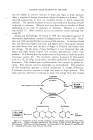
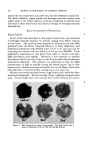
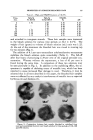
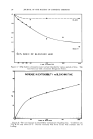
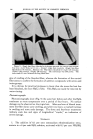
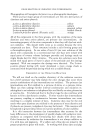
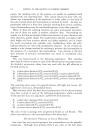
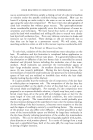
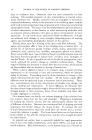
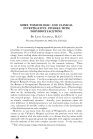
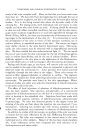
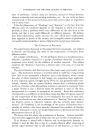
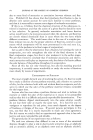
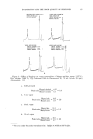
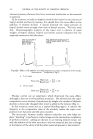
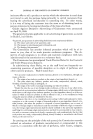
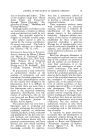
142 JOURNAL OF THE SOCIETY OF COSMETIC CHEMISTS • ?"' . .*." "•t, •%.*.. %.. A • M•..• . •,, •.. • . :• " . :•%•' '" •2 .• :•' ' "•".•.'•-• . •.•....-• .... • •F' • :f .::..•' ..... :½.'• f. • • •.. ...... Z•' ... ... .:•:'.•'"• '" ., '•?•: X ... .•"'., :• ' .. •...s."'•.% ......... ' "'*•4.•c. •. '•::' '•: :,: .... ? '..• ' ' . ...7." .. :. '**'•Z• •.'" .•'. .,•.. .:,• .... ......... ...,..?.-•,• .. •: •*.•i•.. • &.•* , :• -. ,q• . . ::. -.. .:.:½,. .,,.•....._. Figure 7.--Shows the degree ofoxid•tio• d•*•ge o• the h•ir, •s c• be seen by the green color. 50 mi. distilled water. The copper in the tiltrate and washings was de- termined as mentioned above. The copper uptake of the fibers is calcu- lated as a percentage of the origi,,1 fiber weight. It has been reported that on wool oxidation damage results in a green 4.0 HaOa + Cu-SORPT!I•N ON BLEACHED HAIR H•,Oz •.c •q. I leo •sb TIME IN MINUTES Figure 8.--rl•he bottom curve shows the copper uptake in per cent, plotted against bleaching time. The upper curve shows hydrogen peroxide sorption plotted against bleaching time.
Purchased for the exclusive use of nofirst nolast (unknown)
From: SCC Media Library & Resource Center (library.scconline.org)