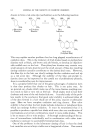
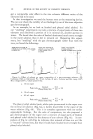
BASIC ELEMENTS OF DYEING HUMAN HAIR 161 a class of mordant dye which has been set aside in cosmetics because many of the metals tend to form off-shades when they come in contact with other cosmetic chemicals, such as waving lotions or other dyes. With mordant dyes, natural hair shades are difficult to produce, and stripping also is difficult. Another special class of bonding, which is partly ionic and partly covalent, is the formation of heavy metal sulfides. Adsorbed lead, bis- muth, mercury and other metals all tend to form sulfides slowly as hydrogen sulfide is released by the keratin fiber. Mercaptides of cysteine also slowly form by cleavage of cystine. The action is accelerated by the presence of moisture and sunlight. Lead and silver are probably the most commonly used metals. The great advantage of dyeing with metallic salts is that the color develops slowly over a period of weeks, suggesting a natural restoration of color, but metallic salts, again, tend to form off-shades with other cosmetics and they are nearly impossible to strip off. Another type of binding to keratin substrate is through hydrogen bonds, van der Waals forces, or, generally, secondary bonds. All classes of dyes are adsorbed on their substrate partially through secondary bonds. In the textile field this type of bonding can become exclusively sufficient, especially with large molecular weight dyes. To dye synthetic ester fibels in an organic medium, dyes are chosen that have a very low solubility in water so that the dye, once in the fiber, can be removed with water only with great difficulty. In this case the results can be classified as a solid solution. On human hair, however, it is difficult to bind dyes with sec- ondary bonds alone because the secondary bond is seldom strong enough in itself to lock in the dye, and the molecule which is large enough to be per- manently bound diffuses too slowly at 25-35øC. to penetrate human hair in a reasonable length of time. Another major classification of dyes could be intitled "Insolubilized Dyes." They are classified as such because they are locked into the fiber by precipitation. Secondary bonding and ionic bonding enter into the partitioning of the dye between solvent and fiber, but these bonds are not strong enough to accomplish thorough fixing by themselves. This class includes many dyes, among which are the most popular dyes now being used for human hair. These dyes are commonly referred to as oxidation dyes because the color and fixation are brought about by oxidation. A small water-soluble molecule like phenylenediamine or analogue thereof is diffused into the hair with modifiers such as aminophenols and catechols, which couple with oxidation into large insoluble chromophoric molecules that are incapable of desorbing from the fiber. It is speculated that oxidation dyes also may form some reversible covalent bonds with the amino groups in the hair. Since the dye molecule grows in size after it penetrates the fiber, intermediates can be quite small so that they penetrate very rapidly at body temperature, and experience has shown that they give a minimal

162 JOURNAL OF THE SOCIETY OF COSMETIC CHEMISTS staining on the skin. Used in high concentration, the intermediate tends to partially redissolve the old dye so that both new and old dye redistribute around the fiber. Most important, with mild reducing agents like sulfoxy- late, the dye can be reduced to a soluble form and washed out if necessary. Thus the oxidation dyes have become the preferred for most permanent hair dyeing. There is one final class of color product, quite common in the textile field for producing complicated patterns on a fabric, that has appeared on the cosmetic market to a limited extent. The color actually is a pigment rather than a dye, and it is printed onto fabrics in a resin vehicle. The pigment is limited to the surface of the fiber, and, therefore, its permanence depends entirely on the tenacity of the resin vehicle for the fiber. Since great strides have been made in recent years making new resins for hair sprays, it is not surprising that there already has appeared on the market some activity in this field of resin bonding of pigments to hair. With all the restrictions to using dyes on humans, it may seem a wonder that hair dyes are used at all and so effectively. The increase in the market and in satisfaction on the part of the consumer is a tribute to the technical advances that have been introduced in recent years. REFERENCES (1) Ooldemberg, R. L., Drug & Cosmeticf•d., 85, 618 (1959). (2) Goldemberg, R. L., 5 t. Soc. Cosmetic Chemists, 10, 291 (1959). (3) Wilmsmann, H., •im. Perfumer•iromat., 75, No. 5, 41 (1960). (4) Howitt, F. O.,•. Textile grist., 51, P120 (1960). (5) Kass, G. S., 5 t. Soc. Cosmetic Chemists, 12, 146 (196l). (6) Kass, G. S., •Im. Perfumer•iromat., 68, No. 1, 25, No. 2, 34, No. 3, 47 (1956). (7) Millson, H. E., and Turl, L. H., •im. DyestuffReptr., 39, 647 (1950). (8) Lindberg, Joel, Textile Research •., 20, 381 (1950) Ibid., 23, 67-76, 573-584 (1953). (9) Underwood, D. L., "Sorption and Diffusion in Human Hair," Ph.D, Thesis, Princeton University, Textile Research Institute, Princeton, N.J. (1954). (10) Speakman, J. B., and McMahon, P. R., New Zealand]. Sci. Technol., 20, No. 5B, March. 248-264 (1939) 21, No. lB, July, 31-46 (1939) 22, No. 5B, March, 235-264 (1941),
Purchased for the exclusive use of nofirst nolast (unknown)
From: SCC Media Library & Resource Center (library.scconline.org)