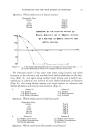
BASIC ELEMENTS OF DYEING HUMAN HAIR 157 total dye is adsorbed, but the movement of the dye through the fiber still is faster unless so much salt is added that fiber swelling is reduced. 3. The effect of fiber charge also can be reduced and penetration rate increased if a nonionic dye molecule or one of opposite charge is employed. 4. Leveling or even distribution of a dye is important in all fields of coloring. The initial penetration of dye never is uniformly distributed geometrically in a fiber because of local breaks in the fiber surface or un- intentional isolation of one fiber by its neighbors. Some dyes are adsorbed so strongly and completely on contact that they tend to remain where they happen to be first bound. They can be redistributed around the fiber by adding an agent that competes for adsorption on the same sites to which the dyes are adsorbed. This agent is called a "leveler." Dyes that are adsorbed only weakly by the fiber automatically give a much more level dyeing because they freely redistribute through a process of exchange be- tween fiber and solution. 5. Most textile dyeing is carried out at very high temperatures. With elevation in temperature there is a great increase in random motion of the solvent and fiber network. More important, keratin fibers swell greatly in water above 75 ø to 80øC., and too, most dyes are more soluble at these temperatures. In the textile industry, aqueous dye baths may be heated under pressure to achieve temperatures above 100øC. Under these con- ditions diffusion rates are increased by many orders of magnitude so that huge dye particles can be driven into the fiber. 6. The condition of a keratin fiber, especially of its surface, vastly affects the rate at which it can be penetrated. Morphological studies also show that wool or hair has several layers. Of these, the cuticle, or sheath of scales, and the epicuticle, a thin continuous outer cover of about 1013 A., are most resistant to penetration (7, 8). An analysis of the rate of sorption of simple salts like sodium sulfate or sodium bromide in human hair also shows that the epicuticle and cuticle form a resistant barrier that is pene- trated 10 to 100 times slower than the cortex in virgin hair (9). Chemical or physical damage of these barriers greatly accelerates diffusion (8). Bleaching, dyeing, waving or even swimming in chlorinated pools, es- pecially with exposure to sun, will break down these diffusion barriers and subsequent penetration by dyes as well as by other cosmetics is vastly accelerated (10). 7. To insure that adequate diffusion of dye occurs even into intact virgin hair, swelling agents can be added. Water probably is one of the best swelling agents for hair, but dilute ammonia or even disulfide reducing agents favorably augment the swelling. Other miscellaneous agents perform a combination of effects--wetting, dispersing, swelling, etc. When dye intermediates are employed, the next step in the dyeing process is color development. Typical dyes used in intermediate forms are azo

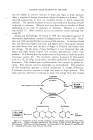
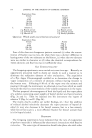
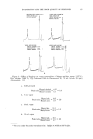
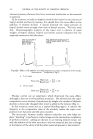
158 JOURNAL OF THE SOCIETY OF COSMETIC CHEMISTS dyes or oxidation dyes. Oxidation dyes are used extensively for hair coloring. The detailed chemistry of dye intermediates is treated exten- sively elsewhere (6). Briefly, oxidation dyes are analogues or derivatives of phenylenediamine, which, in the presence of an oxidizing agent, couples with itself to form large fused ring compounds with at least one unsaturated chromophoric bond. The exact color developed depends upon the presence of other substituents in the diamine or other terminating molecules such as aromatic amines, phenolics, nitro dyes or heavy metals present in trace quantities. In the trade many additional subtle modifications of shade are achieved with changes in ionic strength, dispersing power of wetting agents and hydrophilic-hydrophobic balance of the solvent. Finally, there must be a binding of the dye to the fiber substrate. The amino acid residues offer a host of dye binding sites in human hair. A partial list of functional groups includes amide, amine, ammonium ion, carboxylic acid, carboxyl ion, disulfide, mercaptan, phenol and alcohol. Every conceivable basic type of chemical bond is possible between dyes and the many functional groups in human hair: covalent, ionic, hydrogen, or van der Waals. It also is possible to lock in the dye by precipitation, com- monly achieved by solvent change or oxidative polymerization. These types of binding are discussed in detail after the next section, which points up the problems that are peculiar to dyeing of human hair. When a dye is applied at home or in a beauty shop, a matter of prime importance to all concerned is time and convenience, which we measure today in minutes. Everything must be done, therefore, to choose a dye which will penetrate the hair very quickly. All the factors which affect diffusion must be optimized to get a maximum rate of penetration. These are: concentration, size of dye, dissociation of micelies, dye charge, vis- cosity, swelling and temperature. To favor diffusion, we eliminate first the dyes of very large molecular weight, those which have many negatively- charged groups in their structure, those of low solubility and those that strongly aggregate in solution. On a human head, one hardly can tolerate dripping of dye solution from the woman's head onto her face and shoulders. Dripping is minimized by making the solution viscous, but this unfortunately reduces the rate of diffusion of the dye. Because time saving and lack of dripping are both important, this further reduces the choice of dye. To increase the rate of mass dye penetration, relatively small dyes are chosen and a concen- trated dye solution is sought. The latter factor limits one to dyes that are fairly soluble at the pH, the temperature, and the ionic strength dictated by other factors. As pointed out earlier, heat is especially helpful for rapid penetration and, in fact, very high temperatures, even above 100øC., are used in the textile industry. But, unfortunately, on the human head one is limited to
Purchased for the exclusive use of nofirst nolast (unknown)
From: SCC Media Library & Resource Center (library.scconline.org)