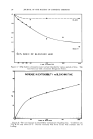
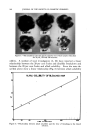
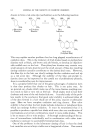
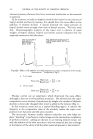
EVAPORATION AND THE ODOR QUALITY OF PERFUMES 171 We prepared two mixtures: one containing the two odorants plus a fixa- tive closely corresponding to one of the odorants in its critical features (e.g., in the second example, a high molecular weight aliphatic ester) the other mixture in exactly the same proportions by weight contains the same two odorants plus a fixative corresponding closely to the other odorant. If fixative action depends on attractive forces and hence on similarities in chemical structure, we would expect that in each of these mixtures that odorant would linger longest which has a structure most similar to that of the fixative. In each of the two mixtures under consideration, therefore, a different odorant would remain at the end. Whether this actually occurs or not can be ascertained quite easily by simple odor tests. A smelling blotter is dipped in each of the two mixtures and the two blotters (marked with code numbers or letters) are presented to members of the test panel. They are told which odorants are contained in the mixture (but nothing is said about their concentration or about any fixatives present). If the tester is not very familiar with the odor of one or both of the odorants involved, he may be shown these in suitable dilu- tions. The question asked is this: "Which of the two blotters smells more of ..... ?," naming one of the components of the mixture. Note that in this arrangement the members of the smelling panel are not asked to make decisions about subtle differences in odor strength or to indicate the point at which an odor becomes imperceptible but only to indicate differences in odor quality. Experience has shown that this is much easier and more reproducible. FIXATION--SMELLING EXPEP. IMENTS The following are some examples of the results obtained in our tests. 1. Solution M Solution N 1 g. Nonyl alcohol 1 g. Nonyl alcohol 1 g. Nonyl acetate 1 g. Nonyl acetate 8 g. Octylene glycol 8 g. Diethyl sebacate 5 mi. Ethyl alcohol* 5 ml. Ethyl alcohol* The question, "Which of these blotters smells more like nonyl acetate ?," was posed to a panel of 6-7 persons at various stages of evaporation. The answers were (cf. Fig. 1): Evaporation time, minutes Results 2-10 86% M 3545 100% M 60-70 100% M 200-205 58% N 280-285 86% N 320-330 100% N * The ethyl alcohol was added solely for the purpose of equalizing the viscosities of the two solutions.

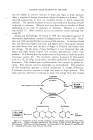
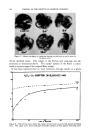
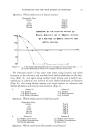
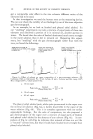
172 JOURNAL OF THE SOCIETY OF COSMETIC CHEMISTS •.0MP',4R'I$oN OF TIlE Fl'XttTI /ff ACTION OF 0CTyLENE GLYCOL AN/) OF NoNYL ALCOHOl_ AND •10NYL ACETATE MIN. Evaporation Time, minutes Results 1-10 100% H 30-35 57% H 54-57 100% G 90-96 100% G Again benzyl benzoate has a more pronounced retarding effect on the evaporation of its close relative, benzyl acetate, than on heptyl alcohol, while tridecyl alcohol exhibits a selective fixative action for heptyl alcohol. A very similar pattern was obtained when the proportion of fixative was diminished from 80 per cent to 40 per cent (Exp. 2b). 2b. Solution T 3 g. n-Heptyl alcohol 3 g. Benzyl acetate 4 g. n-Tridecyl alcohol Solution U 3 g. n-Heptyl alcohol 3 g. Benzyl acetate 4 g. Benzyl benzoate Question: Which smells more of benzyl acetate ? Figure .--Experiment on fixation using odor evaluation by a test panel. The vertical axis indicates which fraction of the test panel stated that blotter M smelled most like nonyl acetate. When the experiment was repeated, the question was rephrased: "Which smells more like nonyl alcohol?." An exactly analogous result was ob- tained. This result indicates that the aliphatic dialcohol, octylene glycol, is the better fixative for nonyl alcohol, while the aliphatic diester is the better fixative for nonyl acetate in Solution M the evaporation of the nonyl alcohol is initially retarded so that the acetate predominates, but in the final stages of evaporation the odor of the alcohol is more pronounced than on the blotter containing Solution N. 2a. Solution G Solution H 1 g. n-Heptyl alcohol 1 g. n-Heptyl alcohol 1 g. Benzyl acetate 1 g. Benzyl acetate 8 g. Benzyl benzoate 8 g..-Tridecyl alcohol
Purchased for the exclusive use of nofirst nolast (unknown)
From: SCC Media Library & Resource Center (library.scconline.org)