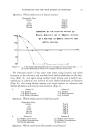
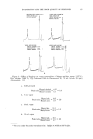
COLOR REACTIONS OF OXIDATION DYE INTERMEDIATES 149 Photographers will recognize the latter two as photographic developers. Third and last major group of intermediates are the nitro derivatives of diamines and amino phenols. p-nitro-o-phenylene diamine ......................... yellow o-nitro-p-phenylene diamine ......................... auburn 5-nitro-o-amino phenol .............................. greenish yellow 2-nitro-p-amino phenol ............................. reddish blonde 2-amino-4,6-dinitro phenol (Picramic acid) ............ orange All of the compounds in the three groups, with the exception of the meta diamines and meta amino phenol, are primary dye intermediates. An interesting property of the nitro compounds is that they will dye hair with- out oxidation. This should really come as no surpise because the nitro compounds are dyes. Their structure includes a salt forming group and a chromophore group. In one series of tests 0.5 per cent solutions of the above nitro compounds in a conventional hair dye base were mixed with equal parts of twenty volume hydrogen peroxide and dyeings made on virgin blonde hair for thirty minutes. The same dye solutions were then mixed with equal parts of water in place of the peroxide and the dyeings repeated. With one exception the dyeings were identical. The 2-nitro- p-amino phenol dyeing with water developed a more orange shade as contrasted with the peroxide dyeing which was a reddish blonde. CHEMISTRY OF THE OXIDATION REACTION We will not dwell on the complex chemistry of the oxidation reaction but a brief summary may help explain the color changes that occur when certain combinations of dye intermediates are oxidized. The primary dye intermediates are first oxidized to a quinone di-imine or a quinone imine. These can then undergo further internal condensation and oxidation re- suiting first in an indamine or indophenol dye and finally an azine, phenazine or oxazine dye. It is believed that in the final stage the dye combines with keratin to form a dye-keratin complex. If other reactive dye intermediates are present, coupling or condensation between intermediates can occur resulting in a complex mixture of dyes. Indamine dyes may be the end result when para diamines are oxidized in the presence of meta diamine and if phenols are present, indophenol dyes may be formed. This reaction will be explored in greater detail when we examine problems of color stability. It is this interaction between dye intermediates that accounts for the basic differences in the development of specific shades with oxidation inter- mediates as compared with formulating hair shades with direct dyes. Color formation by oxidation dye intermediates is not always additive as it is with dyes and pigments. If a yellow and a blue dye are mixed in the proper proportions green will result. In working with direct dyes and pig-

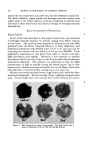
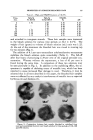
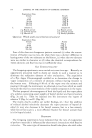
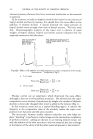
150 JOURNAL OF THE SOCIETY OF COSMETIC CHEMISTS ments, the resulting color of the mixture can readily be predicted both qualitatively and quantitatively. This cannot always be done with oxi- dation dye intermediates if the prediction is made solely on the basis of the color formed when the intermediate is oxidized by itself. Another un- predictable behavior is that color intensity resulting from certain combina- tions of intermediates may be considerably greater or less than expected. Many of these dye coupling reactions are quite pronounced and exten- sive use of them are made in modern oxidation dyes. Outstanding ex- amples are the blue and purple shades from mixtures of para diamines and meta diamines, purple shades from p-phenylene diamine and alpha naph- thol, bright red from p-amino phenol and alpha naphthol, and of course the many interesting and valuable color modifications when the poly- hydroxy phenols are used with p-phenylene diamine. In all of these ex- amples a color change resulted by oxidizing a primary dye intermediate in the presence of a secondary dye intermediate. Less obvious is the fact that mixtures of primary intermediates can result in unexpected color changes. This was demonstrated in the following experiment. Hair swatches were dyed for thirty minutes in each of the following four dye preparations. An alcoholic ammonium oleate base was used with the pH adjusted to 9.6 with ammonia. A. p-phenylene diamine 0.3%, resorcino10.3% B. p-phenylene diamine 0.3%, resorcinol 0.6%, o-amino phenol 0.3% C. p-phenylene diamine 0.3%, resorcinol 0.6%, m-amino phenol 0.3% D. p-phenylene diamine 0.3%, resorcinol 0.6%, p-nitro-o-amino phenol 0.3% The resulting colors were (A) greenish blonde, (B) light ash brown, (C) light brown-violet cast, (D) purplish brown. Hair swatches which had been dyed in preparation (A) for thirty minutes were then re-dyed in each of the following preparations which consisted of the same dye base also adjusted to a pH of 9.6 with ammonia. E. p-phenylene diamine 0.3%, resorcinol 0.3% F. o-amino phenol 0.3%, resorcinol 0.3% G. m-amino phenol0.3%, resorcinol 0.3% H. p-nitro-o-amino phenol 0.3%, resorcinol 0.3% The color of the re-dyeings were all greenish blonde to ash blonde. The colors were additive in this case and behaved like direct dyes. POLYHYDROX¾ [PHENOLS AS COLOR MODIFIERS One other but very essential group of dye intermediates are the phenolic compounds. Although they produce little if any color on the hair when
Purchased for the exclusive use of nofirst nolast (unknown)
From: SCC Media Library & Resource Center (library.scconline.org)