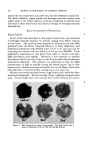
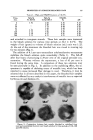
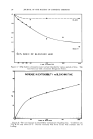
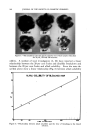
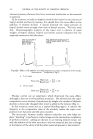
COLOR REACTIONS OF OXIDATION DYE INTERMEDIATES 153 use as a permanent reference sa•nple a dyeing on hair of a dye intermediate or mixture under the specific conditions being evaluated. How can we know if a dyeing we make today is the same as one we made six months ago using the same dye composition ? We have tried color photography of dyed hair swatches but without great success. The spectrophotometer shows considerable promise especially since the development of newer in- struments and techniques. We have found that skeins of spun silk can easily be dyed with metallized and milling silk dyes to match very closely hair dyed with oxidation dyes. Even very delicate variations in shade and intensity can be matched. These dyeings on silk are extremely fast so that they can be kept as a permanent record. We will admit, that matching oxidation colors on silk in this manner requires considerable skill. THE EFFECT OF MOLECULAR SIZE To color hair, oxidation of the dye intermediates must take place on the hair. If oxidation and dye formation is completed before application to the hair, color absorption will not take place. It is generally believed that the absorption or diffusion of dye into human hair is controlled by several chemical and physical factors including the molecular size of the inter- mediate. Small molecules can penetrate the intermicellular spaces of hair--large molecules cannot. An excellent discussion of this by Wilms- mann (4) was recently published. During the hair dyeing process, dye intermediates of relatively small molecular size penetrate the intermicellular spaces of hair and are oxidized to insoluble dyes within the hair shaft thereby locking the dye within the hair. It is quite possible that the molecular size of components of the dye base or vehicle plays an important role. The composition of the dye base has a pronounced effect on the depth of color of the dyed hair, as well as on the actual shade and highlights. For example, if a dye composition were prepared in an aqueous-alcoholic solution, a liquid soap base, and a super farted cream base, all at the same pH and dyeings made on hair for the same length of time and under identical conditions, the color intensity would vary greatly. The water-alcoholic solution would probably give the most intense dyeing and the superfarted cream color the weakest dyeing. As the swelling of the hair increases, it becomes more receptive to the dye and the degree of swelling is certainly a contributing factor. The viscosity of the product may also affect color diffusion. Another possibility is that some of the intermicellular spaces are blocked by large fatty molecules in the dye base thereby reducing penetration of the smaller dye intermediate molecules. This can be demonstrated by using alpha naphtol with p-phen- ylene diamine or with p-amino phenol. In a series of dyeings from a soap base and a superfarted base, both at the same pH, the soap base resulted in dyeing of higher intensity.

154 JOURNAL OF THE SOCIETY OF COSMETIC CHEMISTS The relationship of molecular size of the dye intermediates to color in- tensity on the hair can be a valuable aid to the formulator or a trap for the unwary. One other influencing factor must be mentioned and that is the absorbancy or porosity of the hair. When hair is bleached it becomes more receptive to dyeing because the intermicellular spaces become larger. When the new growth of hair is retouched as it must, because hair con- tinues to grow, the dye batch is applied first to the new growth and then combed out to the ends to obtain an even color effect over the entire head. It is possible that if the composition contains an intermediate or modifier of large molecular size, the porous ends of the hair may dye to the proper shade but the less porous new growth may not or the reverse may be true. For example, in auburn shades this may result in auburn colored hair with rose or pink ends, especially on pre-bleached hair. An interesting application of large molecular weight intermediates is psychological or esthetic. It is usually, but not always, desirable for the developing dye bath to take on the color of the hair shade. When the developer is mixed with the hair dye, color development in the mixture starts immediately. It is possible for the dye bath to become red and dye the hair blonde or the mixture to become yellow and dye the hair steel gray. In certain cases the judicous use of a high molecular weight inter- mediate can be used to adjust the dye bath color to the hair shade without contributing to the hair shade. SUMMARY We have attempted to demonstrate the color effect on hair resulting from combinations of dye intermediates and to point out some of the problems and pitfalls. Because of the poor color fastness on hair of some interme- diates one method of preparing reference dyeing on spun silk is described. Certain practical aspects of the role of molecular weight of both inter- mediates and dye base ingredients are discussed. Bear in mind that this paper has only discussed combinations of two intermediates. The problem becomes more complex when you consider that a specific hair shade may contain from four to eight intermediates. It is our recommendation that those cosmetic chemists without previous experience in this field who may be faced with the problems of formulating oxidation hair coloring products, first become familiar with the dyeing characteristics of each inter- mediate as well as basic combinations. This is a prerequisite to intelligent formulation of complete shades. Although we trust that this paper has shed some light on a complex subject, there is still no substitute for ex- perience. REFERENCES (1) Kass, G. S., vim. Perfurnerviromat.,68, No. 1, 25 (1956). (2) Kass, G. S., Ibid., 68, No. 3, 35 (1956). (3) Kass, G. S.,Ibid., 68, No. 3, 47 (1956). (4) Wilrnsrnann, H.,Ibid., 75, No. 5, 41 (1960).
Purchased for the exclusive use of nofirst nolast (unknown)
From: SCC Media Library & Resource Center (library.scconline.org)