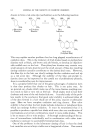
BASIC ELEMENTS OF DYEING HUMAN HAIR 159 the few degrees rise above room temperature that can be tolerated on the scalp. At that, it is risky to rely on a very uniform or reproducible rise above body temperature, especially in the regrowth area close to the scalp where the heat is needed most. Theoretically, one might expose the scalp to temperatures up to about 45øC., but in practice this is difficult to regu- late and the net result is a restriction to dye molecules which will penetrate rapidly at or near body temperature. All cosmetics must be medically acceptable. As a precautionary meas- ure, patch tests are usually recommended to reveal to the consumer any sensitization to the dye. Staining of the skin is another problem. Gloves can be worn to protect the hands, but a certain amount of dye contacts the scalp. To a limited extent staining is unavoidable nevertheless, for reasons not completely understood, dyes differ greatly in their relative tendency to stain skin and dye hair therefore, if any appreciable amount of dye is to be put into the hair, the choice must be restricted to dyes which, by experience, prove to stain the skin only minimally. Textile chemists are always concerned with the problem of level dyeing, or an even adsorption of the dye throughout the fabric or fiber, although on the human head a slight natural variation is desirable. The complications in achieving level dyeing on human hair are far greater than on textiles be- cause of the gross variations in human hair, even on one head. There are natural variations in hair due just to anthropologic constitution, physical condition and age of the man or woman. But far more important than these is the history of chemical treatments the hair has received. There is a pronounced change in rate at which the dye will diffuse into the hair after bleaching, waving and dyeing. As though this were not enough, the most formidable aspects of level dyeing are those connected with regrowth. The regrowth, freshly out of the follicle, is completely free of all former treatments, having intact cuticle and epicuticle, while the tip end may have been waved, bleached, dyed, shampooed, chlorinated and saturated with metals from the water supply. Between the scalp and tip end are demar- cations from all the former treatments. This hair, the consumer demands, must be dyed with natural uniformity from the scalp to tip, from ear to ear and nape to forehead! Such a nonhomogeneous substrate surely could colorfully fractionate some mixtures of dyes. Yet, formulating with more than one dye is required to produce certain colors. Therefore, to achieve reasonably level dyeing, one must use dyes that are similar in structure and size and preferably weakly absorbed so that minimum partitioning of dye mixture occurs between the sections of hair that have received different treatments. It helps to use dyes that are relatively small and free of neg- ative charge so that penetration is equally rapid in both new and old portions of the hair. The process of dyeing of regrowth can add more dye to the

160 JOURNAL OF THE SOCIETY OF COSMETIC CHEMISTS already dyed portion of hair. To minimize this effect, a dye intermediate can be used that will partially reduce and solubilize the old dye so that both new and old dye will be free to redistribute evenly throughout the fiber. Dyes for human hair must not easily rub off on linens or dissolve in a sham- poo or even change color when exposed to other cosmetics. Of course, temporary color rinses, on the other hand, are expected to rinse out, but still should not stain clothing. This requires that only those dyes be used that can be firmly locked into the fiber. In cases where the dye was too intense or not quite the color the woman wanted, or where the woman has decided to make a radical change in hair color, the dye must be strippable (or removable), preferably by a mild solubilization, usually a reduction, and rinsing out. Finally, we add to all these restrictions that the dye selected must be natural and appealing in color. Needless to say, compromises must be made to find dyes that even reasonably approach all these restrictions. It is interesting to see, now, how these many restrictions have reduced the choice of dyes from the thousands available in the textile industry to just a few suitable for use on human hair. It is convenient to consider the available dyes by the type of reaction they undergo with human hair. Covalent bonding produces the most irreversible chemical binding. Dyes containing one or two active chlorides in a cyanuryl ring, for example, will split out HC1 with active hydrogen in keratin. Under proper conditions, vinyl dyes also will react with similar sites to form covalent bonds. How- ever, because these dyes cannot be removed except by severe oxidation of the hair, they are eliminated for use on heads, for removal is mandatory if a woman wants to drastically lighten or alter the color developed in her hair. Ionic bonding is commonly employed in the textile art. Basic dyes form rather firm salt linkages with carboxylic groups of hair, and, being positively charged, will penetrate human hair at reasonable rates since the hair is oppositely charged, but unfortunately, the basic dyes tend to stain the scalp. Acid dyes, on the other hand, are bound rather well to keratin, also by salt linkages, yet are less prone to stain the skin. Large textile acid dyes, which can be put into a swollen fiber at high temperatures, are quite well locked in at room temperature, but the smaller acids that will penetrate hair at body temperature are not bonded strongly enough to be classified truly permanent nevertheless, they can be used as temporary color rinses or hair tints. There are other dyes or pigments important to both the textile and the hair color field which can be classified under the general category of ionic bonding. Most metals, for example, are firmly bound to keratin, including human hair, partially by ionic bonds and partially by coordination bonds, and many dyes which do not in themselves firmly bind to hair will strongly chelate to these metals. This constitutes
Purchased for the exclusive use of nofirst nolast (unknown)
From: SCC Media Library & Resource Center (library.scconline.org)