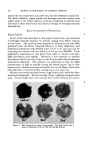
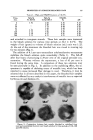
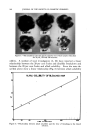
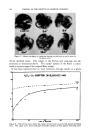
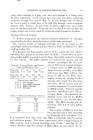
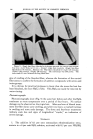
TOXICOLOGIC AND CLINICAL INVESTIGATIVE STUDIES 165 study of the color complex itself. Here, we feel that you have much more data than we. We have felt from the beginning that although the use of callus was superior tO gelatin, yet this is of value only for early pilot testing studies. It is in the living normal skin where the dynamic study of the coloring lies. For testing series, both individuals who are known to color rapidly and those who color slowly are used. Coloring should be observed in skin not only urlder controlled conditions, but also with the skin micro- scope under moderate magnification (7) and with light filtered through the Wood's Filter, 3620 A., for there are characteristics of fluorescence at vary- ing stages in the development of the color (1). It is interesting to watch the development of the color in forms of little particles scattered, not in uniform fashion, in superficial portion of the skin. The masses are larger, more darkly colored in the more heavily keratinized areas. Microscop- ically, the color masses may be observed well in deparafFinized unstained skin. We have studied this also under polarized light (1). We can watch the loss of color under the skin microscope by the use of bleaching agents, such as sodium hypochlorite, and by the use of sodium bisulfite. Form- aldehyde applied to the skin prior to the application of the dihydroxyace- tone will inhibit color it will not change it after the color has developed. Peeling with Scotch tape, as you know, will remove color and the color can be studied in the tape strips when these are suspended in glycerol and observed under the microscope (1). Color particles were found scattered irregularly through the skin often in the ridges. These color masses ob- served at 80X appeared globular or spherical in outline. The pigment masses were studied also under polarizing microscope and with fluorescent microscopy. No particles were found in the skin appendages. Histo- chemical studies are under way with the relationship of dihydroxyacetone to the amino acids in the skin. The effect of local injections of solutions of dihydroxyacetone in the skin has been studied. One injection, intradermally, of a commercial preparation of dihydroxyacetone into the skin of a volunteer did not cause color to develop in the superficial skin. Injections have been made with 20-90 per cent aqueous solutions of dihydroxyacetone subcutaneously in guinea pigs. No color was observed grossly in the deeper tissue but coloring of the skin and hair above the injection site was observed (? con- tamination). Coloring was studied also with various materials such as scales, hairs, epidermal cysts immersed in solutions of dihydroxyacetone. In addition to studies with microscopy, an analysis of the color was made in human skin by color reflectance by the G.E. Reflecting Electrospectro- photometer. The color was compared to sun tanned areas in the same individual and in other subjects. Report of this has been made elsewhere (8). Color reflectance curves were compared also with solutions of di- hydroxyacetone and amino acids.

166 JOURNAL OF THE SOCIETY OF COSMETIC CHEMISTS ß Another phase of the study of the color complex has been repeated ob- servations of changing color of crystals of dihydroxyacetone exposed to air or ammonia. Dihydroxyacetone in a desiccator or in an atmosphere of pure oxygen has not been observed to change color over a period of six months. To study the color change in dihydroxyacetone, thin layers of dihydroxyacetone in alcohol were spread over porcelain or glass. Studies of changes in size and shape of crystals were observed 'under regular, pol- arizing and fluorescent microscope. Infrared absorption studies for us by Brewer (8) showed no quinone structure at any time in the development of the yellowish crystalline mass. Chemical studies of the structural and color changes in crystals are being continued by Wittgenstein and her associates. After exposure to air for three months, the yellowish crystalline masses were dissolved in water and showed coloring of the skin. Crystals ex- posed to air for six months showed only faint coloring of the skin. It is obvious that there is definite need to be able to control better the development of the color--to secure a color less yellow and more natural as sun tanning. Much has been done in this phase but little has been said publicly. In all probability, there is much more speculative material than factual results. It seems to us that the following types of color studies need to be considered: 1. To continue to use higher concentrations of dihydroxyacetone 2. To add colorants 3. To add tannins 4. To attempt to increase melanin production 5. To develop more effective analogues of dihydroxyacetone I am certain that your group will be able to solve this colorant problem. However, it is difficult to work on this in an orderly fashion without any more information on the basic mechanism of the development of the di- hydroxyacetone color complex. Again we plead, monotonously, for con- tinued interest and support for basic research in this field. In brief, then, there is a maximum color response to local application of dihydroxyacetone whether you use a single application of high concentration or repeated applications of weaker concentrations. A whole series of studies with various dyes and dye complexes in solutions of dihydroxyacetone did not produce constant or lasting color. There was no interference with the action of the dihydroxyacetone. Research in this field continues. Black walnut juice extract was used as an example of a tannin. Here, too, even with concentrated and standardized extracts, the color was often not superior and did not persist and was removed easily. Experiments with the development of analogues to complex more amino acids, increase melanin production without irritant or sensitizing reactions are continuing with some interesting although preliminary results. Studies with hair dyeing mixtures are also continuing.
Purchased for the exclusive use of nofirst nolast (unknown)
From: SCC Media Library & Resource Center (library.scconline.org)