SOME TOXICOLOGIC AND CLINICAL INVESTIGATIVE STUDIES WITH DIHYDROXYACETONE By LEON GOLDMAN, M.D.* Presenter/November 29,/960, New York City I• THE constantly changing superficial pattern of the practice, not the principles of cosmetology, it would appear that now this subject of dihy- droxyacetone (9) is of little interest except in courts of law. We, in derma- tology, knew nothing about this fascinating compound when it was intro- duced for consumer use and abuse. Still, we know too little about it and have some concern about this lack of knowledge if dihydroxyacetone is to be continued to be used extensively by the cosmetic industry. When we say we know so little about this, you must remember that some of our research group in Cincinnati have had some four years of experience with dihydroxyacetone, including observations of its coloring effects (1). Some of you may know also that our cooperative work was started more than a year ago, chiefly in response to demands by physicians for informa- tion on dihydroxyacetone. I set up a cooperative study with the Children's Hospital Research Group, who had worked long with dihydroxyacetone, the Bureau of Occupational Dermatoses of the Public Health Service in Cincinnati, the Kettering Laboratory and our Department of Dermatology. We are still trying to learn more about dihydroxyacetone. I am sure that what we do, incidentally, without any budget, in a very cumbersome, tedious institutional type of fashion is done rapidly and efficiently in your own research groups. Each day new avenues of work arise to complicate an already complicated situation. Actually, your pessimism about the color deficiency of dihydroxyacetone is not warranted unless you have, by now, exhausted all possible studies in the mechanism of the development of the dihydroxyacetone color complex. However, as you know from the work of Wittgenstein and her collab- orators at the Children's Hospital and from the previous work with the sugars in relation with the amino acids, it is obvious that the amino acids, especially with the guanido group and especially with arginine and glycine that the majority of this color complex reaction occurs. In the test tube, * Dept. of Dermatology, College of Medicine, University of Cincinnati. 163

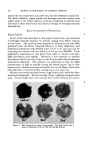
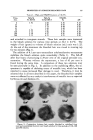
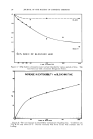
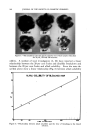
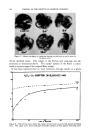
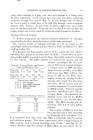
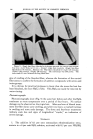
164 JOURNAL OF THE SOCIETY OF COSMETIC CHEMISTS Wittgenstein has found that by increasing the pH, dihydroxyacetone may react with most of the amino acids. Actually, how much of the dihydroxy- acetone applied to the skin is complexed by the amino acids and how much is absorbed as dihydroxyacetone? Sweat from colored areas still complexes dihydroxyacetone to produce color. How can we increase the range of reactivity of the locally available dihydroxyacetone in relationship to the amino acids available in the superficial skin ? As yet we do not know the answer. According to our studies, only a small amount of the available amino acid in keratin is used in the complex. Even with maximum con- centrations of 90 per cent dihydroxyacetone and repeated applications, we seem to reach a saturation point in the development of color which we cannot change either quantitatively or qualitatively. Other investigators have found the same result (3, 4). From our clinical studies on over 280 patients ($), it is apparent also that this complexing does not interfere with any obvious skin function, such as, reaction to infection and, cur- iously, even to yeast infection, or to other forms of reactivity in the skin. We are now studying the vaginal flora under local dihydroxyacetone and also the changes in morphology of the fungi in contact with dihydroxyace- tone in their media including media containing only amino acids. There- fore, since we do have available dihydroxyacetone reactive groups, carbonyl and available amino acids, we should be able to get more amino acid com- plexing. We are continuing to study this problem. We have found recently that we can inhibit color formation on skin by using sodium thiosulfate with dihydroxyacetone or calcium chloride in dihydroxyacetone. You are all familiar with the formaldehyde inhibition of the color complexing (1, 4). Phenol does not inhibit the development of color, neither does glycerol. In our preliminary experiments, dihydroxyacetone phosphate did not produce a color. Moreover, we obtained no color with dihydroxyacetone and N,l-carbobenzoxy arginine. In our experience, glyceraldehyde showed weak coloring (from production of dihydroxyacetone?). Glyoxal shows more rapid development and more homogenous coloring. The material, however, is highly irritating and sensitizing and should not be used in cosmetics. pH of the dihydroxyacetone reaction is of interest. Bandelin (6) has indicated that no color is produced by solutions of pH 8.3 or over. How- ever, in freshly prepared borate buffer solutions of pH 9.5, we have pro- duced color. As the dihydroxyacetone reacts with buffer (and pH is lowered) no coloring develops. It is true, of course, that the pH of the solution applied is not the pH at the reaction site. The coloring on the skin changes the pH of the colored area very little. For example, in one patient, pH changed from 6.4 to 6.7. The other phase of the study which is of more concern to you is the
Purchased for the exclusive use of nofirst nolast (unknown)
From: SCC Media Library & Resource Center (library.scconline.org)