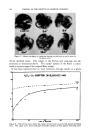
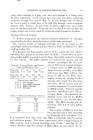
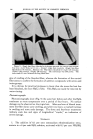
PROPERTIES OF PEROXIDE-BLEACHED HAIR 145 improves the bleach bath stability when in contact with hair by as much as 40 per cent (32.2øC., over a period of four hours). 2. The results of the use of mechanical properties for 20 per cent Index measurements in water may be misleading, if it is assumed that a relation- ship exists to the dry tensile strength of the bleached hair. 3. At 75 per cent relative humidity, hair shows increased extensibility with time in the bleaching solution. The increase is most pronounced in the first hour, 15.6 per cent in subsequent hourly treatment the increase is less, 2.9 per cent to 3.6 per cent, and becomes almost linear. 4. The mechanical properties of human hair in organic solvents indicate that alcohols of molecular weight greater than methyl alcohol are not capable of penetrating the hair, perhaps indicating a different pore size in human hair than that in wool. 5. Alkali solubility tests revealed that there may be not only a break- down of disulfide bonds, but also a partial breakdown of peptide bonds. 6. Copper-uptake determination appears to be a simple, accurate and rapid method for indicating small oxidation damage to hair fibers. 7. The hydrogen peroxide sorption increases with bleaching time and is apparently related to the degree of hair fiber swelling. The H202 uptake from a 6 per cent solution (pH 4) varies from 3.3 per cent to 3.7 per cent. The physically held H20• is easily removed by water rinsing. ztcknowledgments. The authors wish to acknowledge, with sincere gratitude and appreciation, the assistance of the entire staff of Evans Re- search and Development Corporation. We are greatly indebted to E.G. McDonough, Ph.D., whose aid and ideas, throughout the preparation of this study, have been invaluable Mr. James Haygood, whose ideas carried us through every step of our experiments and Mrs. Elsa Knitl, whose careful preparation of the graphs and photomicrographs made this entire study possible. REFERENCES (1) E16d, E., Nowotny, H., and Zahn, H., Me//iand Textif&r, 25, 313 (1942). (2) Harris, M., and Smith, A. L., •. ]Zesearch Mat. Bur. Standards, 16, 301,309 (1936) 19, 81 (1937). (3) Alexander, P., Fox, M., and Hudson, R. F., Biochem., •7., 49, 129 (1951). (4) Stoves, J. L., Trans. Faraday Soc., 38, 501 (1942). (5) Andrews, J., •. Biol. Chem., 102, 253 (1933). (6) Alexander, P., and Hudson, R. F., "Wool: It's Chemistry and Physics," New York, Reinhold Publishing Corp. (1954). (7) Speakman, J. B., Trans. Faraday $oc., 26, 61 (1930). (8) Harris, M., and Smith, A. L., •7. Research Natl. Bur. Standards 18, 623 (1938). (9) Lees, K., and Elswerth, F. F., •7. Dyers & Colourists, 68, 207 (1952). (10) Harris, M., and Smith, A. L., •. Research Natl. Bur. Standards, 17, 557 (1936). (l 1) Weber, R., SIZFFachorgan Textilveredlung, 7, 15 (1952). (12) Valko, E. I. and Barnett, G., "The Swelling of Hair in Aqueous Solutions and Mixed Sol- vents," taken from the thesis of Gabriel Barnett, submitted in partial fulfillment of the requirements for the degree of Master of Science in Chemistry, Polytechnic Institute of Brooklyn, June, 1952. (13) Alexander, P., Carter, D., and Earland, C., Biochem. •., 47, 251 (1950).

COLOR REACTIONS OF OXIDATION DYE INTERMEDIATES By Gvs S. KASS* and Lores HOEHN, JR.t Presented September 15-16, 1960, Semina% Chicago THE RAPIDLY expanding hair coloring market has focused the atten- tion of cosmetic chemists on all types of hair coloring methods and products with particular emphasis on oxidation dyes. A major marketing advance is now under way as oxidation hair coloring preparations break away from their traditional exclusive use in beauty shops to retail sale to the consumer for self application. A modern oxidation dye is a hair coloring preparation that is mixed with a developer, usually hydrogen peroxide, just prior to application to the hair. These products do not contain any dyes in the true sense of the word, except for certain nitro compounds, but contain chemical compounds or intermediates which form a dye upon oxidation In no other cosmetic product do so many variables affect the end result as it does in hair color- ings and this is especially true of the oxidation dyes. Among the many properties which must be taken into consideration when formulating such products are: 1. Color produced on the hair: for both natural and high fashion shades, depth or intensity and hue must be carefully worked out without undesirable highlights. 2. Color of the dye bath: It should bear a color relationship to the color it imparts to the hair. If the hair coloring is ash blonde, it is not desirable for the dye bath to be purple. 3. Viscosity of the dye bath: The current trend is to a viscous or semi- gelled dye bath so that it will not drip or run when applied to the hair. 4. Color fastness on the hair: The shades must be fast to light, sham- pooing, sunlight and perspiration. Certain hues such as the reds and blues are particularly sensitive. 5. Shelf life of the product: These products are sensitive to oxida- tion, trace metals, etc. Certain intermediates, which may be pres- ent in very small amounts, may lose their activity upon aging thereby changing the color produced on hair. 6. Effect ofpH: The degree of alkalinity has a pronounced bearing on * Alberto Culver Company, Chicago, Ill. t Nyanza Color and Chemical Co. Inc., Chicago, Ill. 146
Purchased for the exclusive use of nofirst nolast (unknown)
From: SCC Media Library & Resource Center (library.scconline.org)