PROPERTIES OF PEROXIDE-BLEACHED HAIR By WALTER W. EDMAN and MAX E. MARTI* Presented September 15-16,1960, Seminar, Chicago DAMAGE OCCURRING from the bleaching of hair has largely been a subjective response. This paper, sponsored by Becco Chemical Division, Food Machinery and Chemical Corporation, deals with objective physical and chemical changes that occur in hair treated with hydrogen peroxide. The bleaching or lightening of human hair has been widely practiced. Only within the last few years has anything been published about the physical and chemical changes resulting from bleaching hair. Although much has been published about the effect of oxidizing agents on wool, it is not very useful, since there are important chemical and physical differences between hair and wool. Moreover, differences in the mode of treatment and final end use of wool make many findings on wool partially or com- pletely irrelevant to those for which we look in human hair. It has been reported many years ago that after a strong oxidizing treat- ment with hydrogen peroxide, sulfuric acid can be detected in such bleach solutions (1). Harris and Smith (2) have done extensive work on wool and they found that, after up to three hours in 3 per cent hydrogen per- oxide at 50øC., no severe damage could be seen. According to them the sulfur content stays constant whereas the nitrogen content decreases. By increasing the peroxide concentration or the treatment time, the sulfur content decreases also. It is assumed that oxidation products (3) are formed as intermediate products (RSO=--SO=R, etc.) which are not stable in aqueous solutions, and decompose to sulfonic-, sulfinic- and cysteic acids. Therefore, they concluded that hydrogen peroxide attacks the disulfide linkages in wool. E16d and co-workers (1) have shown that wool dissolves in 3 per cent H=O2 at 60øC., pH 4, after eighteen hours, and concluded that this was due to the attack of HsOs on the peptide bonds. If disulfide- and peptide linkage breakdown occurs in wool when treated with H20=, are there also similar linkage breakdowns in human hair during HsO= treatments ? In answering this important question, several tests and methods have been chosen. The measurement of the tensile strength of the fiber, con- * Evans Research and Development Corp., New York 17, N.Y. 133

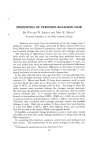
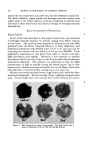
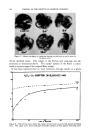
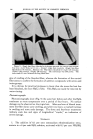
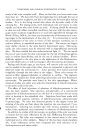
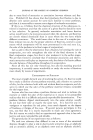
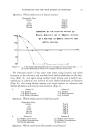
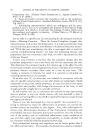
134 JOURNAL OF THE SOCIETY OF COSMETIC CHEMISTS sidered the most important and useful test, has been employed extensively. The alkali solubility, copper uptake and hydrogen peroxide sorption tests widely used in the textile industry, were also conducted to provide more information about the physical and chemical changes on hydrogen peroxide bleached hair. BASIC EXPERIMENTAL PROCEDURES Bleach Solution In all of the tests described in this paper, human hair was immersed in hydrogen peroxide solutions for periods ranging from fifteen minutes to four hours. The solutions were prepared by diluting 35 per cent H202 (obtained from the Becco Chemical Division of Food Machinery and Chemical Corporation) with distilled water to 6.0 4- 0.1 per cent and by activating the solution with the addition of 0.5 per cent NH4OH. From preliminary experiments it was found that, when in contact with hair, H20•. decomposes very rapidly. Therefore, it was necessary to stabilize the solution with 0.1 per cent of the dry salt of tetrasodium ethylenediamine tetraacetate dihydrate. This addition was performed to keep the H20• concentration as high as possible during the bleach process (up to four hours), and to chelate any traces of metallic ions on the fibers, which have been reported to increase the fiber damage up to four times (4). All tests were made with dark brown, virgin Italian hair, which had been previously shampooed. Six-inch strands of hair, weighing two grams were used. Twelve single hairs were knotted (four inches between the knots), Figure 1.--Hair bleached for various time periods. The dark brown hair is shown as bleached for 30, 60, 120, 180 and 240 minutes.
Purchased for the exclusive use of nofirst nolast (unknown)
From: SCC Media Library & Resource Center (library.scconline.org)