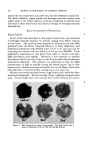
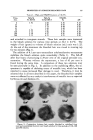
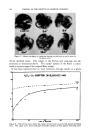
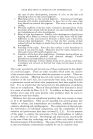
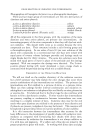
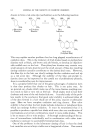
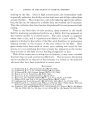
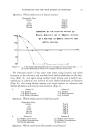
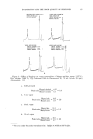
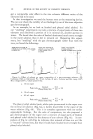
128 JOURNAL OF THE SOCIETY OF COSMETIC CHEMISTS PIGMENT GRANULE FORMATION Observations with the electron microscope by Barnicot and Birbeck (3, 4) appear to provide the best description of this phenomenon. Pigment granules appear to arise in the Golgi zone of the melanocytes. Vesicles in the Golgi zone increase in size and a structure composed of concentric membranes or a crumpled spiral membrane forms in this space (prepigment granule). This structure is presumed to be protein. In the dark hair, pigment is deposited within this protein matrix until the granule becomes a dark homogenous structure. The granules in blond hair are fewer and less well developed but appear to be the same type. Granules in red hair, however, are smaller, have an ill-defined boundary and contain groups of small dense particles. After the granules form in the Golgi zone they become evenly dispersed in the cytoplasm. The granules eventually move into the dendrites and exit from the melanocyte. It is presumed that the enzyme governing pigment formation becomes active on the prepigment granule before pigment is formed. The electron micro- scope provides no evidence regarding exact location of the enzyme. The mechanism by which pigment attaches to the protein matrix is unknown. Hair melanocytes in the albino produce granules consisting only of protein matrix. These granules disperse through the cytoplasm but cannot be followed into the hair. Gray hair from one individual was studied. The melanocytes could not be identified and no structures resembling pigment granules were found. Pigment granules persisted as identifiable structures in dark hair which had been bleached with peroxide. ENZYMES AND PIGMENTS The basic enzyme of human pigment formation is tyrosinase (5, 6). This enzyme is a copper protein which is found only in the melanocytes. It Figure 1• Nor•ai iu•an black hair. A. Melanocytes occupy upper hair matrix. I-Ien•a- .toxylin and eosin. B. Radioautographic tyrosinase method. Lithium carmine. Tyrosinase m the hair bulb melanocytes had catalyzed the oxidation of 0 4 labeled tyrosine to 0 4 labeled melanin. The sites of radioactive melanin are represented by the dense masses of silver grains. (Figure originally published in The Biology of Hair Growth, Montagna, W., and Ellis, R. A., editors, "The Nature of Hair Pigment," by Fitzpatrick, T. B., Brunet, P., and Kukita, A. Academic Press, Inc., New York, p. 288, 1958.)

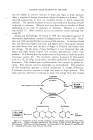
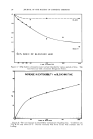
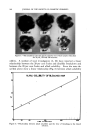
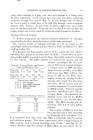
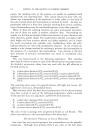
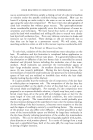
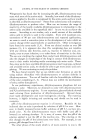
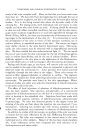
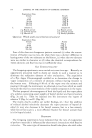
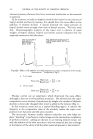
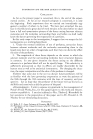
NATURAL COLOR PIGMENTS OF THE HAIR 129 has the ability to convert tyrosine to dopa and dopa to dopa quinone. After a number of further alterations indole-$,6-quinone is formed. This material polymerizes to form an insoluble brown or black compound, melanin. The specific chemical structure and method of bonding melanin to protein is unknown. Melanin may vary from almost colorless to black depending on its state of reduction or oxidation. Melanin is a stable free radical (7). Dark melanin acts as an excellent cation exchange ma- terial (8). Alving and Eichelberger (9) found in 1948 that prolonged ingestion of chloroquine diphosphate resulted in depigmentation of human hair. Saun- ders etal. (10) reported further instances of this reaction. It has been found that red, blond and light brown hair will lighten after chloroquine therapy but dark brown hair and the hair of Negro or Oriental individuals does not change. On the basis of these findings it is now presumed that red, blond and light brown human hair contains pheomelanin rather than melanin. It is known that the melanocytes in these hairs contain an active tyrosinase system (6). The metabolic scheme proposed by Butenandt et al. (11, 12, 13) (Fig. 2) provides a possible mechanism for pheomelanin formation. The melanocytes in pheomelanin hair contain an added en- zyme. This enzyme converts tryptophan to aminophenol. The presence of this compound operates a switch mechanism in energy utilization. Tyrosinase converts tyrosine to dopa and dopa to dopa quinone. The dopa quinone, however, is reduced to dopa and energy from this change Tyrosinose Oxi• Ou,none PIGMENT Arninophenox=zone Arninophenol R R R I I I YELLOW NH NH PIGMENT ( ( from 7•yptophon o•O • Figure 2.--Tyrosinase system and the oxidation of arninophenyl compounds (after Bute- nandt, et al.) (Figure originally published in The Biology of Hair Growth, Montagna and Ellis, editors, "The Nature of Hair Pigment," by Fitzpatrick, T. B., Brunet, P., and Kukita, A. Academic Press, Inc., New York, p. 295, 1958.)
Purchased for the exclusive use of nofirst nolast (unknown)
From: SCC Media Library & Resource Center (library.scconline.org)