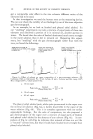
154 JOURNAL OF THE SOCIETY OF COSMETIC CHEMISTS The relationship of molecular size of the dye intermediates to color in- tensity on the hair can be a valuable aid to the formulator or a trap for the unwary. One other influencing factor must be mentioned and that is the absorbancy or porosity of the hair. When hair is bleached it becomes more receptive to dyeing because the intermicellular spaces become larger. When the new growth of hair is retouched as it must, because hair con- tinues to grow, the dye batch is applied first to the new growth and then combed out to the ends to obtain an even color effect over the entire head. It is possible that if the composition contains an intermediate or modifier of large molecular size, the porous ends of the hair may dye to the proper shade but the less porous new growth may not or the reverse may be true. For example, in auburn shades this may result in auburn colored hair with rose or pink ends, especially on pre-bleached hair. An interesting application of large molecular weight intermediates is psychological or esthetic. It is usually, but not always, desirable for the developing dye bath to take on the color of the hair shade. When the developer is mixed with the hair dye, color development in the mixture starts immediately. It is possible for the dye bath to become red and dye the hair blonde or the mixture to become yellow and dye the hair steel gray. In certain cases the judicous use of a high molecular weight inter- mediate can be used to adjust the dye bath color to the hair shade without contributing to the hair shade. SUMMARY We have attempted to demonstrate the color effect on hair resulting from combinations of dye intermediates and to point out some of the problems and pitfalls. Because of the poor color fastness on hair of some interme- diates one method of preparing reference dyeing on spun silk is described. Certain practical aspects of the role of molecular weight of both inter- mediates and dye base ingredients are discussed. Bear in mind that this paper has only discussed combinations of two intermediates. The problem becomes more complex when you consider that a specific hair shade may contain from four to eight intermediates. It is our recommendation that those cosmetic chemists without previous experience in this field who may be faced with the problems of formulating oxidation hair coloring products, first become familiar with the dyeing characteristics of each inter- mediate as well as basic combinations. This is a prerequisite to intelligent formulation of complete shades. Although we trust that this paper has shed some light on a complex subject, there is still no substitute for ex- perience. REFERENCES (1) Kass, G. S., vim. Perfurnerviromat.,68, No. 1, 25 (1956). (2) Kass, G. S., Ibid., 68, No. 3, 35 (1956). (3) Kass, G. S.,Ibid., 68, No. 3, 47 (1956). (4) Wilrnsrnann, H.,Ibid., 75, No. 5, 41 (1960).

BASIC ELEMENTS OF DYEING HUMAN HAIR By D. L. U•D•P. WOOa* Presented September 15-16, 1960, Seminar, Chicago THE SUBJECT of hair coloring is one of increasing appeal to men as well as women. Many million dollars were spent on color products last year, and today even the barber schools are preparing for a large increase in demands by men for hair color treatments. To formulate dyes to meet this cosmetic demand may seem a simple ex- trapolation of the textile dyeing art because keratin, be it wool or human hair, is such a reactive chemical substrate that it can be dyed by practi- cally every class of dye known. In fact, there are thousands of dyes avail- able for coloring textile keratins, yet only a few can be used on human hair. This paper shows why the cosmetic chemist is so limited. The basic ele- ments of textile dyeing are outlined, the problems peculiar to dyeing of human hair are pointed out, then the type or reactions that dyes undergo with their substrate are listed, and finally, it is shown how the problems peculiar to human use have so greatly restricted the choice of cosmetic dyes. There are three basic elements of dyeing. The dye must diffuse from the body of the solution some finite distance into the fiber then, in cases where dye intermediates are used, the intermediate must be altered chem- ically to develop the end color and finally the dye must be bound to the fiber so that it does not rinse out. The chemistry of dye intermediates was treated extensively by Kass at this Seminar (5) and elsewhere (6) there- fore, attention is given here principally to diffusion and reaction of the dye in the fiber. When a typical commercial dyeing solution is applied to hair, or to any other fiber, the dye molecules begin to penetrate. The concentration of dye then decreases in the interface or solution immediately surrounding the fiber. When the bulk of fabric or limitations on stirring prevent direct re- placement of dye, the partially exhausted interface must be resupplied by relatively slow diffusion of dye molecules from the body of the dye solution to the interface. Obviously, dye must reach the interface rapidly if dyeing is to be achieved in a reasonable length of time. * The Toni Co., Chicago 54, I11. .4uthor's Note: The objective in delivering this paper was to provide at the Seminar an in- troductory background to the subject of hair coloring. More detailed recent review papers on the reactivity of hair keratin and the elements of hair coloring have appeared elsewhere (1-4). 155
Purchased for the exclusive use of nofirst nolast (unknown)
From: SCC Media Library & Resource Center (library.scconline.org)