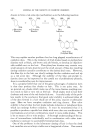
158 JOURNAL OF THE SOCIETY OF COSMETIC CHEMISTS dyes or oxidation dyes. Oxidation dyes are used extensively for hair coloring. The detailed chemistry of dye intermediates is treated exten- sively elsewhere (6). Briefly, oxidation dyes are analogues or derivatives of phenylenediamine, which, in the presence of an oxidizing agent, couples with itself to form large fused ring compounds with at least one unsaturated chromophoric bond. The exact color developed depends upon the presence of other substituents in the diamine or other terminating molecules such as aromatic amines, phenolics, nitro dyes or heavy metals present in trace quantities. In the trade many additional subtle modifications of shade are achieved with changes in ionic strength, dispersing power of wetting agents and hydrophilic-hydrophobic balance of the solvent. Finally, there must be a binding of the dye to the fiber substrate. The amino acid residues offer a host of dye binding sites in human hair. A partial list of functional groups includes amide, amine, ammonium ion, carboxylic acid, carboxyl ion, disulfide, mercaptan, phenol and alcohol. Every conceivable basic type of chemical bond is possible between dyes and the many functional groups in human hair: covalent, ionic, hydrogen, or van der Waals. It also is possible to lock in the dye by precipitation, com- monly achieved by solvent change or oxidative polymerization. These types of binding are discussed in detail after the next section, which points up the problems that are peculiar to dyeing of human hair. When a dye is applied at home or in a beauty shop, a matter of prime importance to all concerned is time and convenience, which we measure today in minutes. Everything must be done, therefore, to choose a dye which will penetrate the hair very quickly. All the factors which affect diffusion must be optimized to get a maximum rate of penetration. These are: concentration, size of dye, dissociation of micelies, dye charge, vis- cosity, swelling and temperature. To favor diffusion, we eliminate first the dyes of very large molecular weight, those which have many negatively- charged groups in their structure, those of low solubility and those that strongly aggregate in solution. On a human head, one hardly can tolerate dripping of dye solution from the woman's head onto her face and shoulders. Dripping is minimized by making the solution viscous, but this unfortunately reduces the rate of diffusion of the dye. Because time saving and lack of dripping are both important, this further reduces the choice of dye. To increase the rate of mass dye penetration, relatively small dyes are chosen and a concen- trated dye solution is sought. The latter factor limits one to dyes that are fairly soluble at the pH, the temperature, and the ionic strength dictated by other factors. As pointed out earlier, heat is especially helpful for rapid penetration and, in fact, very high temperatures, even above 100øC., are used in the textile industry. But, unfortunately, on the human head one is limited to

BASIC ELEMENTS OF DYEING HUMAN HAIR 159 the few degrees rise above room temperature that can be tolerated on the scalp. At that, it is risky to rely on a very uniform or reproducible rise above body temperature, especially in the regrowth area close to the scalp where the heat is needed most. Theoretically, one might expose the scalp to temperatures up to about 45øC., but in practice this is difficult to regu- late and the net result is a restriction to dye molecules which will penetrate rapidly at or near body temperature. All cosmetics must be medically acceptable. As a precautionary meas- ure, patch tests are usually recommended to reveal to the consumer any sensitization to the dye. Staining of the skin is another problem. Gloves can be worn to protect the hands, but a certain amount of dye contacts the scalp. To a limited extent staining is unavoidable nevertheless, for reasons not completely understood, dyes differ greatly in their relative tendency to stain skin and dye hair therefore, if any appreciable amount of dye is to be put into the hair, the choice must be restricted to dyes which, by experience, prove to stain the skin only minimally. Textile chemists are always concerned with the problem of level dyeing, or an even adsorption of the dye throughout the fabric or fiber, although on the human head a slight natural variation is desirable. The complications in achieving level dyeing on human hair are far greater than on textiles be- cause of the gross variations in human hair, even on one head. There are natural variations in hair due just to anthropologic constitution, physical condition and age of the man or woman. But far more important than these is the history of chemical treatments the hair has received. There is a pronounced change in rate at which the dye will diffuse into the hair after bleaching, waving and dyeing. As though this were not enough, the most formidable aspects of level dyeing are those connected with regrowth. The regrowth, freshly out of the follicle, is completely free of all former treatments, having intact cuticle and epicuticle, while the tip end may have been waved, bleached, dyed, shampooed, chlorinated and saturated with metals from the water supply. Between the scalp and tip end are demar- cations from all the former treatments. This hair, the consumer demands, must be dyed with natural uniformity from the scalp to tip, from ear to ear and nape to forehead! Such a nonhomogeneous substrate surely could colorfully fractionate some mixtures of dyes. Yet, formulating with more than one dye is required to produce certain colors. Therefore, to achieve reasonably level dyeing, one must use dyes that are similar in structure and size and preferably weakly absorbed so that minimum partitioning of dye mixture occurs between the sections of hair that have received different treatments. It helps to use dyes that are relatively small and free of neg- ative charge so that penetration is equally rapid in both new and old portions of the hair. The process of dyeing of regrowth can add more dye to the
Purchased for the exclusive use of nofirst nolast (unknown)
From: SCC Media Library & Resource Center (library.scconline.org)